Professionalism and Neurodiversity Can Coexist
Redefining Professional Excellence Beyond Conformity

Understanding Neurodiversity in Professional Spaces
Over the last several years, conversations about neurodiversity have become more common in schools, workplaces, and leadership circles. While the term is often used, it is not always clearly explained.
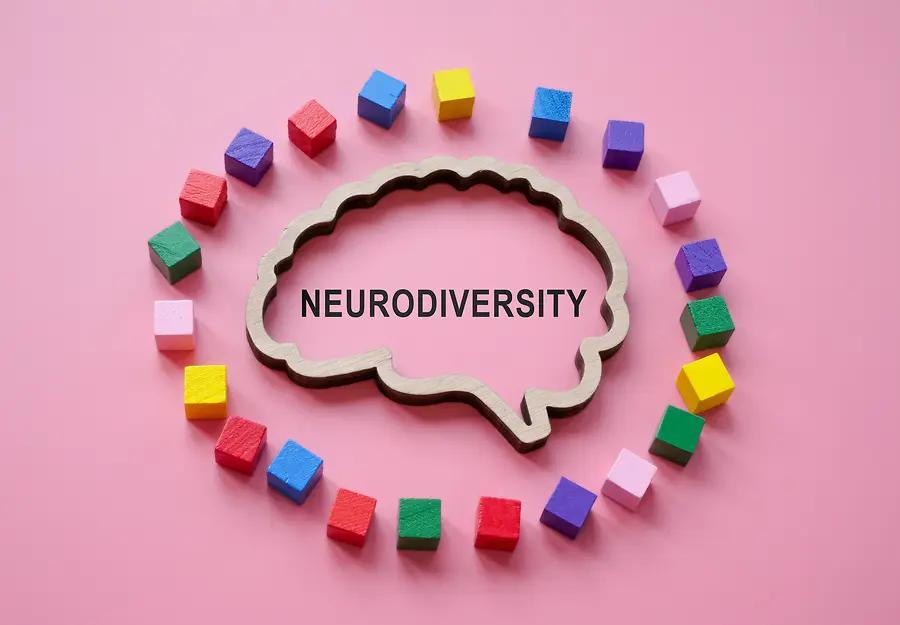
Simply put, neurodiversity recognizes that human brains do not all process information, learn, communicate, regulate emotions, or solve problems in the same way. Neurodivergent individuals include people with ADHD, autism, sensory processing differences, dyslexia, anxiety disorders, and other neurological or cognitive differences. These differences are not character flaws or indicators of intelligence. They are simply variations in how people experience and interact with the world around them.
As someone who is neurodivergent myself, I have spent a great deal of time thinking about what that means in professional spaces.
For a long time, I believed professionalism meant minimizing the parts of myself that felt different.
Like many neurodivergent adults, I became very good at compensating. I developed systems, routines, reminders, calendars, and backup plans for my backup plans. From the outside, most people probably would not have noticed how much effort went into keeping everything organized and moving forward.
What they saw was someone who could lead meetings, manage projects, advocate effectively, and handle complex situations. What they did not see was the amount of energy being spent trying to make my brain operate the way I thought it was supposed to operate.
As I became more involved in leadership development, I started noticing something interesting. Many conversations around leadership focused on understanding how other people think, communicate, and respond to challenges. We talk about adaptive leadership, emotional intelligence, communication styles, and cognitive flexibility. We discuss the importance of recognizing that people approach the same problem from different perspectives based on their experiences and the information available to them.
What I rarely heard people discuss was applying that same curiosity inward.
At some point, I realized I had spent years trying to adapt my behavior to fit professional expectations without spending nearly as much time understanding how my own brain actually worked. Instead of asking how to leverage my strengths, I was asking how to hide my differences. Instead of recognizing the value of thinking differently, I was often measuring myself against standards that were designed around how someone else processed information.
The irony is that many of the qualities that helped me become effective in my work were connected to the very things I had spent years trying to manage as a teenager and into adulthood. The ability to identify patterns quickly, the tendency to question assumptions, the capacity to make connections across multiple pieces of information, and the persistence to keep working through complex problems all played a role in how I approached leadership and advocacy. Those strengths did not erase the challenges that came with being neurodivergent, but they did force me to rethink the narrative I had carried for so long.
The conversation around neurodiversity in the workplace has changed significantly over the past several years, and I think that is a positive shift. For too long, professional environments often operated under the assumption that there was a single "right" way to think, communicate, organize, and work. Anyone who fell outside that model was expected to adapt quietly and independently. While there is certainly value in developing skills and learning to function effectively within an organization, there is also value in recognizing that different ways of thinking can strengthen a team.
The strongest organizations I have encountered are not the ones where everyone approaches problems the same way. They are the ones where leaders understand how to leverage different perspectives, experiences, and cognitive styles. They recognize that innovation, problem-solving, and creativity often emerge when people bring different ways of processing information to the same challenge.
For me, one of the most important leadership lessons has been recognizing that self-awareness is not limited to understanding our emotions, communication styles, or decision-making patterns. It also includes understanding how our brains work. The more I learned about my own neurodivergence, the more intentional I became about creating systems that supported success, instead of constantly trying to force myself into systems that did not.
That shift changed more than my productivity. It changed the way I viewed leadership.
Today, when I think about creating inclusive workplaces, I do not think about lowering expectations or making excuses for performance. I think about creating environments where people can contribute their strengths without feeling pressured to hide how they think. I think about leaders who are willing to recognize that professionalism is not defined by sameness. It is defined by competence, integrity, accountability, and the ability to contribute meaningfully to a shared goal.
Neurodivergent professionals are already leading teams, managing organizations, solving complex problems, and serving their communities every day. The question is no longer whether neurodiversity belongs in the workplace. The real question is whether we are willing to recognize that different ways of thinking have always been part of what makes organizations successful.
From my perspective, some of the most effective leaders are not the people who think exactly like everyone else. They are the people who understand how they think, understand how others think, and know how to bring those differences together in the service of something larger than themselves.


