CO The Silent Killer
Understanding the Dangers and Prevention of Carbon Monoxide Poisoning

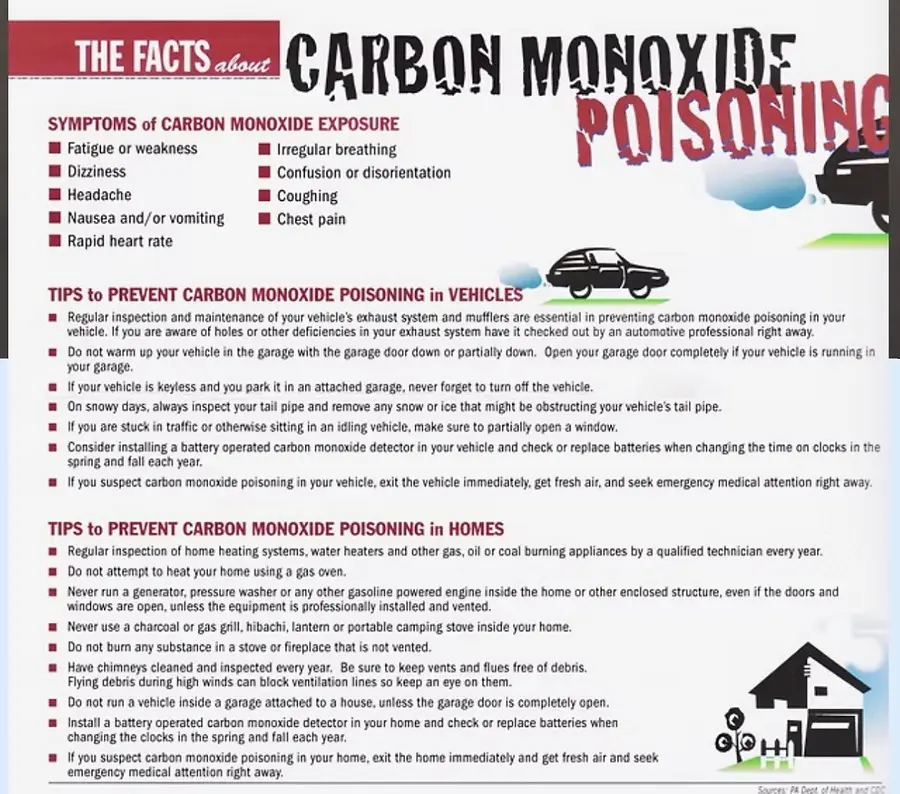
Carbon monoxide (CO) is a deadly, colorless, tasteless, odorless, and poisonous gas. CO is produced by the incomplete burning of various fuels, including coal, wood, charcoal, oil, kerosene, propane, and natural gas. Each year CO is responsible for over 100,000 trips to the ER and 1200 deaths.
CO can be produced by sources in the home such as clothes dryers, water heaters, fireplaces, furnaces, boilers, wood stoves, and ovens.
Products and equipment powered by internal combustion engines—such as portable generators, vehicles, boats, lawn mowers, and power washers—also produce CO.
Because CO is odorless, colorless, and otherwise undetectable to the human senses, people may not realize they are being exposed. The initial symptoms of low to moderate CO poisoning are similar to the flu (but without a fever) and include:
- Headache
- Fatigue
- Shortness of breath
- Nausea
- Dizziness
High-level CO poisoning results in progressively more severe symptoms, including:
- Mental confusion
- Vomiting
- Loss of muscular coordination
- Loss of consciousness
- Ultimately, death
How Can One Prevent CO Poisoning?
- Make sure appliances are installed and operated according to the manufacturer’s instructions and local building codes. Most appliances should be installed by qualified professionals.
- Have your heating system professionally inspected and serviced annually to ensure proper operation. The inspector should also check chimneys and flues for blockages, corrosion, partial or complete disconnections, and loose connections.
- Never service fuel-burning appliances without proper knowledge, skills, and tools. Always refer to the owner’s manual when performing minor adjustments or servicing fuel-burning equipment.
- Never operate a portable generator or any other gasoline engine-powered tool in or near an enclosed space such as a garage, house, or other building. Even with open doors and windows, these spaces can trap CO and allow it to quickly build to lethal levels.
- Install a CO alarm that meets the requirements of the current UL 2034 safety standard. A CO alarm provides added protection but is not a substitute for proper use and maintenance of appliances that produce CO.
- Install battery-operated CO alarms or CO alarms with battery backup on every level of the home and outside sleeping areas. Interconnected CO alarms are best—when one sounds, they all sound. Ensure alarms are not covered by furniture or draperies.
- Never use portable fuel-burning camping equipment inside a home, garage, vehicle, or tent unless it is specifically designed and approved for enclosed spaces.
- Never burn charcoal inside a home, garage, vehicle, or tent.
- Never leave a car running in an attached garage, even with the garage door open.
- Never use gas appliances such as ranges, ovens, or clothes dryers to heat your home.
- Never operate unvented fuel-burning appliances in any room where people are sleeping.
- Do not cover the bottom of natural gas or propane ovens with aluminum foil. Doing so blocks combustion airflow and can produce CO.
- During home renovations, ensure appliance vents and chimneys are not blocked by tarps or debris. Confirm appliances are in proper working order once renovations are complete.
CO Detectors Save Lives
Test them often.
Stay aware!