United Airlines Fleet & History!
From Boeing's subsidiary to the world's largest airline: the evolution of United Airlines.

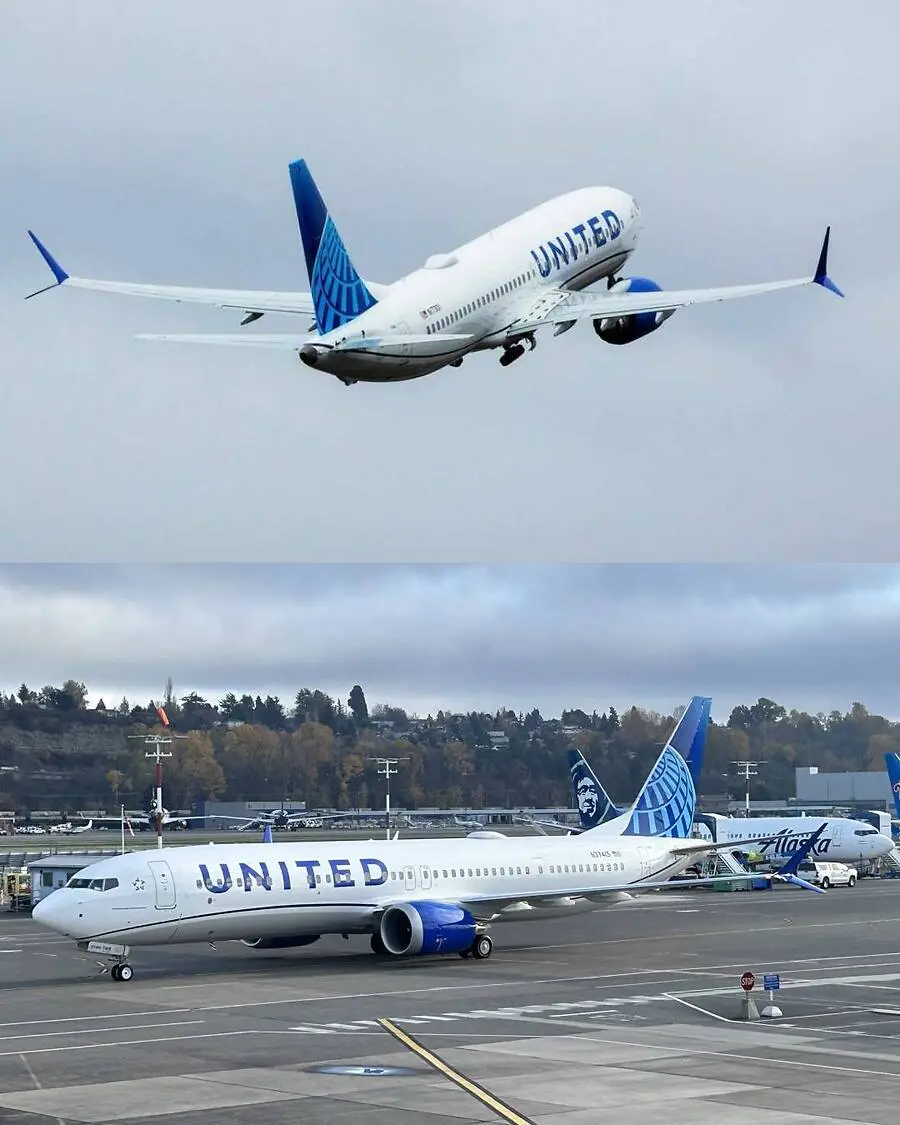
United Airlines was formed in 1931 as a subsidiary of United Aircraft and Transport Corporation to manage a group of airlines controlled by William Boeing, including Boeing Air Transport, National Air Transport, Pacific Air Transport, and Varney Air Lines (also called Varney Speed Lines). All of these carriers held U.S. Air Mail contracts—thus “United” Airlines (spoiler alert!).
Varney Air Lines, one of the founding subsidiaries, was established in 1926 in Boise, Idaho. This is the date United later adopted as its official corporate founding year, even though the company itself was founded in Seattle (and is now headquartered in Chicago at the Willis Tower).
The 1934 Air Mail scandal led to the dissolution of the parent corporation, resulting in the separation of Boeing, United Aircraft (now RTX—better known in the 2020s as Raytheon Technologies), and United Air Lines. All three continued as independent major American companies.
Boeing went on to form Boeing Commercial Airplanes, with divisions in military aircraft, space systems, and drone development. RTX, now widely known as Raytheon Technologies Corporation, develops a significant portion of the weapons systems used by the United States military. United Air Lines became United Airlines and is publicly traded as UAL on Wall Street.
As an independent company, United expanded rapidly. In 1933, it introduced the Boeing 247, the first modern—albeit propeller-powered—airliner, enabling non-stop transcontinental travel. It was one of the first aircraft to incorporate advances such as all-metal (anodized aluminum) semi-monocoque construction, a fully cantilevered wing, and retractable landing gear—innovations for the time. The 247 first flew on February 8, 1933, and entered service later that year with Boeing Air Transport, which became commonly known at the time as United Air Lines.
Several specially modified variants followed. These included a Boeing 247Y appropriated from United for USAAC (U.S. Army Air Corps) use as a test aircraft fitted with two machine guns in the nose. The same installation was later fitted to a 247Y owned by “Generalissimo” Chiang Kai-shek. This aircraft also featured a single Colt .50 caliber machine gun in a flexible mount.
“Young Marshal” Zhang Xueliang ordered two Boeing 247Ds for his air force. He used one of them, named Bai-Ying (White Eagle), during the Xi’an Incident in 1936, during which he flew into the opposing Nationalist army’s camp at Xi’an under a secret truce and had their leader, Chiang Kai-shek, arrested. This temporarily ended the civil war between the Communist and Nationalist forces so they could unite against the Japanese invasion of mainland China—the early stage of what would become World War II.
A 247D purchased by the British RAF became a testbed for instrument approach equipment, a precursor to the IFR flight systems commonplace today. Some 247s were still flying in the late 1960s as cargo transports and business aircraft.
The 247 would go on to see service in World War II as the C-73 with the U.S. Army Air Corps, and later the U.S. Army Air Forces—the precursor to the USAF, which United Air Lines helped support operationally. The 247Y was also exported to China in the 1930s, as previously discussed.
The last remaining 247D—the same aircraft used by the British RAF for IFR evaluation—can still be seen at the Smithsonian National Air and Space Museum on the National Mall in Washington, D.C.
Returning to United, understanding the Model 247 helps illustrate the airline’s broader evolution.
After World War II, United Airlines capitalized on the civilian aviation boom. In 1961, it merged with the struggling Capital Airlines, briefly becoming the world’s second-largest airline by several metrics.
United was a major proponent of airline deregulation in the late 1970s under President Jimmy Carter and ultimately benefited from the post-deregulation decline of Pan American World Airways. It acquired Pan Am’s Pacific route authority in 1985, its London Heathrow operations in 1991, and its Latin America and Caribbean network in 1992, as Pan Am sold off assets in a failed attempt to regain financial stability.
United embraced the competition that deregulation created, and Pan Am’s collapse illustrated this shift clearly.
In 1997, United was one of five airlines—along with Lufthansa, Air Canada, Thai Airways International, and Scandinavian Airlines (SAS)—to launch Star Alliance, the first global airline alliance. As of 2026, it remains the largest global airline alliance.
Four years later, United suffered significant losses during the September 11 attacks, when two of its aircraft—a Boeing 757 and a Boeing 767—were hijacked and deliberately crashed. The airline never fully recovered from 9/11 alone. It was further impacted by the economic downturn that followed and filed for bankruptcy in 2002. United emerged from bankruptcy in 2006 after financial restructuring and, in 2010, merged with Continental Airlines—effectively saving the company and creating one of the world’s largest airlines at the time.
The merger with Continental was completed in late 2011. United’s gray “battleship” livery and the “white tulip” livery served as interim identities while the Continental brand was absorbed. Payrolls were consolidated, human resources streamlined, and corporate functions unified. The new livery adopted the Continental globe logo in traditional United colors, eliminating the iconic “tulip” entirely.
As of April 2026, United Airlines operates 1,081 mainline aircraft—the largest fleet of any airline worldwide. The fleet includes a mix of narrow-body aircraft from Airbus and Boeing, and exclusively Boeing wide-body aircraft. Boeing makes up over 80% of the fleet, with a focus on long-haul wide-bodies such as the 787 Dreamliner and 777.
United maintains a significant Airbus A320/A321neo narrow-body fleet for domestic routes and has large ongoing orders for both the Boeing 737 MAX and Airbus A321neo. The Airbus A321XLR is expected to replace aging 757-200 and 757-300 aircraft. Airbus accounts for approximately 253 aircraft, while Boeing accounts for the remaining 847.
Introduced in 2020 during the COVID-19 pandemic by CEO Scott Kirby, the “United Next” strategy is the airline’s plan to modernize and expand its fleet while improving operational efficiency and the passenger experience.
Unlike many competitors, United retained its wide-body aircraft during the pandemic (while Delta temporarily stored theirs), allowing it to respond quickly to the surge in international travel demand during recovery.
Since 2021, United has placed orders for over 500 narrow-body aircraft and 150 Boeing 787 Dreamliners. The strategy also includes retiring older aircraft and replacing at least 200 single-class regional jets, including updated versions of the CRJ-200—sometimes nicknamed “Satan’s Chariot”—now reintroduced as the CRJ-450 with improved interiors and a more premium feel.
United Next also emphasizes the passenger experience. The “Signature Interior” includes seatback entertainment with Bluetooth connectivity, power outlets at every seat, and larger overhead bins designed to accommodate one roller bag per passenger. All new aircraft will feature this interior, with retrofits expected to be completed by 2025.
United has selected SpaceX’s Starlink as its in-flight internet provider, offering high-speed, low-latency connectivity for streaming, work, and gaming—with complimentary access for passengers.
Now, let’s look at United’s class system.
United Polaris is the airline’s flagship international business class product, combining first- and business-class elements into a premium experience. Seats convert into 6-foot-6-inch flatbeds and include personal storage, power outlets, and upgraded dining and amenities.
Polaris is available on Boeing 767, 777, and 787 aircraft, as well as select internationally configured 757s. Narrow-body 757s feature a 2–2 layout without direct aisle access, while wide-body aircraft provide aisle access for all passengers.
United has announced an updated Polaris suite for the Boeing 787-9, expected to enter service after 2026. These suites will include sliding doors, larger 4K screens, and enhanced “Polaris Studio” seating in the first row.
Polaris passengers receive priority services and access to Polaris Lounges or partner lounges internationally. These lounges feature sit-down dining, cocktail bars, shower suites, rest areas, and premium amenities. Key locations include San Francisco, Chicago O’Hare, Los Angeles, and Newark.
United First is the highest cabin offered on domestically configured aircraft. When used internationally, it is marketed as United Business. Seats on narrow-body aircraft offer a 38-inch pitch, while certain Boeing 777-200ERs feature fully flat seating. Amenities include priority services, meals on longer flights, and dedicated check-in.
United Premium Plus is the airline’s premium economy product, available on international wide-body aircraft. It offers wider seats, increased legroom, upgraded dining, and enhanced amenities.
Economy Plus provides additional legroom and recline and is available in forward economy sections and exit rows. It is complimentary for MileagePlus Premier members, depending on status.
United Economy is the standard cabin, with a typical 31-inch seat pitch. Many aircraft offer seatback entertainment or streaming options, with some Boeing 737s equipped with DirecTV.
Under the United Next initiative, all mainline aircraft are expected to feature personal screens by late 2026.
Food and beverage service varies by route. Long-haul international flights include complimentary meals, while shorter flights offer buy-on-board options. Snacks and non-alcoholic beverages are free on all flights.
Basic Economy is United’s lowest fare class, designed to compete with low-cost carriers. It includes restrictions such as no advance seat selection, limited carry-on allowance, and reduced loyalty benefits. These passengers typically board in Group 6.
As of 2026, United is the largest airline in the world, with over 1,061 aircraft. Its hub-and-spoke network includes San Francisco, Chicago O’Hare, Denver, Los Angeles, Newark, Houston, Guam, and Washington Dulles.
United maintains codeshare agreements with over 40 airlines and benefits from its founding role in Star Alliance, enabling extensive global connectivity. It also holds interline agreements with partners such as Lufthansa, JetBlue, and Air Canada.
Thank you for reading! We at Brooke In The Air Travel hope you found this informative. Be sure to book your consultation, explore our merchandise, and learn more about the “United Empire” by subscribing at Brookeintheairtravel.net.