
700,000 Black Women. More Than a Statistic.
How one woman's four layoffs illuminate the hidden human cost of Black women's workforce displacement.

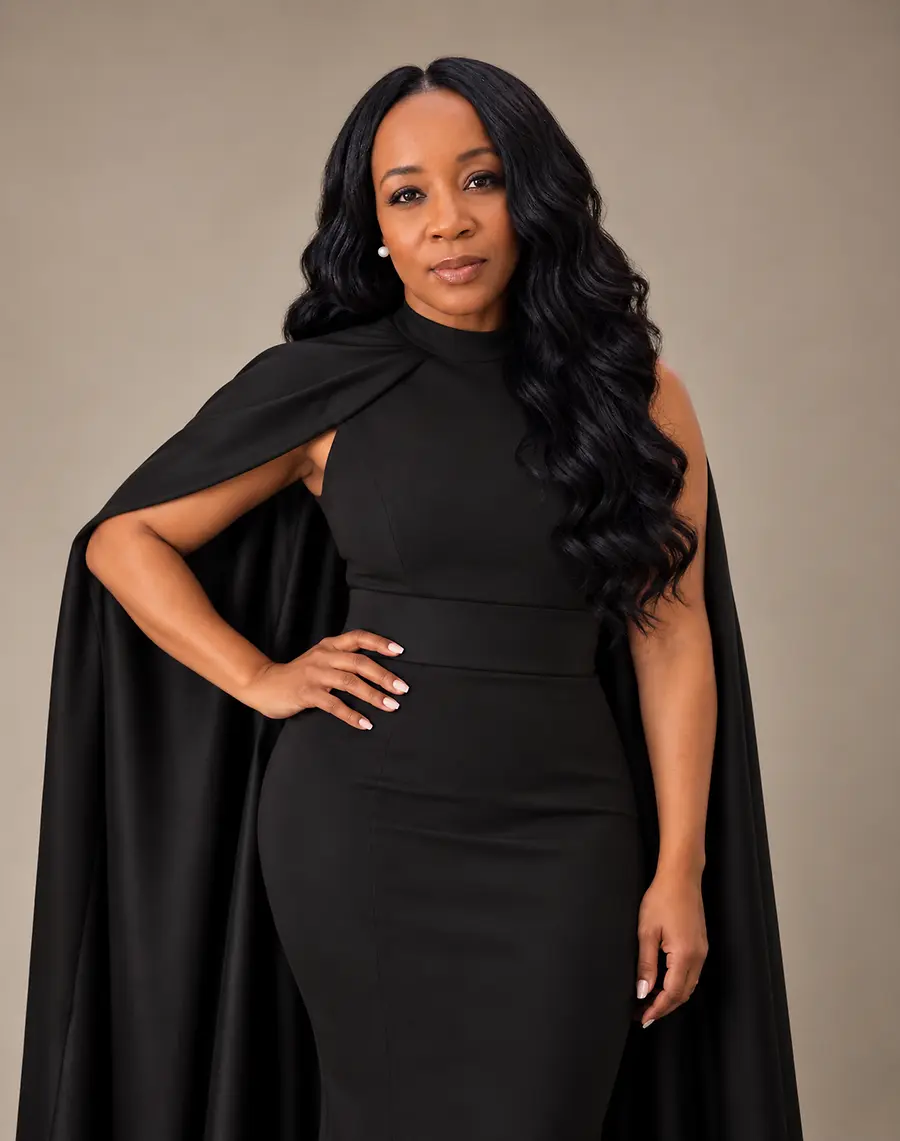
Behind every employment statistic is a woman whose life has been interrupted. A woman with bills to pay, a family to support, a career she worked hard to build, and a future she thought was secure.
For the thousands of Black women facing workforce displacement, losing a job is more than losing a paycheck. It can mean losing financial stability, confidence, and the sense of security they've spent years working toward.
These women are not just numbers in a report. They have names, families, responsibilities, and stories that deserve to be heard.
And I know this because I've been there.
I have been laid off four times.
Four times, I have experienced the shock of learning that a job I depended on was coming to an end. Four times, I have had to consider what would happen to my income, my responsibilities, and the life I was working so hard to build.
And four times, I have had to figure out what came next.
Recently, I came across reporting from EBONY about Black women losing their jobs, along with a documentary project examining the growing number of Black women pushed out of the workforce. Filmmaker Sidney Madden has highlighted reports that approximately 700,000 Black women have been pushed out of America's workforce since the beginning of 2025.
This issue has been reported on before. We have seen the headlines, read the statistics, and heard about the economic consequences. But seeing the number reach such a staggering level and reading the personal accounts of women struggling to recover compelled me to speak.
Because I am one of those women who knows what it feels like to lose a job unexpectedly.
As a survivor of Hurricane Katrina, I came away from that experience with a changed understanding of hardship, uncertainty, and what it means to rebuild a life. I believed that if I could survive Katrina, I could survive just about anything.
But there is something we don't discuss enough about survival.
Just because a woman knows how to survive doesn't mean she isn't hurting.
And just because she finds the strength to begin again doesn't mean starting over is easy.
When Five Years of Loyalty Ended in a Layoff
Of all my experiences with layoffs, one of the most painful came in February 2023, after five years with Equifax.
I had made the decision to move closer to work. My employer knew I was moving and understood why. I was making decisions about my home, my finances, and my future based on the life I was building.
Then I was laid off.
I was angry. I was hurt. And I was suddenly facing the uncertainty of unemployment after making a significant personal commitment.
That February began a job search I will never forget.
I interviewed more than 100 times.
By April, I accepted an opportunity through a staffing agency with Georgia Power. I interviewed and was hired the next day. But I subsequently discovered that the position was temporary, something I had not understood when I accepted it.
I had just moved into a house. I had bills and responsibilities. I needed stable employment, not another period of uncertainty.
So I kept looking. I kept interviewing. I kept reaching out to prospective employers, hoping an opportunity would become available.
Finally, in May, I secured a position.
From the outside, someone might see a relatively short employment gap followed by another professional opportunity.
What they wouldn't see is the emotional strain of those months, the endless interviews, the disappointment, and the pressure of knowing that financial obligations don't stop simply because a paycheck does.
A résumé can show the dates between jobs. It cannot show what a woman endured between them.
A Workforce Crisis That Deserves Our Attention
My experience is personal, but the larger issue extends far beyond my own career.
According to the Institute for Women's Policy Research, Black women's employment declined by 251,000 between January and August 2025. Although employment partially recovered later that year, December still recorded 113,000 fewer employed Black women than January.
The Economic Policy Institute also found that Black women experienced a particularly sharp decline in employment rates during 2025, with college-educated Black women among those experiencing the greatest losses.
And the challenges have continued. In September 2026, the unemployment rate for Black women rose to 6.8%, according to the National Women's Law Center.
These are not simply numbers on an economic report.
Behind these figures are mothers, daughters, caregivers, homeowners, experienced professionals, and women approaching retirement who may be wondering how they will recover financially.
Some have spent decades building careers. Others are supporting children, aging parents, or entire households.
Some are applying for jobs beneath their experience level. Some are accepting lower salaries. Others are considering leaving the workforce altogether.
And many are doing all of this while trying to protect their emotional well-being.
We need to ask more than how many jobs have disappeared.
We need to ask what happens to the women whose lives are disrupted when those jobs disappear.
The Emotional Cost We Rarely Measure
Losing a job can affect far more than a bank account.
It can shake a woman's confidence, disrupt her sense of stability, and make her question the value of everything she has contributed professionally.
For women who have experienced repeated layoffs, the emotional impact can become cumulative.
Recently, while reading comments from women responding to reports about Black women's job losses, I found myself deeply moved by their experiences.
One woman shared that she had lost everything. Others described the emotional and financial toll of unemployment, the uncertainty of finding another position, and the exhaustion of having to rebuild their lives.
Their experiences were disheartening to read because I understood what it meant to have your professional stability taken away.
I've experienced four layoffs throughout my career, each under different circumstances. One company shut down completely. Following a bank takeover, I received a welcome letter from the new bank and believed my position was secure, only to learn a week and a half later that I was being laid off. At IBM, the closure of the training center resulted in my layoff. My fourth layoff came at Equifax.
Four different experiences. Four different circumstances. But each time, I found myself facing the uncertainty of unemployment and the difficult task of rebuilding my professional and financial stability.
And after a while, you get tired of starting over.
Even after securing another position, the memory of an unexpected termination can remain.
A company restructuring, a leadership change, or an unexpected meeting invitation can bring back memories of earlier uncertainty.
And for experienced women, particularly those in midlife, the stakes may feel even higher. There may be fewer years to rebuild retirement savings, greater financial responsibilities, or concerns about whether employers will recognize decades of professional experience.
We celebrate women who reinvent themselves. We applaud those who overcome adversity.
But how often do we acknowledge the exhaustion that comes with repeatedly having to do so?
How often do we allow women to say they are tired without interpreting that exhaustion as weakness?
Black women deserve more than admiration for their ability to endure hardship. We deserve meaningful opportunities, economic stability, and workplaces that recognize the value of our experience.
The Stories That Still Need to Be Told
One reason I felt compelled to write this article was discovering And Counting, an independent documentary by filmmaker Sidney Madden.
The film centers on four Black women across industries and generations, giving them the opportunity to share how workforce displacement has affected their careers, morale, and communities.
The project already exists as a short proof-of-concept documentary, but Madden is working to complete the full film.
Her fundraising campaign has a goal of $3,000 to support post-production, including editing, color grading, and original music.
I believe these stories deserve to be heard.
When women share their experiences of losing jobs, struggling to find employment, or rebuilding their lives, they are doing more than recounting difficult moments. They are helping others understand the human consequences of workforce decisions.
And perhaps they are helping another woman realize she is not alone.
I encourage readers to learn more about And Counting, share the project, and, if they are able, consider making a contribution toward completing the documentary.
Support the documentary: https://www.gofundme.com/f/help-finish-and-counting-a-vital-documentary
You can also follow the documentary's progress on Instagram at @andcountingdoc. The more these stories are heard, the harder they become to ignore.
Redefining Security After Career Disruption
My experiences with unemployment changed the way I think about financial independence and professional security.
Today, I love my corporate career and the work I do. I value the relationships I've built, the opportunities I've been given, and the ability to continue learning and contributing to a profession that has been part of my life for more than two decades.
At the same time, those experiences taught me the importance of investing in myself, my education, my financial future, and the empowerment of other women.
I've also learned that some of life's greatest opportunities come through doors we never expected to open.
Earlier this year, I met a woman I had never known before. What began as a simple introduction developed into a meaningful professional and personal relationship that has already led to three speaking opportunities and opened doors I could never have anticipated.
I couldn't have predicted any of that when we first met.
And that's what I've come to understand about life. You never know who you're going to meet, whose life you might touch, or what opportunity may be waiting on the other side of a conversation.
Sometimes we spend so much time worrying about the doors that have closed that we forget there are others we haven't even discovered yet.
You don't always have to know where the next door will lead. Sometimes you simply need the faith and courage to walk through it.
Faith Beyond the Layoff
My faith has been one of the most important foundations of my life.
But I want to be clear about something. When I encourage women to have faith, I am not speaking from a place where life has always been comfortable or easy.
I have lived through some incredibly difficult seasons.
I survived Hurricane Katrina and lost everything. I experienced four layoffs. I went through two divorces while raising two children.
And for 20 years, I worked two jobs, seven days a week, to provide for myself and my children.
For two decades, my workday didn't always end when I left my full-time job. I went from my regular job to weekend work, taking on additional opportunities wherever I could find them.
I cleaned toilets. I worked side jobs. I did what I needed to do to make sure my children were taken care of, even if that meant working extra hours so they would have Christmas gifts.
There were moments when I was exhausted. Moments when I wondered when life would become easier. Moments when I wanted something more than simply making it through another week.
But I kept praying.
I kept believing.
And I kept getting up.
Nearly a year before receiving the position I hold today, I had prayed specifically for the opportunity I wanted. I prayed for a remote position that would provide the financial stability I had worked so hard to achieve.
I didn't know when or how that prayer would be answered.
Then came another layoff, more than 100 interviews, and the uncertainty of accepting a position that turned out to be temporary.
Through it all, I continued to pray and believe.
And in May, God answered that prayer.
Today, for the first time in 20 years, I no longer have to work a second job to make ends meet. I prayed for the position I hold today, down to the exact salary, and God answered that prayer.
I made a promise to God that I would be a good steward of what He blessed me with. That I would help my family, help others, and never forget the seasons when I struggled.
And I do not take that blessing lightly.
I believe in my heart that God has rewarded my faith, my perseverance, and all those years when I continued moving forward despite the uncertainty.
Matthew 17:20 speaks of faith the size of a mustard seed.
That scripture has personal meaning for me because I know what it feels like to believe in something I cannot yet see.
And I understand that when someone is unemployed, struggling financially, or emotionally exhausted, hearing another person say, "Just have faith," may not feel particularly helpful.
I get it.
When you're worried about paying your bills, feeding your children, or keeping a roof over your head, encouragement alone doesn't solve the immediate problem.
But I also believe faith and action must work together.
You have to keep putting yourself out there. Keep applying. Keep learning. Keep making connections. Keep showing up.
Opportunities don't always arrive at your doorstep. Sometimes you have to go looking for them, even when you're tired.
And sometimes the door you thought was closed leads you toward one you never imagined opening.
I am living proof that circumstances can change.
Not because the journey was easy. Not because I never experienced fear or disappointment. But because I refused to stop believing that my life could become better.
As the saying goes, God is good all the time. He may not come when you want Him to, but He's always on time.
And when I look back at everything I've been through, I can see how much that means in my own life.
Faith has not prevented me from experiencing disappointment. It has helped me continue through it.
I am grateful for every door God has opened, including the ones I never imagined walking through.
But gratitude does not require me to pretend the difficult seasons were painless.
You can be exhausted and still have faith. You can be discouraged and still believe. You can be uncertain about tomorrow and still take another step today.
And if all you have left is faith the size of a mustard seed, hold on to it.
Because you never know which door God is preparing to open next.
We Must Change the Conversation
When we discuss the employment challenges facing Black women, the conversation cannot begin and end with statistics.
We need to examine how layoffs affect mental health, family stability, retirement readiness, professional confidence, and long-term economic opportunity.
We need employers to recognize that experienced professionals are not interchangeable resources whose contributions disappear during a restructuring.
We need greater transparency in hiring, meaningful career-transition support, and serious attention to the barriers facing women attempting to reenter the workforce.
And we need to stop treating resilience as though it is an unlimited resource.
I know what it means to survive.
I know what it means to walk away from a job unexpectedly, go home, and begin figuring out how to rebuild.
I know what it means to feel hurt and angry while still having responsibilities that demand my attention.
And I know what it means to keep believing that something better is possible.
But my hope for Black women is bigger than our ability to survive another setback.
I want us to have opportunities to thrive without first having to lose everything. I want our professional experience to be valued, our contributions to be recognized, and our financial futures to be protected.
I want the women who are currently unemployed, discouraged, or wondering whether their best professional years are behind them to know that their worth has not disappeared with their job title.
And I want the institutions making workforce decisions to understand that every employment statistic represents a human life.
I have survived four layoffs. But I refuse to believe that surviving is the highest achievement we should expect for Black women.
We deserve the opportunity to build, contribute, prosper, and live with dignity.
And for every woman who is unemployed, discouraged, or wondering whether another opportunity will ever come, I want to encourage you not to give up.
You're going to hear no. You may hear it more times than you ever imagined. I know because I went through more than 100 interviews before I finally received the yes I had been praying for.
There were doors I hoped would open that never did. There were opportunities I thought were meant for me that didn't work out. But I kept applying, kept showing up, and kept believing that the right opportunity would come.
Don't let one closed door, or even a hundred closed doors, convince you that another door won't open.
Keep learning. Keep making connections. Keep putting yourself out there, even on the days when you're exhausted and discouraged.
And above all, keep the faith, even if it's only the size of a mustard seed.
A no today doesn't mean there won't be a yes tomorrow.
Your story is not over.
Research References
- EBONY, “Black Women's April 2025 Job Losses and BLS Report.” https://www.ebony.com/black-women-april-2025-job-loss-bls-report/
- Sidney Madden, And Counting, documentary and fundraising campaign. https://www.gofundme.com/f/help-finish-and-counting-a-vital-documentary
- Institute for Women's Policy Research, “One Year Into Trump's Second Term, Black Women Face Disproportionate Job Losses,” February 10, 2026.
- Economic Policy Institute, “Black Women Suffered Large Employment Losses in 2025,” February 10, 2026.
- National Women's Law Center, “September Jobs Report: Black Women's Unemployment Increased,” October 2, 2026.

Charlotte Howard's career is a testament to the power of resilience, continuous learning, and embracing opportunity. Beginning as a receptionist, she built her career by staying curious, developing new skills, and consistently raising her hand for opportunities to grow. That mindset ultimately led her to become a trusted Executive Business Partner supporting senior leaders in some of the world's most recognized…





