
9-R's Conflict Resolution Model
A Practical Model for Teaching Students to Resolve Conflicts Respectfully and Peacefully
How the 9-Rs for Resolving Conflicts Model Came to Fruition
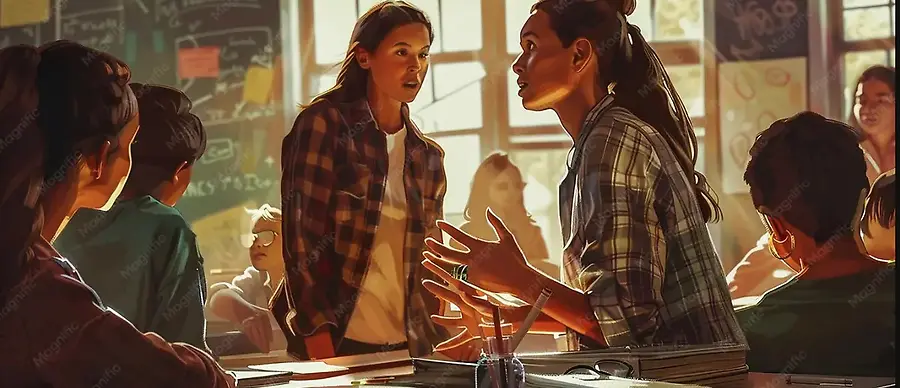
As a society, we normally encounter conflicts but have not normalized a way to navigate through them to everyone's mutual satisfaction. I created a conflict resolution model to assist my high school students with communication tools to respectfully address grievances. This article shares my thoughts about the purpose and benefits of the 9-Rs for Resolving Conflicts model. The steps outlined place responsibility for resolving disputes on the students, with the guidance of a trained mediator who facilitates them through the nine steps. The overarching goal of the 9-Rs model is to assist all students involved in achieving a fair and mutually beneficial outcome.
The Importance of Having a Nine-Step Conflict Resolution Process for Students
School staff expect conflicts to arise among students and their peers. Yet, as learning institutions, schools generally do not teach students strategies for addressing and resolving conflicts. Given the broad range of social development issues students encounter in schools, I propose broadening the scope of every school's responsibilities to include teaching students conflict resolution strategies.
Every staff member in the classroom, school cafeteria, library, playground, and school bus has had to address skirmishes between students, often with very little success. Physically separating students and allowing time to cool down is usually the end goal. Every adult in every school has had to intervene and attempt to mediate conflicts. Schools need trained mediation facilitators to teach students how to resolve conflicts safely and respectfully.
Training School Mediators
Academics are the core responsibility of every teacher, but the time devoted to resolving conflicts in their classrooms impedes their ability to proceed with instruction. Typically, when conflicts erupt, the problem is moved from the classroom to another designated area. However, moving the problem is not the same as solving it. Conflicts are among the most common challenges in every school.
During my years as a school leader, it took some time to recognize the ineffectiveness of removing students from classes or school without addressing the root causes of conflicts. No longer wanting to interrupt students' education, I discontinued the practice of suspending students and removing them from school. That decision led me to imagine an alternative and pragmatic solution.
First, I needed to contemplate how to tackle one of the most vexing and complicated challenges all schools face: "How can we support students in resolving their grievances?" To do that, I needed to view my response to conflicts through a different lens. Rather than focus attention on punitive consequences, I shifted my perspective and began to see errors in judgment or inappropriate behaviors as teachable moments. From there, what evolved was a series of humane steps designed to help students accept responsibility for the well-being of others and achieve peaceful coexistence.
Julie Coles is an accomplished education professional with 39 years of experience dedicated to improving education quality and student outcomes. She pioneered innovative programs including a 9-R's Conflict-Resolution model that eliminated suspensions for 10 consecutive years. As an author and founder of Because I Can LLC, Julie continues sharing pragmatic strategies through educational books and creative poetry,…





