
Discover the 9-Rs Conflict Resolution Model, a comprehensive framework created by Julie Coles to empower high school students with communication tools for resolving conflicts respectfully and achieving mutually beneficial outcomes through guided mediation.
Verified Member
Influential Woman · Education & Educational Publishing
Julie Coles
Because I Can: Founder / Author, Because I Can LLC
01890
1987Years experience
2Articles published
14Awards received
“
I often wondered, What If...The things we truly need, but do not have, simply have yet to be imagined?
Julie Coles · In Her Own Words
Her Story
About Julie
Julie Coles is an accomplished education professional and author with 39 years of experience dedicated to improving the quality of education. She began her career as a special education teacher, where her professional growth was impacted by discovering the importance of student-centered learning. Having to identify and develop instructional methods to meet students at their current learning levels of ability, while also gradually advancing them along their individual learning curve, was very demanding, It was also an enlightening experience because her teacher training program in college was insufficient for meeting the real expectations as a first year teacher. Filled with tenacity and a resolve to do her best on behalf of her students, she modified her method of teaching while also holding students to high academic performance standards. Over the course of her teaching career, she became a highly sought-after classroom management consultant throughout the entire school district. Julie also served as a vice principal for a few years before advancing to a leadership role of an alternative education program. Throughout her career, Julie successfully developed innovative programs. Guided by a commitment to use humane approaches to support the teaching practices of colleagues in need of assistance helped elevate student learning and classroom management practices. Many alternative education programs have a broad population of students challenged with complex issues. Julie embraced those challenges by viewing complications students were burdened with through a compassionate and humane lens. Within the first few years of her leadership Julie discovered the ineffective and detrimental policy of suspending students. Determined to find an effective strategy to respond to inappropriate behaviors and enable students to continue their education she imagined, then created, a 9-R's Conflict-Resolution model. The model guided students through a safe and dignified process to help all parties amicably resolve conflicts. The model was highly successful. It resulted in 10 consecutive years without suspensions. The model reflected Julie's belief that mistakes in judgement and behaviors were teachable opportunities. Using an accountability process that included the creation of safe and comfortable environments helped students lower their defenses. Adult mediators set the tone by modeling respectful communication skills. Respectful exchanges helped parties accept responsibility for their mistakes. It also led to a willingness to take ownership of their actions without feeling shamed. Education through .compassion became an effective hallmark of Julie's leadership style. Placing greater emphasis on creating a safe and welcoming environment for staff and students was achieved through patience, listening, and her open door policy. Today, Julie continues her educational mission as an author and founder of Because I Can LLC. Her new foundation allows her to continue to explore and share ideas designed to strengthen and align professional performances with pragmatic strategies tailored to support the holistic needs of students. Readers of education books Julie authored will encounter a trove of applicable resources for school leaders, teachers, students and parents. Her educational works include America’s Educational Crossroads, Cultivating Exceptional Classrooms, and Changing Misconceptions About the Principal’s Office. Recently Julie made the decision to pivot in a new direction. Through the years one of Julie's hobbies was writing poetry. She has written and published a series of Wait...Who Got Goosed?® books. Her decision to write a contemporary version of Mother Goose Rhymes was based on the belief that we are all multidimensional people capable expressing our creativity in other ways. When opportunities to pursue other areas of interest occur, she believes we should go ahead and take a leap; or at least be willing to dip our toes in new waters.
Her Interview
Ten minutes with Julie
01What do you attribute your success to?
I attribute my success to my ability to evolve through various stages of challenges by becoming an unapologetic advocate of quality education. Influenced by the learning challenges I encountered from elementary school through college my years as a novice teacher and beyond were dedicated to removing learning hurdles for my students. Having to develop learning skills, I was not taught, which often hampered my ability to keep pace with my classmates inspired me to view my students' struggles through a humanitarian lens. Gradually I discovered what contributed to poor academic performances reflected in failing grades I placed on students' assignments and tests. My instructional methods were the primary causality of student errors. Recognizing student errors revealed learning gaps that required either additional instruction, or different methods of instruction, enabled me to place greater emphasis on owning student performance outcomes. I attribute my success as an educator to my ability to take ownership of student performance outcomes. Eventually I decided to evaluate student work as revelations of learning gaps. Errors were used to inform me about my teaching practices. When it became clear learning gaps were likely linked to flaws in my quality of instruction I learned two very important lessons. I learned I had strengths with teaching some subjects but needed support with strengthening teaching skills for other subjects. It was a humbling experience. But it fueled my need to seek the support from more knowledgable colleagues who mentored me when guidance was needed. Overtime I began to unleash my imagination to explore creative solutions to problems in need of solving. The decision to use student performance outcomes as an indicator of my need to become a better educator was a reminder of why I aspired to enter the teaching profession. Acknowledging I needed guidance from other more experienced professionals laid the foundation for the major pivot I needed to become a better educator. Over the span of years I developed the habit of trusting my innate curiosity to tackle challenging educational issues. I simply developed the habit of asking..."What If?"
02What’s the best career advice you’ve ever received?
The best career advice I’ve received was to adapt my instructional approach to meet my students’ educational needs. However, as a special education teacher I learned the necessity of expanding the bandwidth beyond focusing solely on educational needs. Cultivating my ability to manage a classroom where all students participate in learning required extensions to lessons. I learned to see the intersectionality of social, behavioral and how past experiences influenced levels of insecurities and resistance towards subjects for some students. As a special education teacher the real challenge was developing lessons that promoted social cohesion and sustained student focus. Identifying students social and character strengths was enormously helpful. Creating collaborative learning teams, where challenging but highly social students were assigned leadership responsibilities on teams, was helpful in reeling in excessive non-topic related conversations, while other members of the team were assigned roles that aligned with their strengths. Rotation of roles, and stating clear expectations led to team cohesion. Incorporating student's strengths increased sustained engagement in lessons while building stronger classroom management.. As a consultant I passed along my bandwidth philosophy and helped school leaders and their staff create productive learning cultures that encouraged student contributions.
03What advice would you give to young women entering your industry?
My advice to young women entering education is to learn from reputable and respected veteran teachers, ask questions about challenging classroom situations, request visits to observe their classes and invite colleagues to sit in to observe your class, then welcome feedback. Continually seek to broaden your knowledge through professional readings and collaboration with colleagues. Identify areas in need of improving and seek support.
Typically classroom management is one of the most challenging issues novice and seasoned teachers must contend with. Familiarize yourself with your school's policies and practices used to encourage appropriate behavior as well as those used to hold students who violate policies accountable. Students appreciate receiving positive feedback for conduct that contributes to a social culture of respect. Prioritize efforts to catch them 'Doing the right thing." Try to see students being capable of contributing to cultivating a classroom of excellence. When discipline is warranted focus on humane strategies that avoid hurting one's dignity. Most conflicts occurring between students can be avoided if guidelines for respectful engagement are made clear. But it is imperative to investment in humane conflict resolution models. If I were mentoring any first year teacher I would invite them to download a free copy of the 9-R's Conflict Resolution Model available at my website, imagineamorepromisingfuture.com . Develop a classroom culture by creating environments where students can learn, grow, feel respected., and possess an understanding on how to resolve disputes. I would strongly recommend investing time in researching resources like, Cultivating Exceptional Classrooms and other books to develop students' social habits; enabling them to contribute to productive and respectful learning environments. Teaching students the importance of contributing to a safe and welcoming classroom for everyone is the responsibility of students and staff. It's also essential for achieving and maintaining respectful coexistence.
04What are the biggest challenges or opportunities in your field right now?
One of the biggest challenges in education is the need to modernize our public education system. America's public schools across an overwhelming number of communities are tethered to outdated policies, practices, academic standards, underprepared professionals and lack of resources. While industries invest in modernizing equipment, employee training and other areas to keep up with evolving changes required for the 21st century, our education system is woefully behind primarily due to stagnation. Insufficient attention to academic learning gaps is being made worse by declining commitment to education and school attendance, which is impacting our ability to inspire students to aspire to achieve...anything. The labor force needs an educational system that is dedicated to preparing academically, vocationally and socially-emotionally proficient students prepared for life and careers of interest to them. We are a nation in dire need of capable citizens prepared to enter the current and future labor force. Failure to foresee the needs of our nation's labor force and align our education system to successfully produce educationally, vocationally, and socially prepared young adults to obtain employment positions hinders their access to a life of prosperity; financially, socially and emotionally.
05What values are most important to you in your work and personal life?
The values most important to me are integrity guided by a moral compass. Those values anchor my dedication to humanity and empathy for the well-being of others. Whenever I faltered I developed the courage to get back up and try again. Often I had to rely on my ability to imagine a new or different pathway. Fortunately I discovered I had a tendency to be innately curious, which fueled my ability to imagine ways to tackle whatever I was faced with...even obstacles that seemed insurmountable. Whether or not I was victorious mattered, but I was especially proud of my effort to overcome anything.
As a teacher, consultant and school leader my work was grounded in humane educational practices that built trust, strengthened relationships, and created supportive environments where colleagues and students felt heard, safe and respected. First encounters with others were always done with a warm and welcoming smile. Always willing to set a positive tone in initial meet-and-greets helped me discover how acts of courteousness and kindness can have a contagious effect on others. When faced with rare occasions where others were not very receptive to my friendly and warm greetings I attributed their hesitation or discomfort to something, perhaps bias, emanating from them. I often told my students to be welcoming of others and express appreciation for their help because it's important to attract people to want to come and take a seat at the table to work with you, rather than flee from you. Learning about the benefits of making an Attitude Adjustment when needed enhanced social interactions and earned respect from others.
Her Content Hub
Articles by Julie
9-R's Conflict Resolution Model
A Practical Model for Teaching Students to Resolve Conflicts Respectfully and Peacefully
How the 9-Rs for Resolving Conflicts Model Came to Fruition
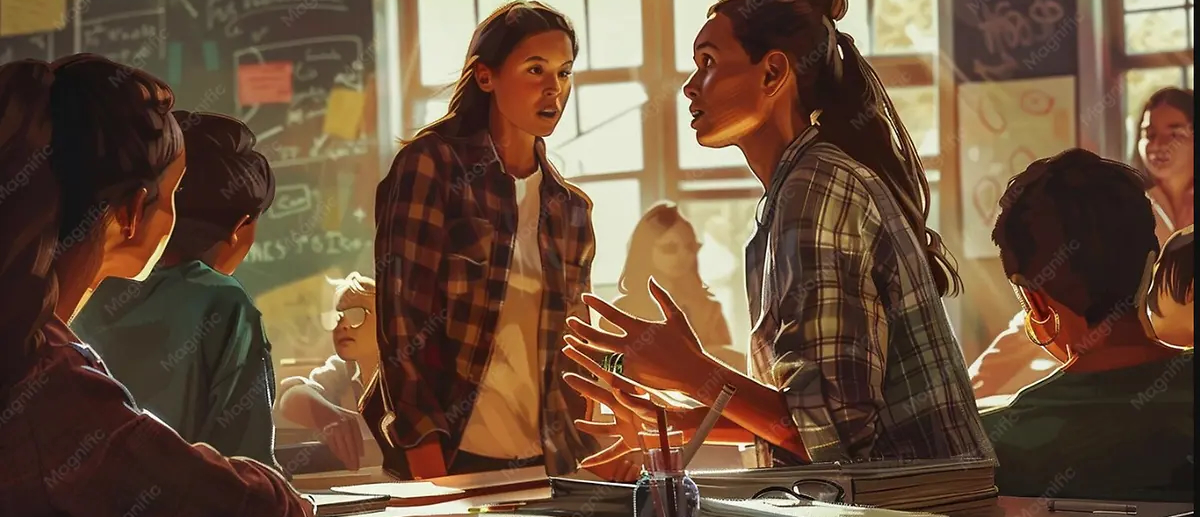
As a society, we normally encounter conflicts but have not normalized a way to navigate through them to everyone's mutual satisfaction. I created a conflict resolution model to assist my high school students with communication tools to respectfully address grievances. This article shares my thoughts about the purpose and benefits of the 9-Rs for Resolving Conflicts model. The steps outlined place responsibility for resolving disputes on the students, with the guidance of a trained mediator who facilitates them through the nine steps. The overarching goal of the 9-Rs model is to assist all students involved in achieving a fair and mutually beneficial outcome.
The Importance of Having a Nine-Step Conflict Resolution Process for Students
School staff expect conflicts to arise among students and their peers. Yet, as learning institutions, schools generally do not teach students strategies for addressing and resolving conflicts. Given the broad range of social development issues students encounter in schools, I propose broadening the scope of every school's responsibilities to include teaching students conflict resolution strategies.
Every staff member in the classroom, school cafeteria, library, playground, and school bus has had to address skirmishes between students, often with very little success. Physically separating students and allowing time to cool down is usually the end goal. Every adult in every school has had to intervene and attempt to mediate conflicts. Schools need trained mediation facilitators to teach students how to resolve conflicts safely and respectfully.
Training School Mediators
Academics are the core responsibility of every teacher, but the time devoted to resolving conflicts in their classrooms impedes their ability to proceed with instruction. Typically, when conflicts erupt, the problem is moved from the classroom to another designated area. However, moving the problem is not the same as solving it. Conflicts are among the most common challenges in every school.
During my years as a school leader, it took some time to recognize the ineffectiveness of removing students from classes or school without addressing the root causes of conflicts. No longer wanting to interrupt students' education, I discontinued the practice of suspending students and removing them from school. That decision led me to imagine an alternative and pragmatic solution.
First, I needed to contemplate how to tackle one of the most vexing and complicated challenges all schools face: "How can we support students in resolving their grievances?" To do that, I needed to view my response to conflicts through a different lens. Rather than focus attention on punitive consequences, I shifted my perspective and began to see errors in judgment or inappropriate behaviors as teachable moments. From there, what evolved was a series of humane steps designed to help students accept responsibility for the well-being of others and achieve peaceful coexistence.
Discover a modern-day Mother Goose series blending humor, poetry, and life lessons. Wait…Who Got Goosed? offers witty rhymes and engaging activities for readers of all ages, celebrating joy through relatable characters and gentle reminders about human nature.
Wait...Who Got Goosed? series
A Modern Twist on Classic Nursery Rhymes Through Humor, Heart, and Creative Storytelling
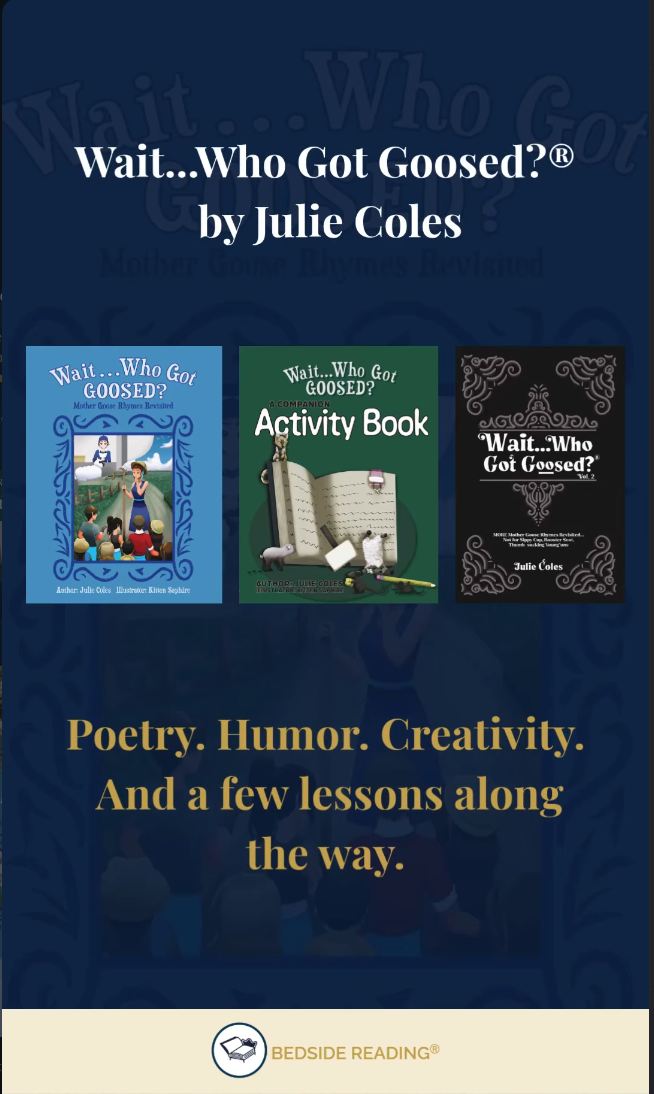
My joy of writing poetry led me to write a three-book series, Wait…Who Got Goosed? Motivated by a desire to write and publish a modern-day version of Mother Goose rhymes, I was able to continue wearing my educator’s cap and imagine other ways kids, teens, and adults could find enjoyment in reading. Recent recognition as the recipient of the Bedside Reading Author Spotlight Award and the feature of the Companion Activity Book in Vivant 2026 magazine were monumental achievements. They also affirmed my decision to pivot in a new direction and make time for other writing genres.
For many years, writing poetry was a hobby and a highly enjoyable adventure. Occasionally, I would share my poems with family and friends. It was their enthusiastic response that inspired me to share them with the public.
Welcome to the collection of Wait…Who Got Goosed?
Wait…Who Got Goosed? Mother Goose Rhymes®
Welcome to a modern-day tribute to the original Mother Goose rhymes. Wait…Who Got Goosed? is a series of humorous poetic stories. The connection between joy and gentle reminders that “to err is human” is reflected in “Little Laid Back Bo Peep,” “Tipsy Humpty Gets Dumptied,” “Miss Muffet’s Chill Time Interrupted,” and other poems. If readers experience joy from these poems, the author will have achieved what she intended.
** Wait…Who Got Goosed? Companion Activity Book® **
Activities tailored to budding young poets, math wizards, and artists make this educational activity book a delightful experience for kids. Each activity zone features engaging and fun ways for kids to use their imaginations. Kids actually become the main characters in poems, solve puzzling math problems, and showcase their artistic skills.
** Wait…Who Got Goosed? Vol. 2: Not for Sippy Cup, Booster Seat, Thumb-Sucking Young’uns **
Readers will enjoy meeting relatable characters navigating soft landings when they need grace, while others, driven by hubris, discover the consequential impact of highly questionable choices. Writing lighthearted lyrical rhymes about complex—and sometimes complicated—circumstances through humor is one of the author’s specialties.
Join Influential Women and start making an impact. Register now.