A Few Feet Away From My Mother
How the way we show up changes everything—one conversation at a time.

I get a ridiculous amount of free stuff.
Strangers have bought me ice cream, restaurants have comped my meals, and I've received unexpected upgrades without asking. Sometimes I'm just laughing with a friend when someone tells me they love my energy and that whatever I'm about to pay for is on them.
I've even managed to get out of a speeding ticket or two.
A few people have told me it's because I'm an attractive woman. That's an interesting explanation to offer someone who has also experienced being treated poorly because of how she looked.
At 18, I made a deal with God. A few things in my life weren't going the way I wanted them to, and apparently, I thought I was in a position to negotiate.
That personal promise led me to wear the hijab, a headscarf worn by many Muslim women as an expression of faith and modesty, for about two years.
During that time, I worked at a U.S. Bank branch inside a grocery store called Safeway. People would come in to do their banking while grocery shopping, and I couldn't believe how rude some of them could be before I'd even had the chance to say hello.
Once we started talking, their demeanor could change considerably. Something as simple as my sense of humor or the familiarity of my American accent seemed to catch them off guard. Before long, some of the very people who had been dismissive toward me were asking questions about my life.
Apparently, I was a little more American than they had anticipated.
I'd seen this happen before, only from a different side of the counter.
I was somewhere between 10 and 13 when I started paying attention to what happened whenever my mom needed to return something at a store. I'd usually be standing a few feet away, distracted by whatever had caught my attention, when I'd overhear the impatience in the voice of the person speaking to her. Sometimes they were just plain mean.
I'd walk over and explain what my mom was asking for. Almost immediately, their tone would soften. They became friendlier and more accommodating, and suddenly, the return wasn't such a big deal.
My mother had already told them what she wanted. I'd simply repeated it.
Eventually, she started asking me to make the returns myself.
My mom wears the hijab. She was never formally taught English and learned to communicate in it while navigating everyday life in America. Having one of her American-born daughters standing beside her seemed to make people more comfortable with her.
As much as I hated watching people treat my mom poorly, I was also a little girl who desperately wanted to fit in. Growing up as a first-generation Arab American often felt like being the "other" in a world full of "them."
I remember helping my mom study for her U.S. citizenship exam. Reading English was particularly difficult for her, so we studied aloud, repeating the questions and answers together until she remembered them.
There I was, helping my mother prepare to become an American citizen while I was still trying to figure out what it meant to be American myself.
Sometimes being different just sucked. I didn't always want to be called over to manage a conversation between two grown adults. I wanted to go back to whatever I'd been doing.
Between those shopping trips and our study sessions, I was getting an education of my own. I was learning how differently people respond to the same information depending on who delivers it and how it's communicated.
Given those experiences, my decision to study psychology probably surprises absolutely nobody who knows me. Ending up in finance might.
I've found that the two have considerably more in common than people realize. Buying a home may look like a mathematical equation on paper, but sit across from someone who's afraid of making a mistake that could affect the next 30 years of their life, and you'll quickly discover how much psychology is involved.
As a senior loan officer, I've spent more than a decade making complicated financial concepts understandable. Knowing how people process information, evaluate risk, and make decisions is every bit as important to my work as understanding the numbers themselves.
There's something particularly interesting about mathematics that I've come to appreciate outside of my career.
Take a simple equation:
5 + x = y
If x is 2, the result is 7.
If x is 10, the result is 15.
The original number hasn't changed, yet changing one variable produces an entirely different outcome.
Human behavior is far more complicated than elementary algebra, but consider what happened at those customer service counters. My mother was the same woman, making the same request to the same employee. When I entered the conversation, the outcome changed.
Years later, behind the bank counter at Safeway, I experienced how an uncomfortable interaction could become a friendly one through conversation.
Today, some of my encounters with strangers end with free ice cream or an unexpected act of generosity.
I can't account for every variable in those experiences. Appearance matters. Cultural biases exist. People carry their own histories, beliefs, and circumstances that I may know absolutely nothing about.
But I'm part of the equation, too.
When someone is being particularly difficult, I've developed a habit of asking another question before deciding what kind of person they are. Some of my favorite conversations have been with people I initially found difficult. Had I responded entirely on the basis of my first impression, I might have walked away convinced they were exactly the person I'd assumed they were.
Imagine deciding someone is unfriendly, becoming less friendly toward them yourself, and then interpreting their response as proof that you were right.
You may have helped produce the very behavior you're criticizing.
I've certainly done it. Having experienced prejudice doesn't make me immune to prejudging others.
My mother was never responsible for the disrespect she encountered. Recognizing our influence doesn't mean accepting responsibility for someone else's cruelty. There are circumstances we cannot change and people whose behavior we cannot control.
What we can examine is our own contribution.
The employees who were unkind to my mother probably don't remember either of us. To them, it was likely just another transaction. They had no idea a little girl was standing nearby, paying attention, and forming an understanding of people that would follow her into adulthood.
That's what makes influence so fascinating to me. An interaction I forget by tomorrow could become a memory someone else carries for the rest of their life.
I spent years studying psychology to better understand other people's behavior. Perhaps the most valuable thing I've learned is to pay closer attention to my own.
The next time I'm convinced someone is difficult, I have a choice. I can respond to the person I've already decided they are, or I can give myself the opportunity to discover who else they might be.
I can't guarantee a different outcome. But I can give one a chance to exist.
I was a little girl standing a few feet away from my mother when I first experienced the power of changing a variable. I didn't change the employee, the merchandise, or the store's return policy.
I changed the equation by becoming part of it.
How much of our lives do we spend waiting for the outcome to change without ever considering the variable we have the most influence over?
You are never just the observer.
You are the variable.
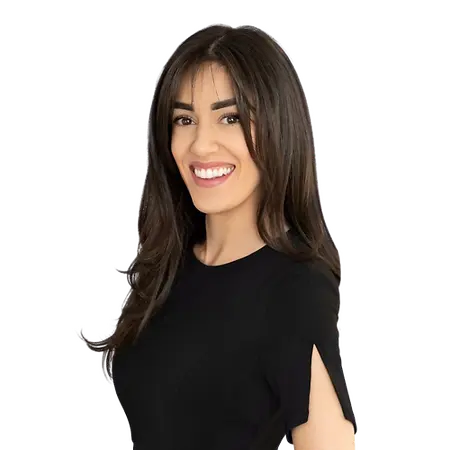
I'm a first-generation Arab American woman, a mortgage strategist, a student of human behavior, and someone who believes we have far more influence over our lives than we give ourselves credit for. I've spent over a decade in mortgage lending, but what has always fascinated me most is people. Why we make the decisions we make. What makes us trust someone. Why some people see possibilities where others see obstacles.…