How The Wellness Recovery Action Plan (WRAP) by Mary Ellen Copeland Helped Me
Finding Wellness Through WRAP: A Personal Journey of Recovery and Peer Support
I am going to submit an article to the above organization. Although I was trained in the field of instructional computing, there was also another role, mentioned on my Facebook account, that addresses my involvement as a mentor in the mental health domain.
The following article reached 30,000 subscribers worldwide.
I cannot say that I really understood how I had a major downfall, both physically and then mentally, especially when I was first diagnosed with anxiety and depression. What lay before me every day was a plethora of symptoms—feeling as if a cocoon lay over me with small holes I eventually punctured that let in tiny rays of light, e.g., hope. Every day was drudgery, and the main advice I received was to “take it one day at a time.” I wondered which would be the magic day I’d wake up and find myself whole again. So I tried to wait it out. Much later, my late sister, Marguerite Bachand, found treatment for me, and I began painting through the ups and downs of my illness with my fellow travelers. Wellness was discussed in terms of being able to resume my career. I accepted the responsibility to take on this persistent health challenge.
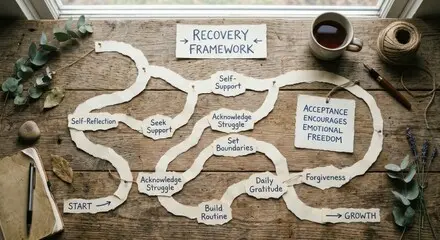
So, I continued down the road, interacting with people daily; yet, how much could I really say that I knew of what I was doing? The process was more than my intellectual means could comprehend, yet I navigated the system to find answers and solutions. So, I continually asked myself: What could I have done to make my life easier? Then, in 2009, I was given a little red book on WRAP. I looked in it and found a plan, which I began to follow. One huge suggestion—always keeping peer support at the forefront—was accessing my “wellness toolbox.” I learned, through brainstorming with others about “mindfulness,” a type of self-love that had eluded me prior to WRAP.
I particularly use it in the section titled “When Things Are Breaking Down” when I need some emotional guidance. I write down a sensation that I am feeling, such as being overwhelmed, and then jot down a sentence about how it transpires within me, such as, “It feels cold.” I follow through by asking the question, “Where do I feel it?” For me, it is in the front portion of my forehead and eyes. This process brings sensory clarification and enables me to become calmer and more focused, helping me move beyond the “just coping” phase. It is something that really works when completed with peers.
So, I conclude with this thought and answer the question of why peers are so important to one's recovery and in finding techniques such as “mindfulness.” As noted in the film A River Runs Through It: “It is just this: Each one of us, at one time or another in our lives, will look upon ourselves and ask the same question, ‘We are willing, but what, if anything, is needed to help us better our behavioral health condition?’”
It is true that sometimes we cannot help ourselves. Either we don’t know what part of ourselves to access or, more often than not, the part we want to dig into is unknown. And so, we can turn to those who sojourn on this personal journey with us, and we can come to know the answers to our questions. They will not elude us because we can still support ourselves and others and find something that resonates with us.
Although I did not always understand what was going on with my emotional states, I could always count on WRAP for guidance. I have always lived my life according to my own principles, so it became easier to mine for things to fill in WRAP. It still holds true today. My path is my own, and WRAP augments it. It truly has become a “living” document.
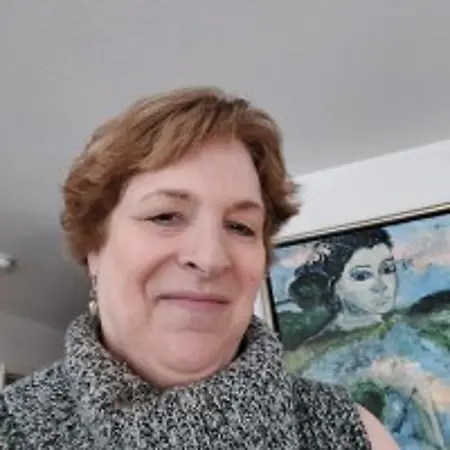
Karen Bachand has spent 6 years in the education industry, serving as an instructor in the School of Education at St. Mary's College of California where she taught teachers to integrate technology with their curriculum, and as campus coordinator of technology while also working in the Office of Affairs. She previously worked in instructional computing at Sacred Heart in San Francisco and as an instructor and trainer…