A Flawed System - The Court System is NOT Set Up to Protect our Youth with Disabilities
A grandmother's fight for justice, understanding, and systemic change after her autistic grandson was brutalized at school.

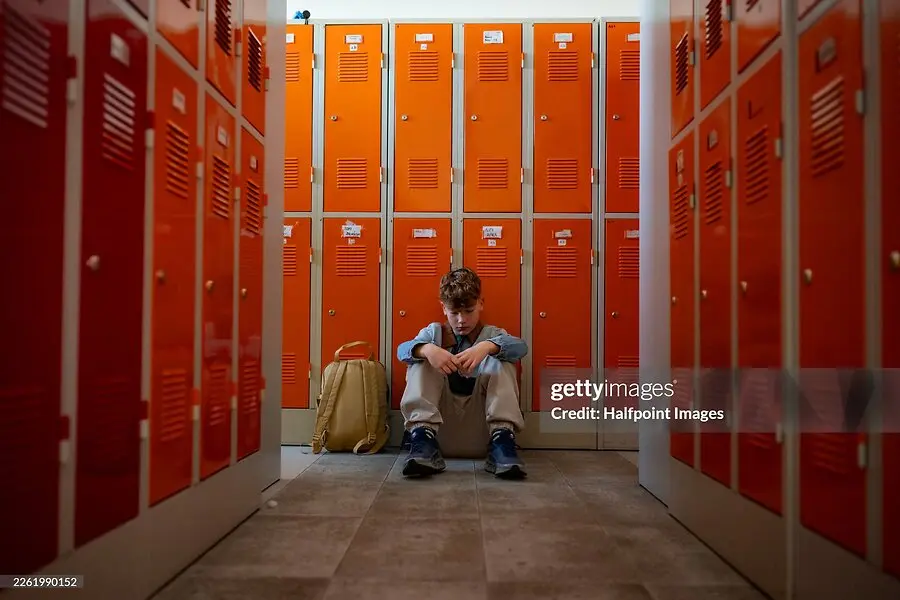
Liam's Story: A Call for Understanding, Compassion, and Change
On April 5, 2024, our grandson Liam was brutalized by a paraprofessional at his elementary school in Springfield, Massachusetts.
Liam has autism, a sensory disorder, and Complex PTSD due to trauma and abuse he experienced early in his young life. My husband and I adopted him when he was three and a half years old. This journey has been difficult at times as we have navigated many "uncharted waters." Learning about Liam's disabilities and understanding how to help him overcome his challenges came in many forms. Educating ourselves about children like Liam was vital to providing him with the care, support, and understanding he needed.
Before the attack, Liam was struggling with emotional regulation and expressing his feelings. He experienced stress-induced flashbacks connected to his past trauma, and he often could not articulate his thoughts and emotions. Because of this, there were many moments of what people referred to as "meltdowns." When Liam entered "trauma mode," he was immediately thrust into a fight-or-flight response.
Unfortunately, there were times when behavioral interventions and restraints were used as part of his support plan. To say Liam struggled profoundly would be an understatement. Many people within the school system did not understand his challenges, and some viewed him as a "troubled child," a "bully," or "violent." These misconceptions about him were deeply painful and completely misunderstood who Liam truly was.
The Reality
Liam is not mentally ill, nor is he a violent child. He is a young person who experienced significant trauma early in life and has been working to overcome those experiences. He is a child with autism who, at a young age, struggled to process everything happening inside his mind and body.
He was a child crying out for help.
His mind and body were responding to his trauma because he did not yet have the words to explain what he was feeling.
He should have been met with understanding and compassion. Instead, on the day of the incident, he was met with judgment and force.
The paraprofessional involved stepped into a situation where he was not assigned to support the classroom. Liam's 1:1 aide was present and familiar with how to support him during moments of distress.
Liam and another student had a disagreement, and he walked away crying. When Liam became upset, he often cried loudly.
His aide was attempting to give him space because she understood his needs. However, another paraprofessional intervened. According to the video footage, he approached Liam, grabbed him, brought him to the ground, and initiated a restraint that lasted far too long and resulted in injuries to Liam.
The incident was captured on video. The footage shows a lack of effective de-escalation strategies and raises serious concerns about whether the appropriate approach was used when responding to a child experiencing distress.
The fundamental principle when supporting a child in crisis is to create safety: give the child space, avoid unnecessary physical contact, use calm communication, and only use physical intervention when there is an immediate risk of harm to the child or others.
On that day, Liam was crying. He was not threatening anyone. He was not harming anyone.
There was no reason for him to be treated the way he was.
As his grandmother, I will never forget walking into that gym and seeing my grandson lying on the cold gym floor in a fetal position, rocking and sobbing. The gym was empty, with only three adults standing over him. No one was comforting him. No one was helping him.
I asked what happened, and I was met with silence.
I looked at Liam and asked, "Are you okay?"
When I rolled him over, I was horrified by what I saw.
His face was bruised and injured. His eye was swollen shut, and blood was coming from the corner of his mouth.
That image of Liam will stay with me forever.
He was shaking, mumbling, and his lip was trembling. I was devastated.
Because no one could immediately explain what had happened, I made the decision to bring him home — to a place where he felt safe and loved — so I could comfort him and encourage him to share what happened.
I had to make that decision while I was in my own state of distress, with very little information about the incident. All I knew was that I needed to get him out of that environment.
When I placed him in the shower to help comfort and calm him, I noticed additional bruising on his body. I immediately contacted the principal.
It took hours before we received answers.
I was told that the incident had been captured on video and that the footage was extremely concerning. After hearing what happened, we contacted the police and filed a report. We also brought Liam to his pediatrician for evaluation.
Two Years in Court
For the past two years, we have spent countless hours in and out of court as the paraprofessional faced charges related to the incident.
I attended every court hearing, sitting quietly as the defense presented a portrayal of our grandson that was incredibly painful to hear. They described Liam as aggressive and dangerous, focusing heavily on his past struggles rather than the circumstances surrounding that day.
They referenced previous behavioral challenges, restraints, and interventions as evidence to support their argument.
Watching Liam's struggles used against him was heartbreaking. It highlighted a painful reality about how society often misunderstands children with disabilities and trauma histories.
This experience has been eye-opening and has shown us how vulnerable children can be within systems that are supposed to protect them.
On June 16, 2026, a jury found the defendant not guilty.
For my husband and me, this was devastating. We were left with grief, confusion, and many unanswered questions.
How could a jury watch the same video we watched, hear the testimony presented, and reach a different conclusion?
We believed this was a clear case of assault and battery against a child. However, the jury ultimately accepted the defense's argument that the actions were justified as self-defense.
Liam's history and struggles became central to the discussion.
Instead of seeing a child experiencing distress, we felt the focus shifted toward judging him for the challenges he has faced.
This Is a Greater Conversation
This outcome represents a painful moment for Liam and for many other children with disabilities who struggle with communication, emotional regulation, and trauma.
We cannot build a better future by responding to children with judgment instead of compassion.
We must be extremely careful about the labels we place on children with disabilities. Labels can follow children throughout their lives, shaping how others see them and how they are treated.
What I witnessed throughout this process reinforced the need for greater understanding, education, and advocacy.
Moving Forward
There needs to be more comprehensive training in schools, law enforcement agencies, healthcare settings, and other environments that support children with disabilities.
Professionals need deeper education about:
- Autism
- Trauma responses
- Emotional regulation
- De-escalation techniques
- Mental health awareness
- How disability and trauma affect behavior
We have seen far too many cases involving children and adults with autism and trauma histories who are misunderstood and harmed because people do not understand what they are experiencing.
How does one person fight a system?
How do we change the narrative?
How do we create a safer world for children like Liam?
Parents send their children to school believing they will be safe. But for children with disabilities, that safety cannot be assumed. It must be protected through education, accountability, and compassion.
One of the most difficult parts of this experience is knowing that the individual involved may continue working with children following the outcome of this case.
That reality is frightening for our family.
As parents and caregivers, we have very little control over legal outcomes. We must now focus on healing, advocacy, and creating meaningful change.
This experience has left us with many emotions to process and personal trauma to heal from.
Liam's Law
My hope is that this becomes the beginning of something bigger.
I believe it is time to create Liam's Law.
This law would focus on increasing accountability and requiring more comprehensive training for school personnel who work with children with disabilities.
Training should include:
- A deeper understanding of autism
- Trauma-informed care
- Recognizing dysregulation
- Effective de-escalation strategies
- Mental health awareness
- Understanding the reasons behind behaviors rather than simply reacting to them
There is so much work to be done.
I cannot leave this moment at "not guilty."
Because yesterday, nobody truly won.
This is not the end.
It is the beginning of something new.
A movement toward understanding.
A movement toward compassion.
A movement to ensure that children like Liam are seen, heard, and protected.
Please share this article with others. It is important that people understand what is happening in our communities and how we support children with disabilities.
Education and awareness are where change begins.
Lisa Zarcone
Please visit: www.lisazarcone.net