A Good Book On the Menu
Cultivating a Literacy Legacy: How Families Plant the Seeds of Lifelong Learning
The rains came down, and the floods came up, closing schools for two days right into the Thanksgiving break.
Typically, I would have welcomed the unexpected time off. This time, however, I actually wanted to share a few more literacy ideas with my scholars before the break. As I prayed for their safety and well-being, and for the families affected by the inclement weather, I found myself hoping that somewhere among the Thanksgiving preparations, family gatherings, and holiday festivities, a good book would find its way onto the menu.
November, after all, is not only a month for Thanksgiving. It is also National Family Literacy Month.
In 1994, the National Center for Families Learning (NCFL) worked with Congress to establish November 1 as National Family Literacy Day. The observance subsequently expanded into a month-long celebration recognizing the importance of literacy, family engagement, and intergenerational learning.
As a proud member of the International Literacy Association, I was recently intrigued and motivated by presentations from three brilliant and influential women in their own right: Dr. Patricia A. Edwards, Dr. Catherine Compton-Lilly, and Dr. Guofang Li.
Their presentations, collectively titled Beyond Parent Involvement: Families as Partners in Literacy Learning, came at a particularly meaningful time in my professional and academic journey.
As I continue navigating my doctoral studies, I remain deeply committed to making a positive, sustainable difference in the lives of the hardworking scholars and families I have served and hope to continue serving in Trinidad and Tobago, the wider Caribbean region, and the United States.
Their presentations reminded me that families are not simply spectators in the educational process. They bring histories, experiences, cultural knowledge, aspirations, and resources that deserve recognition and respect.
And perhaps, as educators, we should spend less time asking whether families are involved and more time examining how we invite them to become genuine partners in literacy learning.
As I listened to the rain and sipped my cocoa tea, my thoughts wandered across the years.
I thought about the hundreds of scholars and families I have encountered throughout my educational journey. I remembered the success stories, the remarkable transformations, and, yes, those who made less-than-successful choices despite the opportunities and encouragement they received.
I thought about gifted scholars and their families, as well as those navigating difficult circumstances while making extraordinary academic gains.
I reflected on the innovative approaches I have developed, borrowed, adapted, and sometimes reinvented in my ongoing efforts to help scholars not merely learn to read but also develop a genuine appreciation for reading.
And I smiled at one of my longstanding philosophies:
Whoever you choose to call God must surely love reading!
After all, there is the Bible, the Qur'an, the Torah, and countless other spiritual and religious texts through which generations have sought wisdom, guidance, understanding, and a deeper connection with the divine.
Surely, there is something magnificent about the written word!
But as I reflected on my own love of reading, I realized that my literacy journey did not begin in a classroom.
It began with my family.
My mother walked us to the library every Tuesday and Thursday for years, reinforcing, through her actions as much as her words, the importance of reading.
Then there was Uncle Julien.
Oh, Uncle Julien!
He gave me crates of books that opened doors to worlds far beyond my immediate surroundings. There were Enid Blyton's Famous Five adventures, the unforgettable Mr. Meddle, and the infamous five-volume collection of Uncle Arthur's Bedtime Stories.
And who could forget those volumes of Encyclopedia Britannica that, for years, we believed our carefully saved pennies had purchased?
Those books were more than gifts.
They were investments.
Investments in curiosity, imagination, vocabulary, knowledge, and possibilities that neither my mother nor Uncle Julien could have fully anticipated at the time.
They were planting seeds.
And decades later, those seeds continue to bear fruit.
Perhaps that is what makes family literacy so powerful. Its influence is not always immediately visible, and its impact cannot always be measured by a reading assessment or captured in a school report.
Sometimes, it emerges years later in a teacher who refuses to give up on a struggling reader, a scholar who discovers the courage to express an unpopular opinion, or an adult who returns to formal education because the desire to learn never disappeared.
Family literacy is not simply about helping children complete their reading assignments.
It is about creating environments where learning is valued, curiosity is encouraged, and the written and spoken word become instruments of empowerment.
It is about recognizing that literacy is not confined to a classroom, a curriculum, or a standardized assessment.
And it is about understanding that families, regardless of their circumstances, have something meaningful to contribute to the learning process.
This Thanksgiving, I am especially grateful for the opportunity to serve as an educator.
From Love to Read and Planting Seeds of Love to the many other literacy initiatives and experiences that have shaped my journey, I remain indebted to the scholars and families who embraced the vision, trusted the process, and allowed me to become part of their educational stories.
You remain among my greatest blessings.
To the professors who taught me how to teach reading to learners with diverse abilities, needs, and experiences, thank you.
To my mother, who understood that those Tuesday and Thursday walks to the library were about much more than borrowing books, thank you.
To Uncle Julien, whose crates of books helped cultivate a lifelong curiosity about the world, thank you.
And to the countless families, colleagues, mentors, and scholars who continue to remind me why literacy matters, I owe a tremendous debt of gratitude.
Most importantly, God, thank You for the opportunity to serve.
Thank You for allowing me to help scholars recognize that being Magnificent is more than an encouraging word or an attractive slogan. It requires hard work, courage, resilience, discipline, perseverance, and, yes, a healthy appreciation for a good book.
As we celebrate Thanksgiving and National Family Literacy Month, let us also remember that the privilege of reading has not always been equally accessible.
Throughout history, people have been denied opportunities to learn, forbidden from accessing education, and subjected to persecution for pursuing knowledge. Others struggled, sacrificed, and fought to expand the right to literacy for generations they would never meet.
Their sacrifices remind us that literacy is not merely an academic skill.
It is a pathway to knowledge, dignity, opportunity, independence, and freedom.
So, this Thanksgiving, alongside the turkey, the stuffing, the sweet potatoes, and whatever else makes its way onto your family's table, I hope you will make room for a good book.
Read with a child. Share a story. Revisit a favorite childhood book. Talk about something you've learned. Or remind a young person that the ability to read is a gift worth developing.
Because somewhere, a child may be waiting for their own Uncle Julien, their own Tuesday afternoon library walk, or that one experience that transforms reading from an obligation into a lifelong passion.
And perhaps, without even realizing it, you may be the person planting the seeds of a magnificent literacy legacy.
Remember:
You may not like to read. You may not want to read. But because we all want to succeed, we must all read!
Sail On. Soar Above. Be Magnificent.
© Michelle K. Agard | The Magnificence Framework™
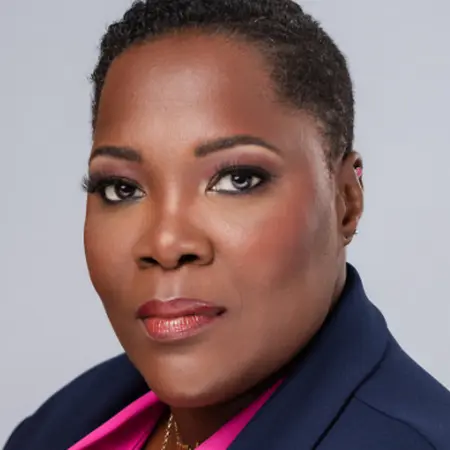
Michelle K. Agard, M.A. Ed, is an educational leader, consultant, and entrepreneur with more than 36 years of experience spanning teaching, educational leadership, curriculum development, educational policy, and strategic planning across the United States and the Caribbean. She is the CEO & Educational Consultant for Brevard Academic Consulting Group and Founder & CEO of KB BEST Educational Services, the foundation…