A Third Language
How a mother and son learned to bridge the gap between what was meant and what was heard.

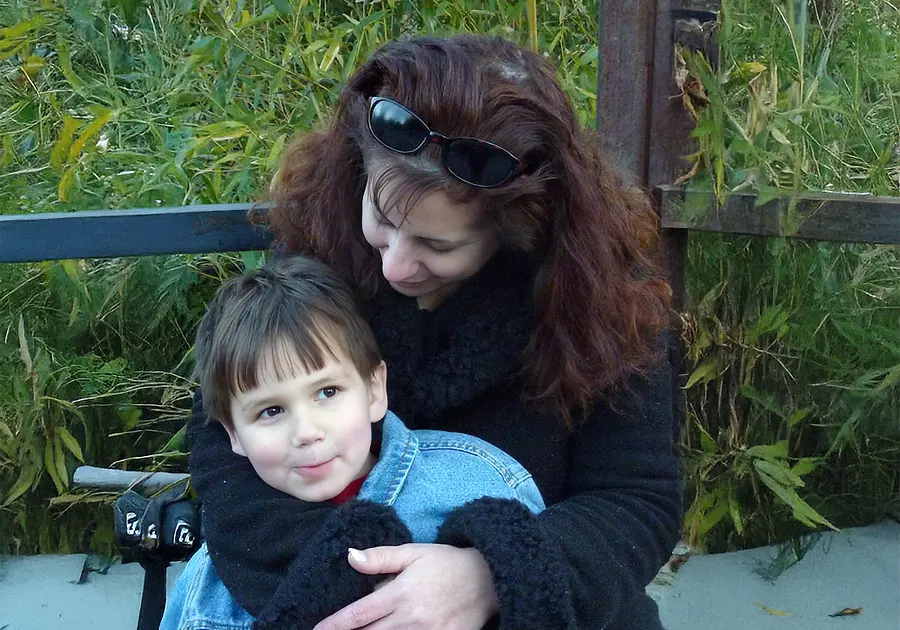
The Third Language
Before my son, Seth, was able to speak in a way other people understood, he would often carry on long, animated conversations filled with sounds and words that made perfect sense to him but were largely unintelligible to everyone else. His expression, cadence, and gestures made it clear he was communicating something important. I just couldn't figure out what it was.
I wanted him to know I was listening, so I nodded, reacted to his tone, and responded as though I understood the substance of what he was saying-even though I didn't. At the time, I thought I was encouraging him. I believed I was showing him that his voice mattered, that I was interested, and that I would stay with him even when I couldn't follow his words.
More than fifteen years later, Seth told me he had found those conversations condescending.
From his perspective, I was humoring him. I was responding to a version of the conversation that existed only in my own mind. He knew I didn't understand him and remembered feeling annoyed when I acted as though I did.
This revelation surprised me.
Not because I didn't believe him, but because I had attached such a different meaning to those moments. I remembered myself as a patient mother trying to reach her child across a communication barrier. Seth remembered being a child who could tell the adult listening to him wasn't being entirely honest.
Both experiences are true and valid.
I was sincerely trying to understand him.
He sincerely felt patronized.
If I could return to that time now, I might say something like, "I know what you're saying is important, but I can't understand all the words yet. I want to." That would have acknowledged both his effort and my uncertainty without pretending the gap didn't exist.
The point is that, for many years, we carried two different versions of the same interaction.
Then we talked about it.
In that conversation, neither of us had to surrender our version of events. I didn't insist that my good intentions should erase Seth's irritation. Seth didn't conclude that because he felt condescended to, I must have intended to patronize him.
Instead, we created something new from both perspectives.
A Third Space
Over the past few years, Seth has become deeply interested in the idea of a third space-a place where two perspectives can meet without either one being erased.
My conversation with Seth created that kind of space. I brought my intention. Seth brought his experience. Neither canceled the other. Together, they created a fuller picture than either of us had carried alone.
A third language, then, is the shared meaning we begin to create when we bridge the gap between what one person intends and what another perceives. It begins when two people stop arguing about what was said and become curious about what was meant, what was heard, and what each person experienced internally.
It sounds like this:
"This is what I intended."
"That is what I heard."
"This is what your words felt like to me."
"That is not what I thought I was communicating."
"I remember it differently."
A third language is not a perfect translation. It doesn't eliminate disagreement or guarantee that no one will ever be hurt. It isn't a collection of magic phrases that makes every difficult conversation easy.
It is a willingness to recognize that meaning does not travel directly from one mind to another.
Words pass through memory, expectation, emotion, trauma, sensory experience, culture, and the private definitions each of us has developed over a lifetime. Two people can hear the same sentence and receive entirely different messages. One person may believe they are helping while the other feels controlled. One may believe they are explaining while the other hears an excuse. One may believe they are truly listening while the other feels profoundly unheard.
Love does not prevent these mistranslations.
Sometimes it makes them more painful.
Seth and I
Seth and I are very close. We are also both neurodivergent, although our brains do not work in identical ways. We share many traits: curiosity, sensitivity, stubbornness, strong opinions, and a tendency to analyze an idea long after most people would have changed the subject.
Those similarities have helped us connect. They have also led us to assume we were on the same page when we really weren't.
In our memoir, Mending Together, Building Together, I wrote about my childhood trauma, Seth's unrecognized autism, and the ways we gradually learned to communicate. Seth contributed his perspective, but the story was primarily told through my memories and voice.
Bridging the Gap
The book Seth and I are developing now is different.
In Bridging the Gap: How a Mother and Son Learned Each Other's Language (our working title), neither of us will tell the other person's story for them.
We will choose topics that have shaped our relationship and write about them separately. Some will come from events described in the memoir. Others will come from conversations we've had since then, including moments we thought we understood well-until one of us revealed an entirely different interpretation.
After writing our individual essays, we will read each other's work and talk about it. We will compare memories, question assumptions, clarify meanings, and acknowledge the places where our perspectives continue to diverge. We may discover that one of us misunderstood what happened. We may learn that both of us did. We may change our minds. We may not.
The goal is not agreement.
Agreement is sometimes possible, but it is not the price of truly hearing one another. Two people can fully understand each other's position and still disagree. They can recognize a loving intention and still be hurt by its impact. They can remember the same event differently without deciding that one person must be lying. They can accept responsibility without accepting a distorted version of themselves.
The goal is to make enough room for both people to remain fully human.
Although Bridging the Gap is about a mother and her adult son, the misunderstandings we explore are not unique to parents and children. They exist between partners, friends, siblings, teachers and students; between neurodivergent and neurotypical people; and across differences in race, ethnicity, culture, gender identity, and sexual orientation. They exist anywhere one person has ever said to another:
"That is not what I meant."
Intention alone is not enough.
What we mean matters, but what the other person experiences matters, too.
A third language is what we create when we are willing to hold both.
Seth and I have been learning each other's language for more than two decades. We are still learning, and we expect to continue for the rest of our lives.
Bridging the Gap will explore what happens when we meet in the space between our meanings and try to build something there together.


