
Accountability Is Not Punishment
How Personal Accountability Transforms Leadership and Organizational Success


During a Lone Star Governance training facilitated by the Texas Education Agency, I encountered an idea that fundamentally changed how I think about accountability.
The training was taking place against the backdrop of state intervention in my local school district, where persistent challenges in student outcomes had prompted a renewed focus on governance. Throughout the sessions, we were asked to reflect on personal accountability before considering what accountability meant for the community we serve.
While working through an assignment with a fellow participant, he made a simple observation: "Accountability is not punishment."
What followed was a 20-minute conversation that has stayed with me.
We talked about how uncomfortable it can be to look honestly at ourselves. Acknowledging mistakes, recognizing where we've fallen short, and taking responsibility for our choices can feel threatening to our sense of self. It's often easier to focus on circumstances beyond our control than to examine the role we've played in our own outcomes.
But we also talked about what happens when we move past that discomfort. Taking accountability means recognizing that we have the ability to influence what happens next. We may not control every circumstance, but we can take responsibility for our decisions, change our behavior, and make different choices.
In that sense, accountability isn't something imposed on us. It's something we can choose to practice—and that choice can be profoundly empowering.
From Personal Accountability to Leadership
That conversation first changed how I approached accountability in my own life. It encouraged me to examine my choices more honestly, acknowledge where I had fallen short, and focus on what I could do differently rather than dwelling on what hadn't gone as planned.
Over time, that shift began to influence my professional life as well.
As a program leader, I work with organizations and individuals who share ambitious goals but operate within different institutional structures, priorities, and constraints. Even when everyone is committed to the same outcome, progress rarely follows a straight line. Plans change, responsibilities become unclear, and well-intentioned efforts don't always produce the results we anticipated.
In those moments, accountability can easily become a conversation about what went wrong, who didn't follow through, or why circumstances prevented progress. Those questions sometimes need to be answered, but they shouldn't be where the conversation ends.
I've found it more productive to ask: What are we trying to achieve? Where are we now? What's preventing us from getting there? And what can we do differently?
These questions don't lower expectations or excuse missed commitments. They create space for honest reflection while keeping the conversation focused on decisions and actions that can improve results.
Creating a Culture of Organizational Accountability
The same principle applies at an organizational level. Accountability is most useful when it is built into how people work together, rather than introduced only when something goes wrong.
In my work coordinating a multi-state collaboration of food banks, we set out to identify opportunities to reduce transportation costs by examining large-scale transportation routes. After three separate exercises, we still hadn't identified a workable solution.
There were plenty of explanations. Our data sets were limited, participating organizations tracked transportation differently, fuel prices were rising, and new requirements for commercial drivers were contributing to labor shortages. These were legitimate challenges, and understanding them was important. But none of those explanations was helping us achieve our goal of reducing transportation costs.
Eventually, we had to acknowledge that our approach wasn't working. Rather than continuing to pursue the same analysis, we shifted our attention to smaller, more localized opportunities. We began exploring how food banks could use their existing fleets for specific routes, provide cold storage instead of requiring immediate transfers, and partner with smaller transportation companies operating within local markets.
The goal hadn't changed, but our strategy had. By acknowledging what wasn't working, we created room to consider alternatives that were better suited to the circumstances.
Organizational accountability isn't simply about explaining results or identifying who is responsible. It's about using what we learn to make better decisions.
Clear goals, defined responsibilities, meaningful performance measures, and regular opportunities for reflection help organizations recognize when a strategy needs to change. Accountability doesn't mean rigidly holding people to a plan that no longer makes sense. It means being honest about where we stand and deliberate about what happens next.
Accountability as a Practice of Empowerment
Accountability requires courage. Looking honestly at ourselves, our teams, and our organizations can be uncomfortable. It means acknowledging mistakes, confronting difficult information, and sometimes accepting that our best efforts weren't enough.
Accountability gives us the opportunity to learn from what has happened without allowing it to define what happens next. It reminds us that while we cannot control every circumstance, we can take responsibility for the choices within our reach.
For leaders, that means creating environments where people can examine results honestly, take ownership of their commitments, and participate in finding better ways forward.
Accountability is not punishment. At its best, it is a practice of clarity, responsibility, and empowerment—and an essential part of making meaningful progress.
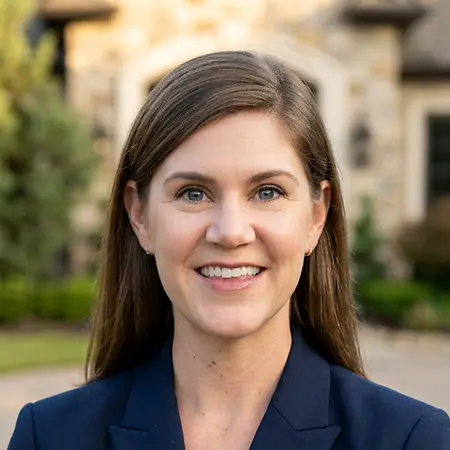
Catherine Gibson is a strategic partnerships and organizational effectiveness leader with 14 years of professional experience helping mission-driven organizations turn ambitious goals into measurable results. Her career spans international development, democratic governance, and food systems, where she has led complex initiatives, managed multimillion-dollar portfolios, and built partnerships across organizations…





