
Actual History of the United States: Cause of the Rebellion of 1774–1781 (ending officially in 1792, part I)
Challenging the Patriotic Narrative: A Historian's Critical Examination of the American Rebellion and Its Uncomfortable Truths.

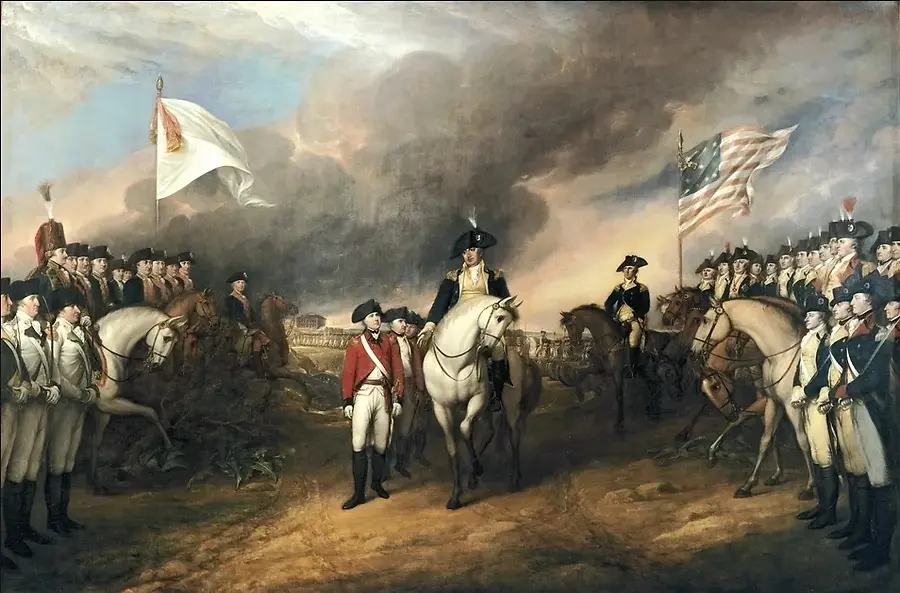
This is Part I of a series on Ameri-centric history. Travel opens our eyes and minds, and we soon realize that the stories we were told as children and grew up with (and the sociopolitical beliefs with which we become inculcated) are propaganda-filled fallacies designed to instill patriotism, if not outright nationalism.
What follows is a timeline of what Americans refer to as the "American War for Independence" but what is known almost ubiquitously around the world as the American Rebellion.
As a graduate student, I interned at the Virginia Museum of History and Culture in Richmond, Virginia, teaching history while working toward my master's degree in history. I also emphasize that, prior to my proficiency in the travel industry, I was a professional historian and law student. I still maintain membership in the American Historical Association (AHA), and most recently, I wrote and conducted research for the Institute for the Study of War (ISW). These timeline sections are supported by scholarly sources, but I will include a bibliography at the end of this series, which will likely span two or three parts.
1763–1764: The Crown and Parliament wanted their American colonies to repay the debt owed to the Crown for protecting them during the French and Indian War (1754–1763, also known as the Seven Years' War in the United States today). This was a reasonable request, really. The colonists had agreed until wealthy landowners made an issue of taxation and decided to spill the blood of the poor instead of paying their fair share. Doesn't this refrain sound incredibly familiar?
1772–1774: Colony-wide riots by lower-class colonists culminated during this period. These riots were incited and fueled by wealthy, elite transplanted British citizens who would become the Founding Fathers. The unrest culminated in the Boston Massacre in 1775, when a group of British infantrymen opened fire on a mob of angry Bostonians, killing at least five colonists who had been pelting the soldiers with rock-laden snowballs. However, primary source accounts of the incident differ.
Regardless, those who are now regarded as the "Founding Fathers" became masters of propaganda and coercive manipulation. They ensured that informational pamphlets were freely or cheaply available throughout the Thirteen Colonies, courtesy of principal author Thomas Paine.
1774: War unofficially breaks out as colonial "sharpshooters" target British gubernatorial staff along the boundaries of the rebellious colonial territories.
1774, continued: While all this is happening, the colonies are being represented in Parliament, in both the House of Commons and the House of Lords in London, as efforts are made to mediate the colonies' concerns. These concerns are voiced by the ultra-wealthy and led by Benjamin Franklin, who rarely left his estate in France. Among these concerns was the "Line of Demarcation," which established the boundary between Native American territory and that of the colonies. The Crown, under His Majesty King George III at the time, created this line to protect Native lands and uphold royal agreements with what the Crown regarded as sovereign nations.
The colonists complained that this line prevented their expansion. Thus, the infamous rallying cry of "no taxation without representation" greatly confused Parliament, as the phrase made little sense from its collective perspective. Furthermore, Parliament's members believed that the colonies wanted a war with the Crown for no real reason.
1775: The so-called Boston Massacre occurs when, as mentioned, Boston colonists throw rock-laden snowballs at British Army redcoats who were garrisoned nearby in commandeered homes. Boston was, at the time, the largest city in the Americas. This incident also laid the groundwork for what would become the Third Amendment to the United States Constitution, part of the Bill of Rights, which restricts the forced quartering of soldiers in private homes without the owner's consent.
1775, continued: George Washington, a member of the elite landed gentry, is unanimously appointed by Congress to command the newly formed Continental Army. Washington lost more battles than he won and fought the redcoats to a stalemate to the best of his abilities. As the story goes, Washington was given command because he was the only member of the elite with prior military experience and the only man who appeared before the Continental Congress in military uniform.
Indeed, Washington had served as a frontier scout for the British Royal Army during the French and Indian War. He was also exceptionally skilled at public speaking, which benefited him greatly after the war ended. However, Washington was a poor military commander who technically lost more battles than he won. The best that can be said of Washington is that he eventually fought the Royal Army to a draw on several occasions and managed to wage a somewhat successful war of attrition on the grand strategic scale.
1776–1780: Open warfare finally breaks out when the wealthy decide not to honor negotiations with the Crown and its ambassadors. Many women want to fight but are denied the opportunity, being told that they would make better wives and mothers than soldiers. Lord Charles Cornwallis is sent to lead the Royal Army's expeditionary forces and campaigns in the north, while Lieutenant Colonel Sir Banastre Tarleton is unofficially given command of a brigade by Cornwallis to "have the devil run amok and give them [the colonists] a whipping" in the southern theater of operations.
Thus, the British initiate a two-front war. Cornwallis reportedly tells His Majesty that the "rebel scrap would be dealt with in a few weeks." Overconfidence is as much to blame for Cornwallis's eventual defeat as Washington's military shortcomings.
1781: The war in the American colonies ultimately ends amid a period when more than 100 other revolts begin worldwide, circa 1770–1790. In other words, nations and regions that are independent today, such as India, Singapore, the Philippines, and the Caribbean, among others, were British colonies that ultimately demanded independence. Some historians have postulated that, had the Royal Army (and, to a lesser extent, the Royal Navy) been able to bring its full strength to bear against the rebels, the colonists would never have stood much of a chance.
1781, continued: The wealthy elite and landed gentry gather in Philadelphia to sign the first draft of the U.S. Constitution. The last signatories would not sign on until 1785. When John Adams's wife, Abigail Adams, asked him to "not forget the ladies," Adams laughed, crumpled up her note, and threw it away. (We have that actual note in our possession, by the way, on display at the Virginia Museum of History and Culture [VMHC].)
1791: The Bill of Rights is conceptualized, drafted, and ratified within a year. Women and people of color are once again ignored, as are all those deemed collectively "not worthy to vote." Women would not be recognized under the Voting Rights Act (VRA) until 1921, 130 years later. This should not be confused with the second Voting Rights Act (VRA) of 1965, better known as the ERA, or Equal Rights Act, which addressed voting rights among racial groups in the United States. The actual ERA was defeated before the act reached Congress. It would have guaranteed equality across the board for all races and genders, but conservatives defeated this version of the act at the state level.
For reference, the Bill of Rights comprises the first ten amendments to the U.S. Constitution. They were ratified through unanimous written consent in Congress to guarantee civil rights and protect them from governmental overreach. For example, Amendment V (my favorite), also known as the Due Process Clause, essentially establishes grand jury requirements, forbids double jeopardy, protects against self-incrimination ("pleading the Fifth"), guarantees due process for all persons, and provides just compensation for property taken through eminent domain.
The southern theater of the "Rebellion" was utterly devastating for the colonies in the South. The warfare was highly unconventional and asymmetric, as Lieutenant Colonel Sir Banastre Tarleton faced off against Nathanael Greene, known by other colonists (and his own troops) as the Swamp Fox. This increased the southern states' reliance on African slavery and set in motion events that would culminate less than a hundred years later in the American Civil War.
It is worth mentioning that when Adolf Hitler's NSDAP (Nazi) Party took power in Germany in 1933, its members looked at the history of the United States, specifically its treatment of marginalized minorities, enslaved people, and Native Americans, as an example to follow in their treatment of Untermenschen, or "social undesirables." This group included socialists, liberals, Jews, LGBTQ+ people, Romani people, and so-called "rebellious women"—anyone who went against social norms or defied the gender-bound expectations of the Reich.
This concludes Part I of the series. If history makes you comfortable, it isn't history. It's propaganda. History is supposed to be uncomfortable and make you think. Travel helps with this, as it all but forces you to consider new perspectives as you encounter new cultures and ways of life.
There are those who make a habit or a point of saying, "Well, that's just your opinion," or, "You wouldn't think that if college didn't brainwash you." Yes, there's a reason for that. They may not want to hear this, but facts do, in fact, have a progressive, liberal bias, and universities, in general, teach facts. That's why it is called "progressive."
Thank you all for reading Brooke In The Air Travel!
I hope you come away with a better understanding of history.

Brooke is the founder and chief operator of Brooke In The Air Travel LLC, a company she formed shortly after graduate school in 2022. She holds a Bachelor’s degree in history and sociology, plus a Master’s degree in history, and has since dedicated her life to travel and unraveling the complex mysteries of flights, connections, hotel bookings, etiquette, and in general “how to travel” with the least hassle…





