AI Is My Pre-Decision Audit, Not My Decision-Maker
How AI became my thinking partner, not my decision-maker.

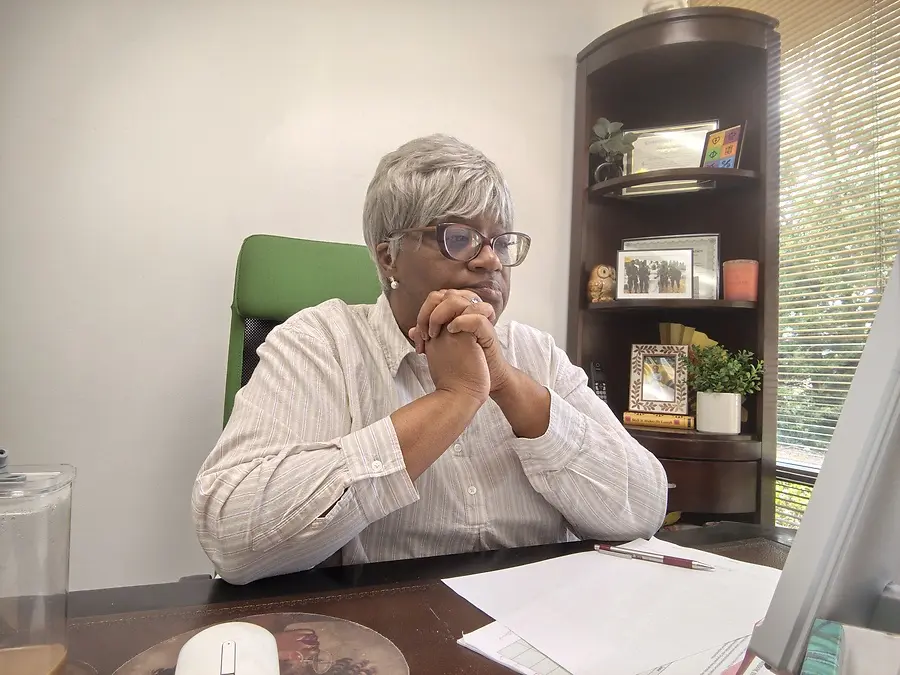
I Don’t Use AI to Make My Decisions. I Use It to Challenge Them.
Most conversations about artificial intelligence eventually come back to speed.
How much time can it save? How much work can it automate? How much more can one person accomplish?
Those benefits are real, but they are not the part of AI that interests me most.
As the Founder and CEO of Wisteria Wisdom, Inc., I have found AI most useful in the space between receiving information and making a decision.
I think of it as a pre-decision audit.
I do not ask AI to make important decisions for me.
I use it to help me determine whether I have asked enough questions before I make a decision.
I Use AI to Argue With Me
Entrepreneurs can become attached to an opportunity very quickly.
We see the possibilities, imagine what success could look like, and sometimes begin moving before we have challenged our own assumptions.
That is when I want resistance.
Instead of asking only why an idea might work, I also ask:
- What am I assuming?
- What has actually been verified?
- What am I missing?
- What could make this more expensive, complicated, or risky than it initially appears?
- What information should cause me to reconsider the decision?
I am not looking for AI to agree with me.
If I can build a strong case for moving forward, I also want to see the strongest case for slowing down.
Sometimes that confirms my thinking.
Sometimes it sends me back to the drawing board.
Both outcomes are useful.
I would rather discover a weakness while I still have the freedom to change course than after I have signed an agreement, spent the money, or committed the company.
Separating Facts From Assumptions
This process has become especially useful as I develop Wisteria Wisdom's planned expansion into Ghana and the proposed Akwaaba Blue cold-chain and sustainable infrastructure initiative.
Developing a business internationally raises questions about legal structure, logistics, financing, regulations, partnerships, operating costs, market conditions, and local relationships.
At an early stage, some information is confirmed, some is planned, and some is still an assumption that needs to be tested.
Those distinctions matter.
AI helps me organize information, compare alternatives, flag possible inconsistencies, prepare questions for meetings, and recognize when an idea may be getting ahead of the available evidence.
But I do not treat an AI response as validation simply because it supports what I already believe.
Enthusiasm is not the same thing as evidence.
“Not Yet” Is Also a Decision
Business culture often celebrates quick action.
Move fast.
Take the opportunity.
Say yes.
Sometimes that is exactly what leadership requires.
Other times, the better answer is:
“Not yet.”
Or:
“Not this way.”
Or simply:
“I need more information.”
I have used AI while evaluating prospective partnerships, sponsorship opportunities, business ideas, operating decisions, and different approaches to problems.
Sometimes that process supports moving forward.
Other times, it reveals a question that needs to be answered first.
I consider both outcomes progress.
Avoiding a poorly structured agreement, unnecessary expense, or premature commitment can be just as valuable as identifying an opportunity worth pursuing.
Not making the wrong decision is still a business result.
Judgment Still Belongs to Me
AI can challenge my thinking, but it cannot accept responsibility for what happens after I act.
If I sign an agreement, authorize an expense, or move a project forward, that decision belongs to me.
The same applies when specialized expertise is required.
I still verify important information and rely on appropriate legal, accounting, financial, technical, or other professional guidance when necessary.
AI may help me arrive at a better question for the professional.
It does not replace the professional.
For me, that is the proper division of labor.
AI can help me test an assumption.
It can help me compare alternatives.
It can help me identify gaps.
It can help me get to a better question faster.
But I still have to decide what to do with the answer.
And more importantly, I still have to own the consequences.
That is the part of the AI conversation I think we sometimes overlook.
The greatest value of AI may not always be helping us make decisions faster.
Sometimes its greatest value is helping us slow down intelligently before we make them.
AI can expand my capacity.
It can challenge my assumptions.
It can broaden the questions I ask.
But judgment and responsibility remain mine.


