Air Flow is the key
The Critical Role of Ductwork in HVAC System Performance and Efficiency

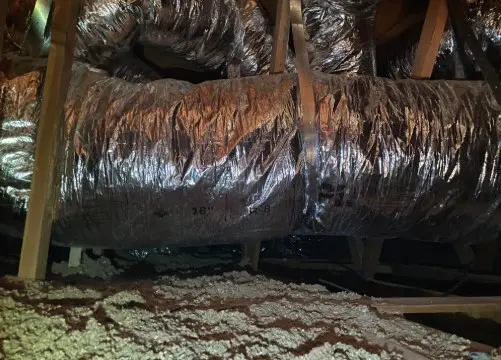
Understanding HVAC Airflow: Why Proper Duct Design Matters
Understanding the dynamics of airflow within HVAC systems is essential for professionals in the industrial and construction industries. Proper airflow plays a pivotal role in ensuring compliance with safety standards, extending equipment longevity, and maximizing the return on investment. Ductwork and airflow should be given careful consideration with every installation, as they are integral to a system's ability to operate efficiently and effectively.
HVAC Airflow Fundamentals
A foundational understanding of HVAC airflow dynamics is essential for professionals in the industrial and construction sectors. The study of HVAC airflow begins with several key concepts.
Cubic Feet per Minute (CFM) is the primary measurement used for system design and performance analysis. Static pressure, which represents the resistance to airflow within the system, is equally important.
When air encounters resistance from ductwork, filters, or abrupt transitions, static pressure increases, forcing the system to work harder. As static pressure rises, the system's overall airflow (CFM) decreases proportionally.
Undersized ductwork often results in uneven airflow distribution, increased noise levels, and a shortened system lifespan. As a result, the HVAC system cannot operate at peak efficiency, leading to higher energy consumption and increased operating costs.
High Static Pressure
High static pressure significantly compromises system performance and places excessive strain on critical components.
During heating operation, restricted airflow reduces the volume of air (CFM) passing across the heat exchanger, which can lead to overheating. In addition, the increased workload placed on the blower motor may result in premature mechanical failure.
During cooling operation, restricted airflow places unnecessary strain on the compressor, one of the most expensive components to repair or replace. Proper airflow management is therefore essential to maximizing system performance and longevity.
How Do Technicians Verify Proper Airflow?
To ensure ductwork delivers the required airflow at the system's design CFM, technicians must perform accurate measurements using calibrated instruments or compare the duct design with accepted duct sizing standards. These calculations help verify that the installation meets the manufacturer's design specifications.
The following steps can help determine whether the ductwork has been designed correctly:
- Using the system model number, locate the airflow table in the installation manual and identify the required CFM for the system.
- Compare the required airflow with a standard duct sizing chart to verify that the return duct is properly sized.
- Count all of the supply registers in the home and note the size of each supply duct.
- Add the CFM capacity of each supply duct to determine whether it matches the airflow being delivered through the return duct.
Example: Duct sizing chart from HVACDirect.com
Calculating Total Static Pressure
The next step is calculating total static pressure, which requires the use of a calibrated manometer to obtain accurate readings.
Every HVAC system includes a data plate that specifies the maximum allowable static pressure. Compare the measured total static pressure with the manufacturer's maximum rating to determine whether the system is operating within its designed limits.
It is equally important to understand how static pressure affects airflow volume. By consulting the manufacturer's airflow table, technicians can determine how changes in static pressure influence CFM. This information allows them to verify whether the system is operating within the manufacturer's specifications.
As discussed earlier, operating outside these parameters not only reduces system performance but also increases operating costs and accelerates equipment wear.
Example: Airflow chart from a forced-air unit (FAU) installation manual
The Importance of Proper Airflow Design
Today's HVAC industry offers a wide range of equipment options, from standard-efficiency units to premium high-efficiency and ultra-quiet systems. In addition, indoor air quality solutions, such as high-performance filtration systems, can be incorporated to improve the quality of the air throughout the home.
However, if ductwork is not treated as a priority during system design and installation, one of the most critical components of the HVAC system is overlooked.
Because an HVAC system represents a significant investment for homeowners, it should be installed in a manner that allows it to perform as designed. When contractors include airflow analysis as part of the installation process, customers receive the full benefits of improved efficiency, greater comfort, reduced operating costs, and longer equipment life.
Sharon Stewart


