America’s Enigma of the Air: AvHistory #27
From low-cost disruptor to hybrid carrier: Understanding JetBlue's evolution, struggles, and uncertain future in a cutthroat aviation market.

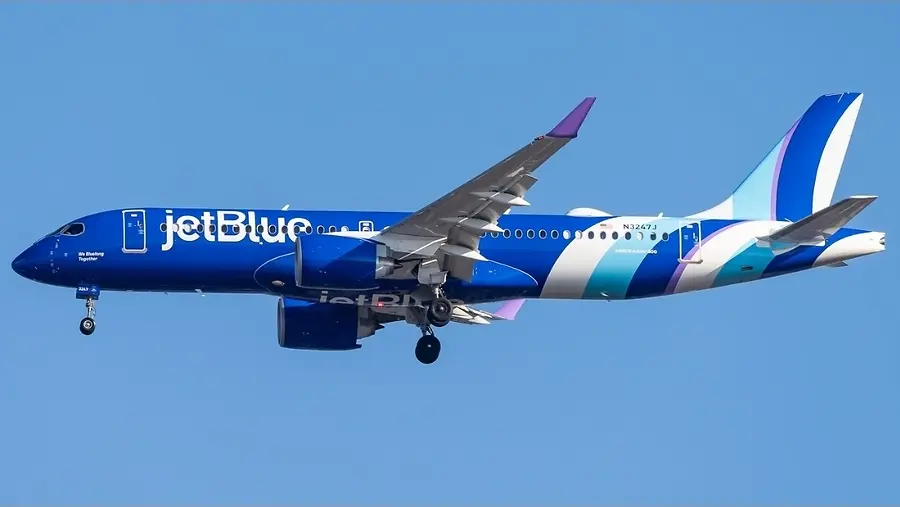
Aviation History #27: What Exactly Is JetBlue?
For years, people—passengers, analysts, and everyday travelers alike—have been asking, “What exactly is JetBlue?” Well, for Aviation History #27, I will, on behalf of the Brooke In The Air Travel team, attempt to answer this question!
From JetBlue’s initial founding in 2000 to its evolution today, JetBlue both delights and confounds passengers who have no idea what exactly the airline is. JetBlue began as a low-cost carrier, just as Spirit Airlines did. Of course, we know how Spirit Airlines went. If there were ever a museum of extinct airlines, Spirit would be the newest member. JetBlue will be joining the proverbial dustbin of history as well, and the “C-suite” knows that quite well, which is exactly what they are desperately trying to avoid. JetBlue, last year in 2025, would be best identified as a hybrid carrier; in other words, neither legacy nor low-cost. The airline was designed to disrupt legacy carriers and their route monopolies. This sounds rather heroic in a Hollywood sort of way, until one realizes the realities JetBlue has to navigate with this hybrid model and how it is changing in order to survive in an increasingly cutthroat market.
Currently, and for all of its history (though there was brief talk of moving south once it bought Spirit Airlines’ gates at Fort Lauderdale), JetBlue is headquartered in Long Island City, in Queens, New York City. Primarily a point-to-point carrier, as Southwest Airlines is, JetBlue's network features six focus cities, including its main hub and de facto base at New York City's John F. Kennedy International Airport (JFK), with destinations across the Americas and Europe. Although not a member of any global airline alliances, JetBlue has codeshare agreements with airlines from Oneworld, SkyTeam, and Star Alliance, though many such agreements were made throughout 2024–2025.
To truly dive in, we need some brief history. Let’s go!
David Neeleman founded the company in August 1999 under the temporary name "NewAir." JetBlue was incorporated in Delaware in August 1998 but did not start flying until 2000. JetBlue started by following Southwest's approach of offering low-cost travel but sought to distinguish itself through its amenities, such as in-flight entertainment, live TV at every seat, and SiriusXM satellite radio. These were revolutionary amenities that no other low-cost carrier had!
JetBlue sought to primarily use the Airbus A320 family to ease maintenance, taking a similar approach to Southwest, which primarily uses the Boeing 737 (as discussed in prior articles, especially on Southwest Airlines). Indeed, Neeleman used Southwest as a blueprint for his airline. Neeleman would go on to found or co-found other airlines, such as Canada’s WestJet, Mexico’s Azul Air, and current low-cost rising star Breeze Airways. With David’s exit, Joanna Geraghty was soon made CEO of JetBlue.
As a slightly comedic aside, JetBlue's founders had set out to call the airline "Taxi" and therefore have a yellow livery to associate the airline with New York. However, the idea was dropped after threats from investor JP Morgan (now JPMorgan Chase) to pull its share ($40 million of the total $128 million) of the airline's initial funding unless the name was changed. Thus, the name “Taxi” was dropped, and JetBlue was born.
JetBlue was one of only a small number of U.S. airlines that made a profit during the sharp downturn in airline travel following the September 11 attacks, 16 months after JetBlue first started flights and was awarded its very first set of 75 gates at New York (JFK). The company's planned initial public offering was put on hold due to the attacks and subsequent downturn. The IPO eventually took place in April 2002, raising $260 million at its NASDAQ debut.
Mini-Rivals Quickly Emerged From the Shadows
The airline sector responded to JetBlue and Southwest's market presence by starting mini-rival carriers: Delta Air Lines started Song, and United Airlines launched another rival called Ted. Song had a lime-green color scheme inside that hurt passengers’ eyes upon boarding and, after a short, failed experiment, was disbanded and reabsorbed by Delta. Ted faced similar issues. There was nothing positively distinguishing it from the mainline United fleet, and passengers truly found the aircraft, marketing, and branding annoying when the marketing was noticed as being different from United at all. The experiment with Ted lasted about six months, with the Ted aircraft subsequently reabsorbed by United and, after being refitted to United's standards, incorporated back into United’s mainline fleet.
JetBlue experienced its first-ever quarterly loss during the fourth quarter of 2005, when the airline lost $42.4 million, enough to make it unprofitable for the entire year of 2005. The loss was the airline's first since going public in 2002. In addition to that, JetBlue forecasted a loss for 2006, citing high fuel prices, operating inefficiency, and fleet costs. An especially critical factor was the ongoing Iraq War (2003–2012), which drove prices up, not just for fuel but across the board. In 2005, and for many years after, analysts had predicted that JetBlue's growth rate would become unsustainable. Despite this dour prediction, the airline continued to add planes (new A320s) and routes to the fleet at an incredibly brisk pace.
In addition, in 2006, the IAM (International Association of Machinists) attempted to unionize JetBlue's ramp service workers, in a move that was described by JetBlue's then-COO Dave Barger as "pretty hypocritical," as the IAM opposed JetBlue's creation when it was founded as New Air in 1998. The union organizing petition was dismissed by the National Mediation Board because fewer than 35 percent of eligible employees supported an election.
Note: Even as a small business, Brooke In The Air Travel supports unionization by employees and supports all stances/pillars the AFL-CIO stands for, as the U.S. was founded by union labor, and unions make us all stronger as workers, women, and, most of all, citizens. The only exception for a non-unionized company/corporation would be a company that provides for its employees willingly, making a union unnecessary in the first place. In law school, Brooke herself specialized in labor law and labor rights, so her passion is invested in the subject.
Moving back to JetBlue, in 2006, during the first-quarter report, CEO David Neeleman, President Dave Barger (former Chief Operating Officer), and then-CFO John Owen released JetBlue's "Return to Profitability" ("RTP") plan, stating in detail how they would curtail costs and improve revenue to regain profitability. The plan called for $50 million in annual cost cuts and a push to boost revenue by $30 million. In October 2006, JetBlue announced a net loss of $500,000 for the third quarter of that fiscal year, and a plan to regain that loss by deferring some of its Embraer E190 deliveries and selling five of its mainline Airbus A320s.
In December 2006, JetBlue, continuing as part of its RTP plan, removed a row of seats from its A320s to lighten the aircraft by 904 lb. and reduce the cabin crew size from four to three (per the FAA regulation requiring one flight attendant per every 50 seats), thus offsetting the lost revenue from the removal of seats and further lightening the aircraft, resulting in less fuel burned. As a result, in January 2007, JetBlue returned to profitability with a fourth-quarter profit in 2006, reversing a quarterly loss in the year-earlier period. As part of the RTP plan, 2006's full-year net loss was $1 million compared to 2005's full-year loss of $20 million.
While its financial performance started showing signs of improvement, in February 2007, JetBlue faced a crisis when the blizzard of 2007 hit the Northeast and Midwest, throwing the airline's operations into chaos. Because JetBlue followed the practice of never cancelling flights, it desisted from calling flights off, even when the ice storm hit and the airline was forced to keep several planes on the ground. Because of this, passengers were kept waiting at the airports for their flights to take off, which never did. In some cases, passengers who had already boarded their planes were kept waiting on the apron for several hours and were not allowed to disembark, resulting in numerous class-action lawsuits that JetBlue subsequently lost and forcing the FAA to create new rules for airlines. However, after all this, the airline was eventually forced to cancel most of its flights because of prevailing weather conditions. This reportedly cost JetBlue $30 million USD.
On October 22, 2008, JetBlue opened its new primary hub at John F. Kennedy International Airport Terminal 5, or simply T5, costing approximately $800 million to build. The first flight arrived from Bob Hope Airport (formerly Hollywood Burbank Airport, IATA code: BUR) at 5:06 a.m., followed by arrivals from Oakland International Airport (OAK) and Long Beach Airport (LGB), respectively. The new T5 replaced JetBlue's old hub at JFK in Terminal 6. The last flight to operate out of T6 was a departure to Rafael Hernández Airport in Aguadilla, Puerto Rico, departing at 11:59 p.m.
Moving ahead just a bit, on June 13, 2012, JetBlue ranked "Highest in Customer Satisfaction Among Low Cost Carriers in North America" by J.D. Power and Associates for the eighth year in a row.
In 2013, things truly began to change as JetBlue introduced Mint. Mint is a premium cabin service on transcontinental and select Caribbean flights (now offered on JetBlue's limited European routes, too). The service began in 2014, using the Airbus A321-200 aircraft ordered by JetBlue. These planes are outfitted with winglets, as well as "lie-flat" seats and moveable partitions that can create small suites on the airplane. Called "Mint" by JetBlue, these planes are configured with 16 business-class seats and 143 economy seats, instead of an all-economy configuration of 190 seats that the airline had started out with.
The next year, in 2014, JetBlue's pilots voted to officially unionize for the first time since the airline was founded, with 71% casting ballots in favor of joining the ALPA.
On September 18 of that year, Dave Barger announced his resignation from the company, effective February 16, 2015, following several reports that investors and the board were unhappy with his performance. He was replaced on the board and as CEO by Mr. Robin Hayes.
On August 31, 2016, JetBlue Flight 387 from Fort Lauderdale–Hollywood International Airport to Abel Santamaría Airport in Santa Clara became the first scheduled commercial flight between the United States and former-Soviet Cuba in 55 years, a first for international relations.
In July 2017, JetBlue announced it was taking qualifications to develop a terminal at JFK that would not only occupy Terminal 5 but also the space of Terminals 6 and 7. In April 2018, JetBlue announced its return to Ontario International Airport in Southern California after ten years, as well as commencing new service to Steamboat Springs in Colorado and Bozeman in Montana.
During Fiscal Year 2018, JetBlue, along with 90 additional Fortune 500 companies, "paid an effective federal tax rate of 0% or less" as a result of Donald Trump's Tax Cuts and Jobs Act of 2017, while standard line employees at JetBlue paid upwards of 8.9% state income tax, on top of hiked federal tax rates and federal interest rate hikes.
While COVID destroyed global aviation and travel, JetBlue did take proactive measures. By August 2020, JetBlue, along with Southwest Airlines, implemented strict policies for the wearing of face masks, which did not allow for any medical exemptions, as part of its procedures during the pandemic. The airline also announced that it would continue to block middle seats through at least mid-October, perhaps later into 2021.
On July 9, 2020, JetBlue announced the imminent closure of its base at Long Beach Airport and transfer of the base's operations to Los Angeles International Airport (LAX) from October 6, 2020. JetBlue had spent years negotiating to create a U.S. Customs and Border Protection station at the airport, and in 2017, despite a favorable recommendation from the city administration, the city council voted against the plan. The city and the airline also had disputes over late landings and slot usage. However, this was short-lived because, in September 2024, JetBlue officially closed its LAX focus city due to the federal court blocking its merger with Spirit Airlines, causing massive cuts and downgrading LAX from an operating base to a mere “spoke city” in its system for now. As of late 2026, it remains to be seen if JetBlue will reopen its LAX operating base or instead replace it with a different city in the region, such as Ontario, Burbank, or Santa Ana, all three of which are LAX network airports and cities JetBlue currently serves.
On July 16, 2020, American Airlines joined JetBlue in a strategic partnership called the "Northeast Alliance," which allowed the two carriers to share passengers and revenue and coordinate schedules for flights to and from New York's three major airports and Boston. While the deal with American had the blessing of the Trump administration, the Department of Justice under then-President Biden, along with six states (New England) and the District of Columbia, initiated an antitrust lawsuit in 2022.
On May 19, 2023, after a year-long court battle, the court ruled against the two airlines, holding that the JetBlue–American partnership was anticompetitive and ordering the alliance to be unwound on grounds of antitrust law violations. Despite American announcing it would appeal, JetBlue said it would follow the judge's order and terminate its three-year alliance. In court, JetBlue said ending the alliance would render "entirely moot" the Justice Department's objections that led to its separate lawsuit to block JetBlue's proposed merger with then-active Spirit Airlines, which would be the largest in the U.S. airline industry since 2013, when American Airlines finalized its merger with US Airways. American said it "respected JetBlue's decision to focus on its other antitrust and regulatory challenges" but still planned to proceed with its appeal. In late 2023, the appeal was later denied by a federal judge.
When the Spirit Airlines case finally went to trial in the holiday season of 2023, JetBlue argued that if it acquired Spirit and thus grew its fleet by 70%, it would be more able to compete with the Big Four airlines (United Airlines, American Airlines, Delta Air Lines, and Southwest Airlines). The Justice Department argued that an independent Spirit fills a role for price-conscious consumers that needs to be protected. JetBlue said the vacuum Spirit Airlines would leave in the market would be filled by growth from other budget carriers. The Justice Department said that was unlikely because the limits to growth that airlines face, such as shortages of planes and pilots, affect all airlines, including the discount carriers.
In a ruling on January 16, 2024, a federal judge officially blocked JetBlue's acquisition of Spirit Airlines. The two airlines initially said they would appeal, but on March 4, 2024, they announced they were calling off the merger, with JetBlue paying Spirit a breakup fee of $69 million and Spirit's shareholders $400 million. Of course, Spirit Airlines filed for bankruptcy in late April 2026 and went out of business on May 3, 2026.
On February 1, 2021, JetBlue introduced its new Mint product called Mint Suite, which was to be configured on its entire Airbus A321LR fleet for its future transatlantic flights to London and on some of its A321neo aircraft for select flights initially to Los Angeles.
In April, JetBlue announced that the airline would finally be expanding into Canada, announcing new routes between Vancouver (YVR) and both New York City (JFK) and Boston (BOS). Just days later, JetBlue held its inaugural Airbus A220-300 flight, which flew from Boston Logan International Airport to Tampa International Airport.
In November 2022, JetBlue confirmed plans to fly from New York (JFK) to Paris (CDG) starting in summer 2023.
In April 2023, JetBlue continued its sizable international expansion, announcing that it would add Amsterdam to its list of international destinations with a new route from John F. Kennedy International Airport to Amsterdam Airport Schiphol in late summer 2023.
Robin Hayes, JetBlue's CEO, said that the New York (JFK) to Amsterdam (AMS) route is "long overdue for some competition.”
In October 2023, JetBlue announced it would add flights from both Boston and New York (JFK) to Dublin, Ireland (DUB), and New York (JFK) to Edinburgh, Scotland (EDI), in 2024. Service from Boston to Amsterdam would also begin that year. The announcement brought JetBlue's list of transatlantic destinations to six.
In January 2024, JetBlue announced that CEO Robin Hayes would step down effective February 12 and would be replaced by President Joanna Geraghty. She became the first woman to lead a major U.S. airline and still leads JetBlue today.
On February 7, 2024, the airline announced that Marty St. George would return to the airline as president starting on February 26, 2024, after leaving the airline back in 2020 to become the COO of LATAM Airlines Group.
In April 2025, American Airlines announced it was suing JetBlue for over $1 million in unpaid obligations dating back to their dissolved Northeast Alliance. Litigation is still continuing, and the lawsuit is pending as of this article's writing.
In May 2025, JetBlue and United Airlines announced a new partnership involving reciprocal frequent-flier benefits and shared booking access. This is officially known as the BlueSky Alliance. United will return to JFK via at least seven JetBlue gate slots by mid-2027.
In March 2026, it was confirmed that JetBlue hired financial advisors to manage a possible sale of itself and all of its assets as it talked to rival airlines about a possible acquisition of the company. In April 2026, founder David Neeleman warned that JetBlue may not be able to continue operating as normal and claimed that it was on the verge of filing for Chapter 11 bankruptcy. United Airlines was listed as one possible buyer, though CEO Scott Kirby has disputed this entirely and dismissed talk of a merger or buyout.
However, CEO Joanna Geraghty disputes these claims, stating that the airline had no plans to file for bankruptcy in 2026, despite rising jet fuel prices. Geraghty claimed that JetBlue secured over $500 million in debt financing to support up to 22 aircraft.
In terms of JetBlue's network, it has fingers in tons of cookie jars, if you'll forgive the metaphor.
As of January 2025, JetBlue Airways flies to 104 destinations in the Americas, with most of them in the United States and the Caribbean, a smaller selection of destinations in parts of Central and South America, and four destinations in Europe.
As of late 2025, JetBlue has expanded Mint offerings to routes to cities in the United States, Canada, Latin America, the Caribbean, the United Kingdom, France, Ireland, the Netherlands, and Spain.
This is where codeshare agreements make their presence known.
JetBlue has officially entered into a number of codeshare agreements with other airlines, meaning airlines agree to share certain flights, which both airlines market and publish on their own flight schedules under their respective airline designators and flight numbers. This is most visibly represented by JetBlue's alliance with United Airlines, the BlueSky Alliance.
Here we present a brief overview of JetBlue's current cabin offerings.
Core
On most of its aircraft, JetBlue offers a uniquely unified cabin experience called Core. In Core, some rows offer customers as much as 7 extra inches of legroom, referred to as “Even More Space” seats.
The Core cabin includes leather seats, complimentary Wi-Fi, complimentary snacks and non-alcoholic drinks, and entertainment screens with DirecTV, SiriusXM Radio, and movies.
The airline restyled Core seats in 2014 with the debut of JetBlue's first Airbus A321. The revamped Core seats started to appear on the airline's A320 aircraft in 2018, with further modifications in 2019. This seat design carried over to JetBlue's Airbus A220 aircraft upon launch.
Mint / Mint Suites
In 2014, the airline introduced its version of a business-class cabin, called Mint. The service was originally available only on transcontinental domestic routes on select Airbus A321s starting in 2014. The seat design includes fully lie-flat seats, some of which have sliding panels for more privacy.
Mint has since been expanded to select Caribbean routes, and in 2021, a newly reimagined version of the service and seating was announced. The average cost of a one-way Mint ticket is around $2,200 USD.
The Mint sub-fleet consists of exclusive A321 aircraft with 159 seats, including 16 flat-bed Mint seats. The Mint seat is a version of the Thompson Aero Vantage business-class seat, with extra storage and dual 120 V + USB power outlets at every seat.
Four of the 16 Mint seats are mini-suites, which include a sliding door for privacy. The seats have a width of up to 22.3 inches and can convert to a flat bed of up to 6 ft. 8 in. in overall length. Pairs of non-suite Mint seats alternate with single mini-suite seats. The seats use air cushioning, allowing passengers to adjust the firmness of the seats.
Main cabin (economy class) on JetBlue's premier Mint A321 aircraft uses specialized B/E Aerospace Pinnacle slimline seats, with a seat pitch of 33 inches in the main cabin and up to 37 inches in the "Even More" extra-legroom product (premium economy on other airlines). There are two power outlets per row of economy-class seats.
Mint (business-class) and Mint Suite passengers receive deluxe in-flight meal service. Amenity kits are provided by the CARRA brand, with other companies as seasonally required by the contract between the airline and the toiletry brand.
JetBlue's in-flight entertainment options are available to all passengers and consist of gate-to-gate “Fly-Fi” internet access, over 100 channels of DIRECTV, SiriusXM Radio, and movies, and, on the Airbus A321 and newer retrofitted Airbus A320 aircraft, a 15-inch interactive video screen that is not available on the rest of the fleet. JetBlue's partnership with Amazon lets customers watch Amazon Prime videos by connecting to Wi-Fi and downloading the Amazon Video app on their mobile phone or tablet.
The in-flight Wi-Fi is under the "Fly-Fi" network name and is complimentary on all flights, at speeds of 12–15 megabits per second.
Will JetBlue be bought out? Every analyst, including us, has opinions. We may be wrong, but we heartily believe United Airlines will buy out or at least merge with JetBlue by 2028. What is JetBlue's corporate identity and identity in general? Looking at JetBlue's network and the growth they have put themselves through since COVID, JetBlue can best be described as a leisure carrier with an option for first-class offerings. Their alliance with United, their expansion of overseas destinations, their making the Caribbean their own proverbial sandbox, and their leisure-oriented marketing all point to this definition of JetBlue.
Thank you all for reading, and we hope you don't necessarily agree, but that you preferably draw your own conclusions before booking a ticket on JetBlue. Instead, book a travel consultation with Brooke In The Air Travel at brookeintheairtravel.net!