Artificial Intelligence, Accessibility, and Assessment Validity
Examining Alternative Explanations for Declining Exam Performance Beyond AI-Assisted Cheating

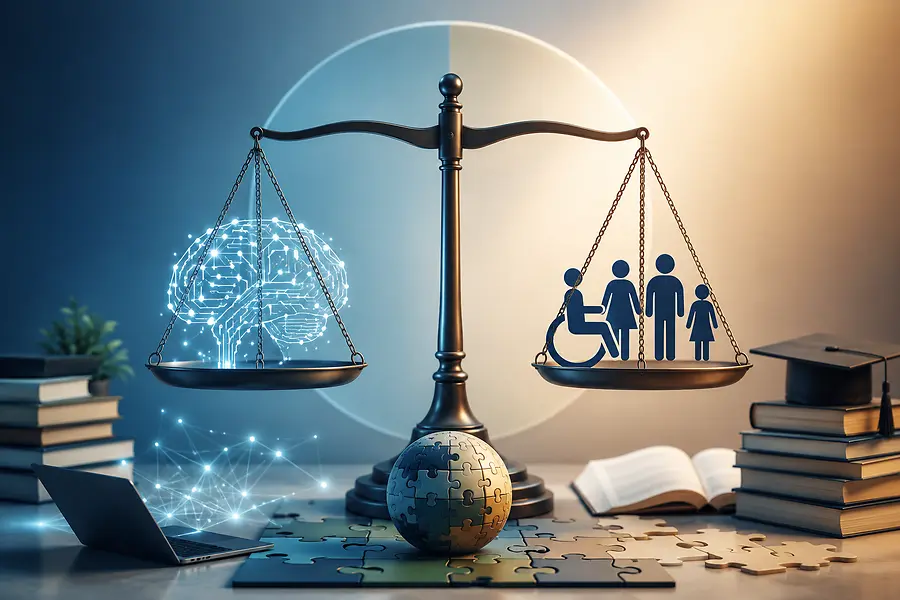
Artificial Intelligence, Assessment, and Accessibility in Higher Education
The emergence of artificial intelligence (AI) has transformed higher education by introducing new opportunities for learning while simultaneously raising concerns about academic integrity. As generative AI tools become increasingly sophisticated, many colleges and universities have reconsidered the use of take-home examinations and written assignments that may be completed with unauthorized AI assistance.
One widely discussed example involved Brown University economics professor Roberto Serrano, who reported a significant decline in student performance after replacing a take-home final examination with an in-person assessment. Although many interpreted the decrease in scores as evidence of widespread AI-assisted cheating, such a conclusion warrants careful examination. A decline in examination performance alone does not establish causation and should instead be evaluated alongside alternative explanations, including accessibility, disability accommodations, assessment design, and environmental influences.
Distinguishing Correlation from Causation
While unauthorized AI use may contribute to inflated performance on unsupervised assessments, educational research requires investigators to distinguish correlation from causation. Numerous variables influence student achievement, particularly when assessment conditions change dramatically. Differences in examination format, time limitations, psychological stress, environmental distractions, and accessibility supports may all affect student outcomes independently of AI use. Without controlling for these factors, attributing lower in-person scores exclusively to academic dishonesty represents an oversimplification of a complex educational issue.
Accessibility and Disability Accommodations
Accessibility provides one of the most compelling alternative explanations for the decline in in-person examination scores. Students with documented disabilities often receive accommodations such as extended testing time, speech-to-text software, text-to-speech technology, reduced-distraction testing environments, adaptive equipment, or scheduled breaks.
In addition to formal accommodations, students completing assessments at home frequently benefit from environmental self-regulation. They can control lighting, noise, temperature, seating, movement, hydration, medication schedules, and other factors that influence concentration and cognitive performance. For students with autism spectrum disorder (ASD), attention-deficit/hyperactivity disorder (ADHD), learning disabilities, anxiety disorders, or executive functioning challenges, these self-regulated environments may substantially improve academic performance.
In contrast, traditional in-person examinations often introduce additional cognitive demands. Increased sensory stimulation, unfamiliar surroundings, strict testing procedures, and performance anxiety may impair attention, working memory, processing speed, and executive functioning. Even when disability accommodations are appropriately implemented, many aspects of a home learning environment cannot be replicated within a standardized testing setting. Consequently, lower examination scores may reflect differences in accessibility and testing conditions rather than reduced access to AI technologies.
Assessment Methodology
Assessment methodology also influences student performance. Take-home examinations frequently emphasize higher-order thinking, research, analysis, and synthesis, whereas timed, proctored examinations often prioritize rapid recall and procedural knowledge. Although both formats may assess similar learning objectives, they measure different cognitive processes. Therefore, score differences may result from changes in assessment design rather than changes in student competence or academic integrity.
Artificial Intelligence as Assistive Technology
Artificial intelligence itself should not be viewed exclusively as a mechanism for academic misconduct. When used ethically and transparently, AI can function as an assistive educational technology that supports grammar, organization, brainstorming, language translation, concept clarification, and individualized tutoring. For many students with disabilities, these tools reduce barriers to learning without replacing independent intellectual effort. A central challenge for institutions of higher learning lies in crafting policies that clearly differentiate authorized educational assistance from the unauthorized completion of coursework.
Interpreting Declining Scores with Caution
Ultimately, declining examination scores following a transition from take-home to in-person testing should be interpreted with caution. While unauthorized AI use may explain a portion of the recorded decline in test results, it is equally important to evaluate other key variables, including accessibility, disability accommodations, environmental self-regulation, psychological stress, and assessment methodology.
Institutions committed to both academic integrity and educational equity should rely on evidence-based research rather than assumptions when evaluating the impact of artificial intelligence on student performance. By balancing rigorous assessment practices with accessible learning environments, higher education can preserve academic standards while ensuring fair opportunities for all students.


