Explore how intentionally designed preschool environments support holistic child development across cognitive, emotional, social, and physical domains through responsive classroom design, cultural inclusion, and developmentally appropriate practices.

Influential Woman · Education
Elizabeth Shugrue
Teacher, Educator
Woodbury, CT
7Years experience
14Articles published
2Awards received
“
Being different is not something to overcome; It's something to embrace. True leadership means advocating for accessibility and creating spaces where everyone thrives.
Elizabeth Shugrue · In Her Own Words
Her Story
About Elizabeth
Elizabeth Shugrue has been an educator for much of her life, with strong roots in her early desire to teach and learn continuously. After initial study and work in ag science during her high school years. She followed up with another accomplishment of earning her Associate's Degree in 2008 from Landmark College. In 2009, she continued her education and earned her CNA, phlebotomy, and EKG certifications. She shifted into education around 2019. She is now preparing to graduate from Post University with her Bachelor's Degree in Child Studies this August 2026, and currently holds a 3.7 GPA and honors. She currently works as a preschool teacher and paraprofessional in public and private school settings in Woodbury, Connecticut. In these roles, she enjoys designing her own curriculum and preschool centers, supporting special education students, and using creative approaches tailored to children's individualized developmental needs.
Her Interview
Ten minutes with Elizabeth
01What do you attribute your success to?
My inspiration comes from the people and experiences that surround me in my daily life. I remember when I was hospitalized in sixth grade, the nurses and hospital staff showed me compassion, patience, support, and kindness during a difficult time. Their care made a lasting impression on me and inspired me to help others with the same respect and understanding they gave me.
Another major source of inspiration was attending Ben Bronz Academy, a special education school in West Hartford, CT. The entire staff showed me the importance of believing in every student's potential. They created an environment where students were supported, encouraged, and valued for who they were. Their commitment inspired my passion for education, disability advocacy, and creating inclusive environments where every individual has the opportunity to succeed. Those experiences continue to motivate me to empower others, promote neurodiversity, and make a meaningful difference in the lives of children and families.
02What advice would you give to young women entering your industry?
It kind of sounds funny, but it's kind of like what Dory says from Finding Nemo, just keep swimming. You will make it!
"What's A Life Without A Fight“ ~ Myung ~
03What are the biggest challenges or opportunities in your field right now?
One of the biggest challenges in education today is addressing increasing student behavioral needs while creating supportive, inclusive learning environments. Many students require additional social-emotional support, consistent routines, and individualized behavior strategies to help them regulate their emotions and engage successfully in the classroom. Educators must balance academic instruction with behavioral interventions that meet the diverse needs of every unique learner.
At the same time, there is a significant opportunity to strengthen students' decision-making skills, creativity, and independent thinking. By encouraging correct language support, problem-solving, critical thinking, self-advocacy, and responsible decision-making, educators can help students become confident, capable learners who are prepared for success both inside and outside the classroom.
Developing these skills empowers students to navigate challenges, build resilience, and become lifelong learners.
04What values are most important to you in your work and personal life?
The values that are most important to me in the workplace are respect, equity, inclusion, integrity, and communication. I believe every person deserves to be treated with dignity, have equal access to opportunities, and feel valued regardless of their background, identity, or abilities. I am passionate about creating welcoming and inclusive environments where everyone can learn, grow, and succeed. I also value continuous learning because it helps me become a better educator, advocate, and leader who can support the diverse needs of others.
In my personal life, I value compassion, honesty, fairness, and perseverance. I strive to build relationships based on trust, empathy, and mutual respect while embracing the unique experiences and perspectives that make each person different. I believe diversity strengthens communities, and I am committed to promoting understanding, education, accessibility, inclusion, and belonging in both my personal and professional life. These values guide my decisions and inspire me to make a positive impact on the lives of others.
Her Content Hub
Articles by Elizabeth
Designing the Preschool Classroom Environment to Support the Whole Child
Creating intentionally designed developmental ecosystems that foster cognitive, social-emotional, physical, and creative growth through responsive environmental design and pedagogical practice.

Designing the Preschool Classroom Environment to Support the Whole Child
The preschool classroom environment constitutes a critical dimension of high-quality early childhood education because it shapes children's opportunities to learn, communicate, establish relationships, regulate emotions, develop autonomy, and construct meaning from their experiences. Early childhood development is multidimensional and dynamic, encompassing cognitive, physical, linguistic, social-emotional, and adaptive domains that develop interdependently rather than in isolation.
Consequently, an effective preschool classroom should not be conceptualized solely as a setting for academic instruction or preparation for kindergarten. Rather, it should function as an intentionally designed developmental ecosystem that responds to children's individual abilities, interests, identities, cultural and linguistic backgrounds, and diverse approaches to learning. Developmentally appropriate practice emphasizes the importance of creating responsive learning environments grounded in knowledge of child development, individual variation, and children's social and cultural contexts (National Association for the Education of Young Children [NAEYC], 2020). From this perspective, the classroom environment becomes an active pedagogical component that can cultivate children's agency, competence, curiosity, belonging, and capacity to participate meaningfully in their learning communities.
Physical Environment and Developmental Engagement
The physical organization of the preschool classroom has substantial implications for children's engagement, independence, and development. Clearly defined and intentionally arranged learning areas for dramatic play, literacy, mathematics, science, sensory exploration, art, construction, music, and fine-motor activities create opportunities for children to investigate concepts through multiple modalities. Such environments reflect the principle that young children learn most effectively through active engagement, exploration, play, and social interaction.
Importantly, learning centers should not be understood as isolated academic stations. A single experience can simultaneously support multiple developmental domains. For example, block construction can promote spatial reasoning, early mathematical thinking, fine- and gross-motor coordination, language development, creativity, problem-solving, persistence, and social negotiation. When children collaboratively determine what to construct, assign roles, communicate their ideas, and resolve disagreements, they are simultaneously developing cognitive and interpersonal competencies.
This integration illustrates why early childhood curriculum should avoid unnecessarily fragmenting learning into discrete academic subjects. Instead, developmentally appropriate environments provide experiences through which children construct knowledge across interconnected domains.
The physical environment also contributes to children's emerging executive-function abilities. Materials that are organized, visually identifiable, accessible, and positioned within children's reach allow children to exercise choice and participate in classroom routines with progressively less adult assistance. Structured routines, labeled resources, defined activity zones, visual aids, and predictable schedules help children transition smoothly, stay engaged, take initiative, follow expectations, and complete tasks independently.
The Division for Early Childhood emphasizes intentionally designing physical, social, and temporal environments to promote children's access, participation, engagement, and learning. These considerations are especially important in inclusive classrooms because children vary widely in communication, attention, sensory processing, motor development, and developmental readiness.
Social-Emotional Development, Belonging, and Identity
Beyond equipping classrooms with age-appropriate learning resources, nurturing the whole child demands a deliberate effort to foster a sense of security, inclusion, and healthy interpersonal connections. When classrooms serve as welcoming physical and psychological environments, young learners are empowered to build genuine connections, share their perspectives, actively engage in learning, and confidently explore their surroundings. As a result, the early childhood environment must intentionally convey to both children and their families that they are respected and integral members of the educational community.
The environment can communicate inclusion through family photographs, culturally and linguistically diverse literature, dolls and dramatic-play materials representing varied identities, multilingual resources, adaptive materials, and representations of diverse abilities and family structures. These elements should be selected thoughtfully rather than used merely as decorative symbols of diversity. The NAEYC (2019) identifies equity, identity, and belonging as central considerations in high-quality early childhood education. Meaningful representation can therefore support children's developing self-concept while simultaneously encouraging empathy, respect, perspective-taking, and appreciation for human differences.
A classroom designed for belonging also recognizes that children's identities are shaped through their interactions with adults, peers, materials, language, and institutional structures. When children consistently encounter representations of themselves within classroom books, photographs, dramatic-play materials, and learning experiences, they receive an implicit message that their experiences and identities matter. Conversely, environments that exclude or inaccurately represent particular groups can communicate marginalization. Consequently, culturally responsive environmental design should be understood as an essential pedagogical practice rather than an optional enhancement.
Environmental Design and Emotional Regulation
Emotional regulation is another essential consideration in whole-child classroom design. Preschool-aged children are still developing the neurological, cognitive, linguistic, and behavioral capacities necessary to independently regulate emotions, attention, impulses, and responses to sensory stimulation. Consequently, educators should recognize regulation as a developmental process that often requires adult support and environmental scaffolding.
Classrooms can facilitate regulation by incorporating quiet areas, comfortable seating, sensory materials, opportunities for movement, predictable routines, and spaces where children can temporarily reduce environmental stimulation. These areas should not function as punitive "time-out" locations. Instead, they should be intentionally designed as supportive spaces where children can pause, receive assistance with regulation, and develop strategies for identifying and responding to their emotional and sensory needs.
Teacher-child relationships are equally important within this framework. Educators contribute to children's regulatory development through co-regulation, emotional modeling, responsive communication, explicit instruction in emotional vocabulary, and consistent yet supportive expectations. Research examining classroom interactions has demonstrated the significance of instructional and emotional support for children's developmental and academic outcomes. Thus, the physical environment and interpersonal environment should be viewed as interconnected components of children's developmental support systems.
Inclusion, Accessibility, and Learner Variability
An environment designed to support the whole child must recognize developmental variability as a fundamental characteristic of early childhood rather than an exception to the norm. Children of the same chronological age can demonstrate substantial differences in language, communication, attention, motor abilities, social interaction, self-regulation, and problem-solving. Effective educators therefore design environments that anticipate variability rather than assuming that all children will engage with materials and routines in identical ways.
Universal Design for Learning (UDL) provides a useful framework for addressing learner variability through multiple means of engagement, representation, and action and expression. Rather than designing instruction around an assumed "average" learner and introducing accommodations only after difficulties arise, educators can incorporate accessibility into the initial design of the classroom and curriculum.
Examples include adaptive writing and art materials, visual communication systems, sensory resources, flexible seating, accessible shelving, assistive technology, and learning materials that provide varying degrees of complexity. Such supports can reduce unnecessary barriers to participation and increase children's opportunities to demonstrate competence. Within this framework, inclusion is not conceptualized as an individualized intervention added to an otherwise standardized classroom; rather, accessibility becomes an embedded characteristic of the learning environment.
This approach also has implications for educators' understanding of disability and developmental difference. When an environment creates barriers to participation, the challenge may not reside exclusively within the child. Environmental design, instructional expectations, sensory conditions, communication systems, or classroom routines may contribute to the difficulty. A responsive educator therefore asks not only, "What does this child need to change?" but also, "What can I change about the environment to increase this child's access, participation, and success?"
Play as a Foundation for Whole-Child Learning
Play represents one of the most significant mechanisms through which preschool children develop integrated competencies. Developmentally appropriate environments provide substantial opportunities for child-directed play alongside intentional, teacher-supported experiences because play naturally integrates cognitive, linguistic, physical, social-emotional, and creative development.
Dramatic play, for example, provides opportunities for symbolic representation, language development, perspective-taking, negotiation, and social problem-solving. Construction activities encourage spatial reasoning, mathematical thinking, planning, persistence, creativity, and collaborative problem-solving. Outdoor play supports gross-motor development while simultaneously providing opportunities for sensory exploration, scientific inquiry, social interaction, and appropriately managed risk-taking. Art, music, and movement offer additional avenues through which children can communicate ideas and emotions that they may not yet possess the linguistic ability to articulate.
Accordingly, play should not be positioned as an activity that occurs only after "real learning" has been completed. In early childhood, play is itself a significant context for learning. When educators intentionally observe, scaffold, and extend children's play, they can identify emerging competencies and introduce new vocabulary, concepts, questions, and challenges without undermining children's agency. A well-designed classroom therefore protects sufficient time and space for sustained play while simultaneously recognizing the educator's role as an intentional facilitator of learning.
The Educator as Environmental Designer and Reflective Practitioner
Although the physical classroom is important, the educator ultimately determines how effectively the environment functions as a developmental resource. Skilled early childhood educators continuously observe how children interact with materials, spaces, routines, peers, and adults and use those observations to inform environmental modifications. Assessment should therefore serve not merely as a mechanism for documenting children's skills but also as a tool for understanding development and informing pedagogical decision-making.
Environmental design should consequently be understood as an ongoing reflective process rather than a task completed before the academic year begins. If children consistently struggle to transition between learning areas, for example, educators should investigate whether the difficulty may be related to the physical arrangement of the classroom, unclear expectations, excessive sensory stimulation, insufficient transition time, or limited visual supports. Similarly, if particular materials are rarely selected by children, educators might examine whether the materials are accessible, culturally relevant, developmentally appropriate, or sufficiently engaging.
This reflective orientation represents a significant shift in professional practice. Instead of interpreting children's difficulties exclusively as individual deficits, educators consider the reciprocal relationship between the child and the environment. Such an approach is consistent with inclusive early childhood practice because it recognizes that environmental conditions can either facilitate or constrain children's participation.
Balancing Predictability, Flexibility, and Autonomy
High-quality preschool environments must also balance predictability with flexibility. Consistent routines provide children with a sense of security and help them develop independence, behavioral regulation, and an understanding of classroom expectations. However, excessive rigidity can restrict children's agency and fail to accommodate individual developmental differences.
An effective environment therefore establishes predictable structures while maintaining flexibility in how children participate, communicate, transition, and demonstrate their learning. Children should have meaningful opportunities to make choices, pursue interests, revisit experiences, engage in sustained play, and gradually assume greater responsibility for classroom routines. This balance is particularly important because autonomy is not synonymous with the absence of structure. Rather, developmentally appropriate autonomy emerges when children are provided with structured opportunities to make meaningful decisions within supportive boundaries.
When educators intentionally balance structure and responsiveness, classroom management becomes less dependent upon continuous adult direction. Instead, the environment itself provides organizational cues that support children's developing self-regulation, decision-making, and independence. In this sense, effective classroom design can function as a form of preventive guidance by reducing unnecessary barriers and making expectations more understandable and attainable.
Conclusion
Designing a preschool classroom to support the whole child requires educators to conceptualize the environment as an active pedagogical influence rather than merely the physical setting in which instruction takes place. The arrangement of furniture, accessibility of materials, sensory conditions, cultural representation, opportunities for play, classroom routines, and quality of teacher-child interactions collectively shape children's educational experiences and developmental trajectories.
A whole-child approach recognizes that academic learning cannot be meaningfully separated from communication, creativity, physical development, emotional regulation, social relationships, identity, autonomy, and belonging. Developmentally appropriate and inclusive classroom environments therefore provide children with opportunities not merely to prepare for kindergarten but to develop the foundational competencies, relationships, confidence, curiosity, resilience, and sense of agency necessary for continued learning.
Ultimately, designing the preschool classroom around the whole child is both a pedagogical commitment and a professional responsibility. The most effective environments are not static spaces filled with educational materials; they are responsive ecosystems that evolve in relationship to the children who inhabit them. When educators intentionally design environments that promote accessibility, belonging, exploration, autonomy, and meaningful interaction, the classroom becomes an essential instrument through which children are empowered to participate, construct knowledge, develop relationships, and experience themselves as capable members of a learning community.
This article examines the biological relationship between mitochondrial dysfunction and autism spectrum disorder, exploring how impaired cellular energy production may contribute to neurodevelopmental differences in some autistic individuals while clarifying that it is not a universal cause.
Mitochondrial Dysfunction and Autism Spectrum Disorder: Exploring the Biological Connection
Investigating Mitochondrial Abnormalities as One Component of Autism's Complex Biological Foundation
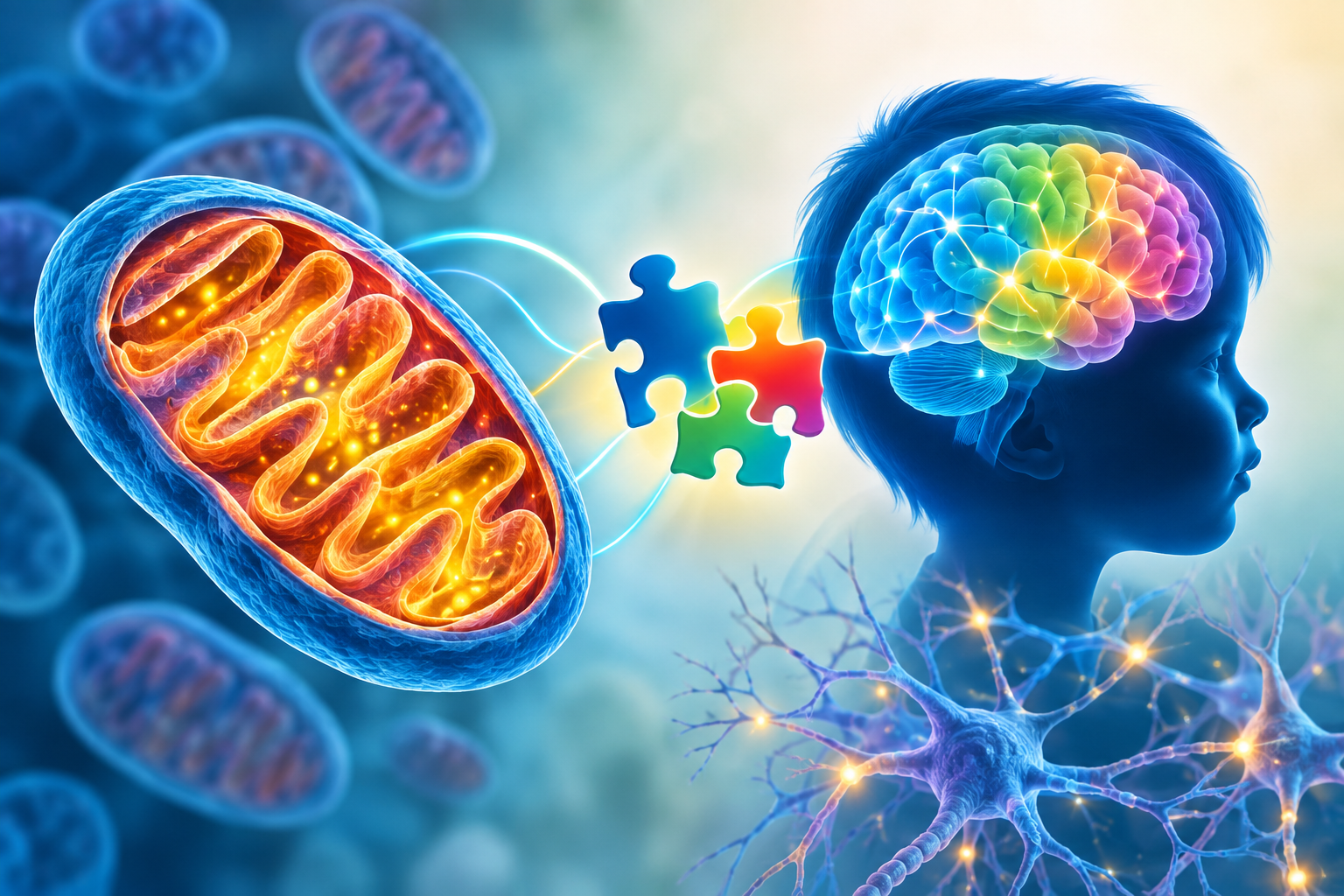
Mitochondrial Dysfunction and Autism: Exploring the Biological Connection
Autism spectrum disorder (ASD) is a complex neurodevelopmental condition characterized by differences in social communication and interaction, restricted or repetitive patterns of behavior, and sensory and behavioral differences. Contemporary research increasingly recognizes autism as a biologically heterogeneous condition involving interactions among genetic, neurological, metabolic, and cellular processes.
One area of increasing scientific interest is mitochondrial function. Mitochondria are cellular organelles responsible for producing much of the adenosine triphosphate (ATP) required to sustain cellular activity. Because the brain has exceptionally high energy requirements, mitochondrial function is particularly important during neurodevelopment. Consequently, researchers have investigated whether impaired mitochondrial function may contribute to neurological and developmental differences observed in a subset of autistic individuals.
The available evidence supports an association between mitochondrial abnormalities and ASD; however, mitochondrial dysfunction should not be characterized as the universal cause of autism. Instead, current research suggests that altered mitochondrial function may represent one component of a complex biological pathway affecting some individuals on the autism spectrum.
Mitochondria and Brain Development
Mitochondria perform several functions essential to neuronal health. Their primary role is to produce ATP through oxidative phosphorylation. In addition to energy production, they play key roles in regulating calcium, facilitating cellular signaling, guiding apoptosis, and controlling reactive oxygen species.
These functions are particularly important in neurons because maintaining electrical gradients, transmitting signals, transporting cellular materials, and supporting synaptic communication require substantial amounts of energy.
The developing brain is especially metabolically demanding. During early childhood, neurons undergo rapid differentiation, migration, synapse formation, and circuit refinement. These processes depend on adequate energy availability and tightly regulated cellular signaling.
Disruptions in mitochondrial function could therefore affect cellular processes involved in neuronal development. This does not mean that mitochondrial dysfunction necessarily produces autism, but it provides a biologically plausible mechanism through which altered cellular metabolism could influence neurodevelopment.
Evidence Linking Mitochondrial Dysfunction With Autism
Research examining mitochondrial function in ASD has identified several biological differences in some autistic populations. A systematic review and meta-analysis found evidence of increased rates of mitochondrial disease and biochemical abnormalities associated with mitochondrial function among individuals with ASD. Reported differences included alterations in lactate, pyruvate, carnitine, and other metabolic markers.
More recent research has expanded these findings. Frye et al. (2024) conducted a systematic review and meta-analysis involving 204 studies examining biomarkers of mitochondrial dysfunction in ASD. The researchers identified differences in several metabolic measures, including lactate, pyruvate, ATP, creatine kinase, carnitine, and acyl-carnitines. Studies also reported differences involving mitochondrial DNA and mitochondrial respiration.
These findings are significant because they suggest that mitochondrial abnormalities may occur more frequently within some autistic populations than would be expected by chance. At the same time, studies may vary substantially. Differences in participant characteristics, diagnostic populations, laboratory methods, and definitions of mitochondrial dysfunction make it difficult to establish a single mitochondrial profile associated with autism.
Thus, mitochondrial dysfunction appears more appropriately understood as a potential biological feature of a subgroup rather than a defining characteristic of ASD.
Oxidative Stress and Cellular Energy
One proposed mechanism connecting mitochondrial dysfunction and autism involves oxidative stress. Mitochondria naturally produce reactive oxygen species as a byproduct of energy production. Under normal physiological conditions, antioxidant systems maintain an appropriate balance between reactive oxygen species and cellular defenses. When this balance becomes disrupted, excessive oxidative stress can damage proteins, lipids, DNA, and cellular membranes.
Because neurons require significant amounts of energy, impaired mitochondrial energy generation and oxidative imbalance can affect neuronal function. Researchers have proposed that increased oxidative stress could interfere with synaptic signaling, cellular communication, and other processes involved in neurodevelopment.
Importantly, oxidative stress should not be interpreted as an autism-specific mechanism. Oxidative stress occurs in numerous physiological and pathological conditions. Its potential relevance to ASD is therefore best understood as one component within a larger network of biological processes rather than as an independent explanation for autism.
Genetics, Mitochondrial Function, and Neurodevelopment
The relationship between mitochondrial dysfunction and autism also intersects with genetics. ASD has substantial genetic heterogeneity, with numerous genes contributing to differences in brain development, synaptic function, cellular signaling, and metabolism. Genetic pathways associated with neurodevelopment also influence mitochondrial processes.
Mitochondrial DNA provides an additional layer of biological complexity, as mitochondria contain their own genetic material and have distinct patterns of inheritance from nuclear DNA. Genetic variation affecting mitochondrial function may therefore interact with nuclear genetic factors and other cellular processes.
This interaction illustrates why autism cannot be adequately explained through a single biological mechanism. Rather, autism appears to emerge from complex interactions among multiple biological pathways. Mitochondrial function may be one pathway through which genetic differences influence neuronal development and cellular energy regulation.
Mitochondrial Dysfunction Versus Mitochondrial Disease
A critical distinction must be made between mitochondrial dysfunction associated with ASD and primary mitochondrial disease. Primary mitochondrial disorders are medical conditions caused by genetic or cellular abnormalities that impair mitochondrial function. Individuals with mitochondrial disease may experience neurological and developmental manifestations, including developmental delays, seizures, motor abnormalities, and, in some cases, autistic characteristics.
However, autism is not synonymous with mitochondrial disease. An autistic individual does not necessarily have a mitochondrial disorder, and an abnormal metabolic marker does not automatically establish a diagnosis of mitochondrial disease. Clinical diagnosis of a mitochondrial disorder requires appropriate medical assessment, laboratory evaluation, and, when indicated, genetic testing.
This distinction is particularly important because the presence of mitochondrial abnormalities in research studies should not be interpreted as evidence that all autistic individuals have an underlying mitochondrial disease.
The Question of Causality
Perhaps the most important issue in understanding mitochondrial dysfunction and autism is causality. Although researchers have identified associations between mitochondrial abnormalities and ASD, association does not establish that mitochondrial dysfunction causes autism.
Several possibilities remain under investigation. Mitochondrial dysfunction could contribute directly to neurodevelopmental differences in some individuals. Alternatively, mitochondrial abnormalities could emerge as a consequence of other biological processes associated with autism. A third possibility is that the relationship is bidirectional, with genetic and cellular differences affecting mitochondrial function while altered mitochondrial activity subsequently influences neuronal development.
It is also possible that multiple pathways exist and that mitochondrial dysfunction represents one biological mechanism within specific subgroups of autistic individuals. This interpretation is consistent with the considerable heterogeneity observed in autism research.
Mitochondrial Function, Fatigue, and Autistic Burnout
The relationship between mitochondrial metabolism and autistic burnout is an emerging area of interest but should be approached cautiously. Autistic burnout is generally described as a state of significant exhaustion and reduced functioning associated with prolonged demands, chronic stress, environmental mismatch, and insufficient recovery.
Mitochondria are central to cellular energy metabolism; it is biologically plausible that metabolic processes could interact with experiences of fatigue and physiological stress. However, current evidence does not demonstrate that mitochondrial dysfunction causes autistic burnout. At present, any proposed relationship between the two should be regarded as a research hypothesis rather than an established clinical explanation.
Future research examining energy metabolism, stress physiology, neurodevelopment, sensory demands, and recovery may provide greater insight into whether metabolic differences contribute to fatigue or reduced functioning within particular autistic populations.
Implications for Autism Research and Clinical Understanding
Understanding mitochondrial biology may eventually contribute to a more precise model of autism. Rather than viewing ASD as a single condition with one underlying mechanism, researchers increasingly recognize that autism may involve multiple biological pathways and subgroups.
Identifying individuals with clinically meaningful mitochondrial abnormalities could potentially improve understanding of specific developmental or neurological profiles. It may also contribute to future research into individualized interventions.
However, evidence is not currently sufficient to support the assumption that mitochondrial-targeted treatments are appropriate for autistic individuals generally. Additional research is needed to determine which individuals may benefit from specific approaches and how mitochondrial biomarkers should be interpreted clinically.
Consequently, mitochondrial research should complement, not replace, established developmental, behavioral, educational, and clinical approaches to supporting autistic individuals.
Conclusion
Mitochondrial dysfunction represents an important and evolving area of autism research. Mitochondria regulate cellular energy production and participate in oxidative balance, calcium regulation, cellular signaling, and neuronal development. Because neurons require substantial amounts of energy, disruptions in mitochondrial function could theoretically affect processes involved in brain development and synaptic communication.
Current evidence demonstrates that mitochondrial abnormalities are present in a subset of individuals with ASD and that differences in metabolic biomarkers, mitochondrial DNA, and mitochondrial respiration have been reported across numerous studies. Nevertheless, the evidence remains heterogeneous and does not support the conclusion that mitochondrial dysfunction is the universal cause of autism.
The most scientifically appropriate interpretation is that mitochondrial dysfunction may represent a potential contributing mechanism or biological correlate within a subset of autistic individuals. Continued research examining mitochondrial genetics, cellular metabolism, oxidative stress, neuronal development, and environmental influences may help clarify how these mechanisms interact.
Such research has the potential to advance a more individualized understanding of autism while avoiding reductionist explanations that attribute a highly complex neurodevelopmental condition to a single biological process.
This article challenges the misconception that autistic and ADHD individuals lack empathy, explaining that many instead experience "hyperempathy" or intense emotional responsiveness that can cause significant personal distress and sensory overload.
Hyperempathy in Neurodivergent Adulthood: Understanding Heightened Emotional Responsiveness in Autism and ADHD

Hyperempathy in Neurodivergent Adulthood: Understanding Heightened Emotional Responsiveness in Autism and ADHD
Introduction
Empathy is commonly understood as the capacity to recognize, understand, and respond to the emotional experiences of other people. Within discussions of neurodivergence, however, empathy has historically been conceptualized through an overly simplistic deficit framework, particularly in relation to autism. Autistic individuals have frequently been characterized as having diminished empathy, while adults with attention-deficit/hyperactivity disorder (ADHD) are more commonly discussed in relation to impulsivity, attention, and executive functioning rather than interpersonal emotional processing.
Contemporary research increasingly demonstrates that these descriptions fail to capture the complexity of neurodivergent emotional experiences. Empathy is not a single ability; it encompasses cognitive empathy, affective empathy, empathic concern, personal distress, perspective-taking, and emotional contagion. Consequently, an individual may experience difficulty interpreting another person's mental state while simultaneously experiencing an exceptionally intense emotional response to that person's distress.
Within neurodivergent communities, the term hyperempathy is sometimes used to describe unusually intense sensitivity or responsiveness to the perceived emotional states, suffering, or needs of other people or, for some individuals, animals, fictional characters, or emotionally significant situations. Hyperempathy is not itself a formal diagnosis in the Diagnostic and Statistical Manual of Mental Disorders (DSM), nor should it be considered a universal characteristic of autism or ADHD. Rather, it is a useful descriptive concept for an experience reported by some neurodivergent individuals. Scientifically, aspects of what people call hyperempathy may overlap with constructs such as heightened affective empathy, personal distress, emotional reactivity, emotional contagion, sensory sensitivity, and difficulties regulating emotional arousal.
Autism and the Myth of the "Empathy Deficit"
One of the most persistent misconceptions surrounding autism is the assumption that autistic individuals inherently lack empathy. Modern research presents a considerably more nuanced picture. A 2025 systematic review and meta-analysis incorporating 226 studies found substantial differences depending on what researchers meant by "empathy" and how they measured it. Although autistic participants demonstrated differences in cognitive empathy, differences in affective empathy were comparatively small and became nonsignificant when analyses were restricted to higher-quality studies. Importantly, autistic participants demonstrated greater personal distress on one commonly used empathy measure.
This distinction is essential for understanding hyperempathy. Cognitive empathy generally involves identifying or intellectually understanding what another person may be thinking or feeling. Affective empathy, by contrast, involves emotionally responding to another person's experience. Personal distress refers to one's own uncomfortable emotional activation in response to another person's distress.
An autistic adult could therefore have difficulty determining why another person is upset while nevertheless becoming profoundly distressed once the person's suffering is recognized. The observable difficulty in interpreting a social situation should not automatically be interpreted as emotional indifference.
Research examining responses to other people's pain similarly challenges simplistic deficit models. Neuroimaging research has found evidence of preserved emotional empathy and emotional contagion in autistic participants when observing others experiencing pain. At the same time, more recent research indicates that emotional contagion is not universally heightened in autism; a 2026 study found lower average susceptibility to several forms of emotional contagion among autistic adults compared with non-autistic participants. These apparently contrasting findings illustrate an important principle: there is no single autistic empathy profile.
Hyperempathy and the Autistic Experience
For an autistic adult who experiences hyperempathic tendencies, emotional information may sometimes feel less like information being observed and more like an experience entering their own regulatory system. Another person's sadness, anger, fear, embarrassment, or interpersonal tension may produce substantial internal activation.
This experience can become particularly complicated when combined with sensory processing differences. Emotional environments are also sensory environments. Facial expressions, changes in voice, crying, interpersonal conflict, body posture, silence, environmental noise, physical proximity, and unpredictability can occur simultaneously. As an autistic nervous system is frequently managing significant cognitive and sensory processing demands, it may operate with diminished capacity to modulate intense emotional inputs.
Some individuals may therefore experience a sequence resembling:
perception of another person's distress → strong internal emotional activation → difficulty separating one's own emotional state from the situation → increased cognitive and sensory load → need for withdrawal or recovery.
Importantly, withdrawing in such circumstances does not necessarily represent an absence of empathy. Paradoxically, disengagement may sometimes occur because emotional engagement has become too intense to regulate effectively.
ADHD, Emotional Intensity, and Hyperempathic Experiences
Hyperempathy in ADHD requires somewhat different consideration. ADHD is fundamentally associated with differences in attention, inhibition, motivation, and executive functioning, but emotional regulation has become an increasingly important area of adult ADHD research. A meta-analysis involving 2,535 participants found substantially greater overall emotional dysregulation among adults with ADHD than among controls, with particularly large differences in emotional lability and negative emotional responses. ADHD symptom severity was also significantly associated with the severity of emotional dysregulation.
Subsequent systematic research has similarly identified difficulties with emotion regulation among adults with ADHD, although findings vary considerably between individuals and studies. More recent clinical research continues to demonstrate the importance of emotional dysregulation in adult ADHD and its relationship with functioning and quality of life.
For some adults with ADHD, therefore, what they describe as hyperempathy may not necessarily involve universally greater empathic accuracy but rather greater emotional intensity once emotionally relevant information captures their attention.
An individual might notice that someone is disappointed and immediately experience a powerful emotional reaction. Attention may subsequently become locked onto the interaction: Are they okay? Did I do something wrong? Should I fix this? What if they remain upset? Emotional activation can then interact with executive-function demands, making it difficult to redirect attention, inhibit repetitive analysis, or return efficiently to another task.
Thus, ADHD-related hyperempathic experiences may sometimes reflect an interaction among empathy, attentional capture, emotional reactivity, perseverative thinking, and difficulties downregulating emotional activation.
When Autism and ADHD Coexist
In adults with both autism and ADHD, sometimes informally described as AuDHD, these processes can overlap. The individual may simultaneously experience differences in social interpretation, sensory processing, attentional regulation, executive functioning, and emotional regulation.
This combination can create an apparent contradiction: a person may occasionally miss subtle social cues while responding extraordinarily strongly to emotional cues that they do detect.
For example, an individual may not immediately recognize that a coworker's shortened responses indicate frustration. Once the frustration becomes apparent, however, the individual's emotional response may become disproportionately intense or persistent. Difficulty recognizing a signal quickly and experiencing a powerful emotional reaction after recognizing it are not mutually exclusive.
This distinction helps explain why conventional assessments of empathy can produce misleading conclusions. Research has raised concerns about whether commonly used empathy measures adequately capture autistic emotional experiences. Empathy should therefore be understood as a multidimensional process rather than a continuum extending simply from "low empathy" to "high empathy."
The Double Empathy Problem
The double empathy problem provides another important framework. Rather than assuming that communication difficulties between autistic and non-autistic individuals result exclusively from autistic deficits, this theory proposes that people with substantially different ways of experiencing and communicating with the world may have reciprocal difficulty interpreting one another.
Research increasingly supports aspects of this perspective. Studies have demonstrated that non-autistic people can have difficulty accurately interpreting autistic people's emotional experiences and that mixed-neurotype interactions can produce distinctive communication challenges.
Consequently, an autistic adult can simultaneously be highly emotionally responsive and frequently misunderstood. An individual might deeply care about another person's emotional state yet express that concern through problem-solving, information sharing, silence, physical withdrawal, parallel presence, or practical assistance rather than conventional emotional language. Empathy and the social performance of empathy are not identical.
The Functional Cost of Hyperempathy
Heightened emotional responsiveness can provide meaningful interpersonal strengths. Neurodivergent adults who identify with hyperempathy may demonstrate substantial compassion, sensitivity to injustice, commitment to caregiving, loyalty, protectiveness, or responsiveness to vulnerable people. These qualities can be valuable in education, healthcare, advocacy, counseling, caregiving, creative professions, animal care, and other human-centered occupations. However, emotional sensitivity can become functionally costly when empathy consistently develops into personal distress.
When someone continually absorbs the emotions of those around them, it can lead to burnout, difficulty stepping away from workplace disagreements, taking on too much responsibility for others' welfare, lingering over social interactions, struggling to maintain personal boundaries, or needing extended time to recharge after emotionally taxing experiences. When emotional demands coexist with sensory overload, executive-function demands, masking, and chronic stress, the cumulative burden may become considerable.
Additionally, hyperempathy can heighten susceptibility to over-accommodation. When a person habitually prioritizes avoiding discomfort in others, they may routinely set aside their own needs. Saying no may produce guilt. Setting boundaries may feel equivalent to harming another person. Conflict may be avoided even when conflict is necessary. The individual can gradually become responsible for managing everyone's emotional state except their own.
In helping professions, this pattern may be particularly consequential. While highly responsive to the needs of those around them, neurodivergent professionals, such as educators, healthcare workers, caregivers, advocates, and support workers, frequently face significant emotional and regulatory exhaustion.
Empathy Without Emotional Absorption
Rather than aiming to diminish one's empathetic capacity, emotional regulation can focus on a more practical objective: cultivating the ability to offer genuine compassion without inherently taking ownership of another individual's emotional well-being.
Key to this approach is differentiating among three distinct assertions:
- "I acknowledge your distress."
- "I feel compassion regarding your distress."
- "It is my obligation to resolve your distress."
Whereas the first two expressions represent authentic empathy and concern, the truth of the last claim depends entirely on the situation.
Practical regulation strategies can therefore focus on maintaining this distinction. Neurodivergent adults may benefit from identifying situations that produce emotional overload, reducing unnecessary sensory demands during emotionally intense interactions, establishing explicit interpersonal boundaries, allowing decompression after socially demanding environments, using written communication when verbal interactions become overwhelming, and deliberately identifying whether an emotion originates internally or has been triggered by another person's emotional state.
In relation to ADHD, strategies addressing attentional disengagement and emotional regulation may be particularly relevant. For autism, environmental predictability, sensory regulation, communication clarity, and adequate recovery time may be equally important. When autism and ADHD coexist, effective support frequently requires addressing both emotional regulation and environmental load rather than treating empathy itself as the problem.
Conclusion
Hyperempathy offers an important counterpoint to simplistic assumptions about neurodivergent emotional functioning. Autism should not automatically be equated with an absence of empathy, nor should ADHD be conceptualized exclusively through attention and behavioral regulation. Contemporary evidence suggests substantially greater heterogeneity. Autistic adults can demonstrate differences in cognitive empathy while retaining substantial affective responsiveness, and some experience considerable personal distress in response to others' emotions. Adults with ADHD frequently demonstrate clinically meaningful differences in emotional regulation that can intensify the functional consequences of emotionally salient experiences.
At the same time, hyperempathy should not be presented as a scientifically established defining characteristic of either autism or ADHD. It is better understood as a descriptive framework encompassing several potentially interacting processes, including affective empathy, emotional reactivity, personal distress, attentional capture, sensory sensitivity, and emotion-regulation differences.
For some neurodivergent adults, the central difficulty may therefore not be an inability to feel what others feel. The difficulty may be experiencing another person's emotions intensely while simultaneously managing sensory input, executive demands, social interpretation, and one's own regulatory needs.
Understanding this distinction moves the discussion beyond the outdated question of whether neurodivergent people have "more" or "less" empathy. A more scientifically useful question is how an individual experiences, interprets, regulates, and responds to emotional information—and what happens when that emotional information becomes too intense to process comfortably.
Join Influential Women and start making an impact. Register now.