Balanced Baptist: When Faith, Black Womanhood and Discernment Meet
A Black Woman's Reflection on Faith, Discernment, and Why She Won't Trade Her People for Clout

September 24, 2026
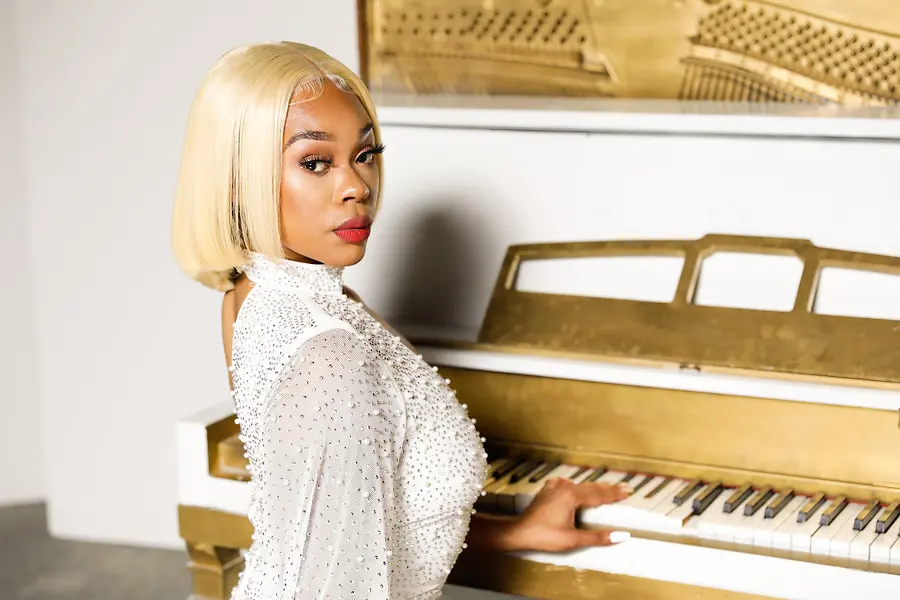
For AyeDNicole, being a Christian woman has never meant surrendering her personality, intelligence, Blackness, or ability to discern when something does not feel right.
She describes herself as a balanced Baptist woman—a woman who loves Jesus Christ while understanding that Christianity does not require silence, blind loyalty, or the abandonment of cultural identity.
Her perspective is rooted in a simple principle: faith should strengthen discernment, not eliminate it.
And after an interpersonal experience that challenged the way she thought about attraction, community, Black identity, and spirituality, AyeDNicole came away with a declaration that summarizes the lesson:
“I won't trade my people for clout.”
This reflection is bigger than one relationship.
It is written particularly for Black women learning that attraction does not automatically mean alignment—and for Black men who should understand that Black women are not stepping stones to be used for encouragement, creativity, connections, emotional support, or community credibility before being diminished when their presence becomes inconvenient.
What Does It Mean to Be a Balanced Baptist Woman?
A balanced Baptist woman can pray and still ask questions.
She can forgive and establish boundaries.
She can love Black men while expecting accountability from individual Black men.
She can participate in multicultural environments without becoming embarrassed by her own community.
She can appreciate another person's accomplishments without minimizing her own.
And she can recognize someone's charisma without confusing charisma with character.
Matthew 7:16 teaches:
“Ye shall know them by their fruits.”
For AyeDNicole, that scripture has become increasingly important.
What happens after the applause stops?
How does someone communicate during disagreement?
How does a man treat a woman whose attention he once welcomed when she begins challenging something he does not want challenged?
What does community service look like when there is no camera?
Those questions matter.
When Christianity Becomes Branding
AyeDNicole has become particularly cautious about what she describes as:
“Christianity cult energy.”
She is not describing Christianity itself as a cult, nor declaring any specific church or individual one. Rather, the phrase describes what she perceives as a social phenomenon: religious language, popularity, community service, and personal influence becoming so intertwined that questioning someone's behavior begins to feel like questioning their spiritual authority.
That is not the Christianity she wants.
“God is not a marketing gimmick.”
A Bible verse underneath a photograph cannot establish somebody's character.
A community event cannot establish somebody's private integrity.
Popularity cannot establish righteousness.
And Christianity should never become a weapon for undermining a Black woman who refuses to surrender her discernment.
When Charm Does Not Equal Character
One personal experience sharpened these convictions for AyeDNicole: her interactions with Rique Bentley, founder of the Jacksonville Run Club.
AyeDNicole is careful to distinguish between what she personally experienced and what another person may have intended.
She cannot speak for Bentley's private motivations, beliefs, or recollection of their interactions.
She can speak about her own.
There was a time when she genuinely liked him.
She recalls direct messages, conversations, and attention that she interpreted as significant interest in getting to know her and spending time together. She was receptive in part because she respected what she perceived as an interest in service and community.
That made their later communication more painful.
She recalls receiving communication she interpreted as suggesting that she was not making sense and that something was wrong with the way she communicated.
She felt belittled.
She felt misunderstood.
Most importantly, she felt that the woman being characterized in those exchanges was fundamentally different from the woman she knew herself to be.
“I cared about him. That's why it hurt.”
She refuses to disguise that admission with artificial toughness.
A Black woman can be accomplished, intelligent, outspoken, and emotionally strong while still admitting that a Black man she genuinely liked hurt her feelings.
Pain does not cancel strength.
“I Cannot Mesh With a Black Man Who Is Not for His People”
Looking back, AyeDNicole believes their interactions taught her something deeper than whether two people were romantically compatible.
She began paying attention to mannerisms.
Communication.
Social priorities.
Who received warmth.
Who received patience.
What appeared to earn approval.
What happened when Black womanhood entered the conversation.
And what she personally perceived as the difference between being Black and being genuinely rooted in Black people.
Those observations changed what she wants in a partner.
“I realized I cannot mesh with a Black man who is not for his people.”
For AyeDNicole, “for his people” does not mean hostility toward anybody else.
It does not mean a Black man cannot have White friends.
It does not mean he cannot love a Hispanic woman.
It does not mean he must exclusively occupy Black spaces.
And it certainly does not mean every Black person must agree with every other Black person.
It means something much more fundamental.
“You should be able to walk into everybody's room without becoming ashamed of the people who were in your house.”
She wants a Black man who can build multicultural relationships while remaining grounded in Black family and community.
A man who does not need to diminish Black women to demonstrate that he appreciates women from other backgrounds.
A man who can pursue professional advancement without treating proximity to Whiteness as evidence that he has outgrown Black spaces.
A man who understands that his grandmother matters when there is no audience.
His mother matters.
His father matters.
Black children matter.
Black women matter.
Black men struggling quietly matter.
The neighborhood matters.
The church elder matters.
The student nobody knows yet matters.
“If your definition of community only includes Black people once they become useful to your image, then that isn't the kind of community I want to build my household around.”
That realization was personal.
There were things about Rique's mannerisms and their interactions that AyeDNicole interpreted differently as time passed. What initially appeared attractive or charismatic to her eventually highlighted differences in values she could no longer overlook.
She does not claim those observations establish what Bentley privately believes about Black people.
They established something equally important:
what she requires.
“Maybe somebody else can mesh with that. I know that I cannot.”
That is discernment without possession.
A woman does not have to declare a man universally bad to recognize that he is wrong for her.
When Public Presentation Starts Feeling Like Performance
Another lesson concerned authenticity.
From AyeDNicole's perspective, aspects of the public presentation surrounding community leadership began to feel excessively polished and performative to her.
She questioned whether some messaging she encountered was authentically spontaneous or heavily scripted, including material she felt had characteristics associated with AI-assisted communication.
She does not claim to know how another person's content was actually produced.
Her larger question is more important:
Where does presentation end and character begin?
Technology can organize words.
Marketing can polish an image.
Social media can create visibility.
But none of those things can manufacture roots.
“I don't need to show my gifts to the internet.”
Her gift of gab does not disappear when the camera turns off.
Her ability to rap does not disappear because she is not performing.
Her education does not disappear because her résumé is not displayed.
Her professional experience does not disappear because strangers cannot see it.
Her Blackness does not disappear because another person receives more attention.
“My spoken words, my raps, and my Blackness come from somewhere no algorithm lived.”
“You Don't Have a Team”
Another statement remained with her: being told, in substance, that she did not have a team.
But adulthood has changed AyeDNicole's understanding of what a team actually is.
A team is not simply the people standing around you when cameras are present.
Her understanding of a team includes family, friends, mentors, professionals, supporters, and people who knew her before brands, publications, businesses, or music campaigns existed.
She also refuses to measure the legitimacy of someone's community by race alone.
There are Black people who support her.
There are other minorities who support her.
There are respectful White and Hispanic people who support her.
The distinction is not racial exclusivity.
It is respect.
“I don't need a man to validate my village.”
And she does not need to diminish somebody else's progress to recognize her own.
Popularity Is Not Community
The experience also made AyeDNicole examine the word community more critically.
Events matter.
Running clubs can matter.
Networking can matter.
Photographs can help organizations grow.
But community cannot end where visibility begins.
Jacksonville contains Black families, churches, historically Black communities, elders, students, professionals, entrepreneurs, and working families whose needs exist regardless of whether those needs create attractive social-media content.
That raises an important question:
Who are we serving when nobody is watching?
AyeDNicole also challenges Black professionals to avoid reproducing within our own circles the same exclusionary dynamics frequently criticized in institutional environments.
Whether someone attended an HBCU or a predominantly White institution does not, by itself, establish that person's commitment—or lack of commitment—to Black communities.
The meaningful question is what people do with their education, influence, access, and resources.
Representation is not automatically service.
Visibility is not automatically impact.
And popularity is not automatically community.
YORUBA IS NOT AN ACCESSORY: WHEN AFRO-DIASPORIC CULTURE GETS SEPARATED FROM BLACK PEOPLE
This part requires clarity because AyeDNicole does not want her Christian convictions to become an excuse for historical ignorance.
Yoruba and Santería are not interchangeable.
Yoruba refers to a West African people, language, culture, and spiritual heritage with deep roots, particularly in present-day Nigeria, Benin, and Togo. Through the violence of the transatlantic slave trade, Yoruba people and traditions were carried into the Americas. In Cuba, Yoruba-derived religious traditions interacted with Catholicism and other influences in the historical development of what became known as Regla de Ocha/Lukumí, commonly called Santería.
That history matters.
So when AyeDNicole speaks critically about spirituality that conflicts with her Baptist Christianity, she is not rejecting African people or pretending that African history began in America.
She is asking a different question:
What happens when people embrace pieces of Afro-diasporic culture while becoming indifferent to the Black people whose ancestors carried that culture across an ocean?
That contradiction bothers her.
You Cannot Love the Culture and Treat Black Women Like Accessories
AyeDNicole's criticism is not of Hispanic women collectively. Hispanic and Latino communities contain enormous racial, national, and cultural diversity, including Afro-Latinas whose own ancestry is inseparable from the African diaspora.
Her concern is with any individual—regardless of ethnicity—who embraces Black or African-derived spirituality, aesthetics, music, language, relationships, or social proximity while displaying little concern for Black women or Black men themselves.
You cannot wear Blackness like jewelry.
You cannot become fascinated with African spirituality while treating African-descended people as disposable.
You cannot celebrate a Black man's body, music, masculinity, influence, or cultural currency while viewing Black women as competition.
And you cannot claim to love a Black man simply because being chosen by him makes you feel superior to Black women.
Wanting a Black man to demonstrate that you can love him “better” than Black women is not the same as demonstrating genuine concern for Black men.
Love is not a racial competition.
A Black man has responsibility in that equation, too.
He cannot demand that the world respect Black culture while allowing Black women to become collateral damage in his pursuit of validation.
“I won't trade my people for clout.”
And AyeDNicole does not want a man who will either.
The Jacksonville Disconnect: When Proximity Does Not Become Respect
AyeDNicole has reflected on social environments in Jacksonville where, from her perspective, Black women can encounter cliquishness, weak communication, or exclusion while Black culture itself remains socially desirable.
That distinction matters.
Nobody should seek acceptance from Black communities while refusing to communicate respectfully with Black women.
Nobody should benefit from Black cultural spaces while treating Black women as obstacles.
Nobody should expect Black men to validate their proximity to Black culture while regarding Black women as competitors.
That is not meaningful cultural appreciation.
It is selective proximity.
“Black Men Are Not Cultural Accessories Either”
Black men should not become accessories for somebody else's proximity to Black culture.
“A Black boyfriend is not cultural authentication.”
A Black husband does not automatically prove that someone understands Black people.
Dating a Black person does not automatically create expertise about racism, Black womanhood, African-American history, or the African diaspora.
The reverse is equally true.
Black people do not automatically understand another culture because they date someone belonging to it.
Intercultural relationships require learning, humility, communication, and mutual respect.
“Love the person without consuming the culture.”
My Baptist Faith and Yoruba-Derived Traditions
AyeDNicole is equally direct about her own theology.
“I am Baptist. I believe in Jesus Christ.”
There are spiritual practices outside Christianity that she personally does not practice and would not want incorporated into her romantic relationship.
That is her religious boundary.
But Christianity does not require historical erasure.
She can recognize Yoruba civilization and African cultural survival while remaining committed to Jesus Christ.
She can acknowledge the African historical roots that contributed to Lukumí/Santería without adopting its theology.
“I can reject a spiritual practice without rejecting Africa. I can follow Jesus without being ashamed of where Black people came from.”
For her, those ideas are not contradictory.
They represent discernment.
A Prayer for Deliverance—Not Reunion
Her Baptist response is therefore prayer.
Not possession.
Not retaliation.
Not asking God to force a relationship back together.
Her prayer is:
“Anything spiritually holding him outside of God's will for his life, I pray that it is cast out in Jesus' name. Amen.”
And:
“We cast out what is not of God in Jesus' name—not to return him to me, but for him to return to his light.”
This prayer represents AyeDNicole's own Christian theology and spiritual interpretation. It is not intended as a factual declaration concerning another person's religion, spiritual condition, or soul.
That distinction is important to her.
“Not for him to return to me. For him to return to his light.”
She does not need possession of a man.
She does not need another conversation to prove she mattered.
She does not need his downfall.
She wants peace.
The Power of God's Grace to Forgive
And that brings the story to one of Christianity's most difficult requirements:
Forgiveness.
Ephesians 4:32 calls Christians toward kindness, compassion, and forgiveness.
AyeDNicole understands that grace differently now because she recognizes that she has needed it, too.
She has misunderstood people.
She has reacted emotionally.
She has made mistakes.
She has needed correction.
And she has needed God's mercy.
“God's grace is powerful enough for me to forgive somebody who hurt me without pretending that the hurt never happened.”
Forgiveness, however, does not necessarily mean renewed access.
“Forgiveness does not mean you get your access back.”
A woman can forgive a man and decide not to date him.
She can pray for him and decline another conversation.
She can release resentment without reopening a relationship.
Forgiveness releases the desire for revenge.
Discernment remembers the lesson.
“Looking in That Man's Eyes…”
There is one memory AyeDNicole describes plainly:
“Looking in that man's eyes, I knew we would not be equally yoked.”
Second Corinthians 6:14's teaching concerning being unequally yoked has taken on deeper meaning for her.
Equally yoked no longer means simply finding someone who identifies as Christian.
She wants spiritual compatibility.
Emotional accountability.
Cultural awareness.
Family values.
Ambition.
Humility.
Respect for Black women.
Genuine concern for Black men.
And a man capable of participating in multicultural spaces without becoming embarrassed by Black spaces.
“I can love everybody without forgetting who raised me.”
That is the balance she expects in a future partner.
Black Women Are Not Stepping Stones
This is perhaps the most important lesson AyeDNicole wants younger Black women—and Black men—to take from her story.
Black women are not stepping stones.
Their encouragement is not disposable.
Their creativity is not free emotional currency.
Their professional networks are not something to extract.
Their affection is not weakness.
And their willingness to support a Black man does not authorize him to diminish them later.
A Black woman can support Black men while holding an individual Black man accountable for how he treats her.
Black men can pursue success, multicultural friendships, interracial relationships, and broad professional networks without disrespecting Black women in the process.
“You don't have to step on a Black woman to prove you've stepped up.”
Black Women Should Never Have to Disappear for Somebody Else to Enjoy Black Culture
Sometimes people will love everything surrounding Black women before learning how to respect Black women themselves.
They may love the music.
The hairstyles.
The slang.
The food.
The athleticism.
The creativity.
The spirituality.
The aesthetic.
The Black man.
The proximity.
But somehow the Black woman becomes the person expected to move aside.
AyeDNicole rejects that premise.
“You don't get to consume the fruit and disrespect the tree.”
Black women are part of the history.
Their grandmothers are part of it.
Their mothers are part of it.
Their scholarship is part of it.
Their labor is part of it.
Their churches are part of it.
Their beauty is part of it.
Their survival is part of it.
Their voices are part of it.
That does not mean Black women exclusively own every Afro-diasporic cultural expression. The African diaspora crosses countries, languages, religions, and racial identities.
It means Black women should not have to become invisible for somebody else to celebrate Blackness.
Vengeance Is Not My Assignment
Romans 12:19 reminds Christians:
“Vengeance is mine; I will repay, saith the Lord.”
AyeDNicole therefore rejects the idea that she needs to sit around waiting for “karma.”
“Karma is not mine, nor is vengeance.”
She does not need somebody to fail.
She does not need to compete with another woman.
She does not need to recruit an audience against somebody.
She does not have to reveal every gift she possesses so the internet understands what another person supposedly lost.
She can tell her story.
She can establish boundaries.
She can protect her name.
And then she can continue living.
If she was wrong about something, God can correct her.
If somebody wronged her, she believes God can handle that, too.
If two people misunderstood one another, God knows what neither person's social-media audience could possibly know.
That is surrender.
My Gifts Were Never the Performance
AyeDNicole knows where she comes from.
Charleston is in her.
Jacksonville is in her.
Her family is in her.
Black church is in her.
HBCU education is in her.
Hip-hop is in her.
Professional experience is in her.
The South is in her diction.
And generations of family history live in expressions she may not even realize she inherited.
“I don't need to show my gifts to the internet.”
She knows she can rap.
She knows she can write.
She knows she can speak.
She knows she can research.
She knows she can build.
She knows she can serve.
She knows she can love.
None of those gifts requires an algorithm's certification.
Another woman—Black, White, Hispanic, or otherwise—cannot duplicate the precise combination of ancestry, family, upbringing, education, creativity, faith, failures, victories, and Southern Black culture that created AyeDNicole.
Nor can AyeDNicole duplicate another woman.
That is not superiority.
That is individuality.
The Balanced Baptist Woman
So what does balance finally look like?
It looks like a Black woman who can say:
“I cared about him.”
“He hurt me.”
“I learned.”
“I forgive.”
“And I release.”
It means refusing to confuse forgiveness with reconciliation.
It means understanding that attraction is not alignment.
It means recognizing that Christianity does not require Black women to become smaller.
It means participating in multicultural America without becoming ashamed of Black America.
And it means recognizing that God's grace can work on two people separately without requiring either person to become the other's destination.
AyeDNicole does not need Rique Bentley to return to validate her experience.
Her prayer remains:
“Don't return to me. Return to your light.”
Because sometimes deliverance is reconciliation.
Sometimes deliverance is restoration.
And sometimes deliverance is finally understanding why two people needed to walk separate roads.
“I won't trade my people for clout.”
“I won't trade my roots for acceptance.”
“I won't trade discernment for attraction.”
“And I won't trade God's peace for somebody's popularity.”
Amen.
EDITORIAL, PERSONAL-EXPERIENCE & LEGAL NOTICE
Authorial Perspective. This article is a first-person cultural, religious, and personal commentary reflecting AyeDNicole/Adrienne's individual experiences, recollections, beliefs, interpretations, and opinions. It should not be understood as independent investigative reporting or an objective adjudication of any interpersonal dispute.
References to Identifiable Individuals. References to Rique Bentley and interactions involving him represent the author's recollection and interpretation of her personal experiences. Statements describing conduct, mannerisms, communication, public presentation, or social dynamics communicate the author's subjective perceptions and reactions. Statements concerning what the author believes she learned about compatibility describe her relationship standards and are not presented as independently established findings about Bentley's beliefs, motives, private relationships, or character.
AI and Public Communications. References to messaging that appeared “AI-assisted,” “scripted,” or similarly characterized reflect the author's impression of communication style. Unless independently substantiated, they should not be interpreted as factual assertions that a particular person used artificial intelligence or intentionally manufactured communications.
Religious Commentary. Statements concerning Christianity, Baptist theology, Yoruba traditions, Lukumí/Santería, prayer, deliverance, spiritual compatibility, being “equally yoked,” or something being “cast out” communicate the author's personal Christian beliefs and religious expression. They are not factual determinations regarding another person's religion, soul, spiritual condition, or religious practices.
Cultural Commentary. Discussions concerning Black, Hispanic/Latino, White, Afro-Latino, and other communities address the author's experiences and broader concerns involving cultural respect, appropriation, interracial relationships, and Black womanhood. They are not intended to attribute a single belief, behavior, or motive to an entire racial, ethnic, national, or religious population.
No Statement of Institutional Position. References to Jacksonville, educational environments, professional culture, community organizations, or broader social dynamics represent the author's commentary and should not be interpreted as statements made on behalf of any school, employer, religious institution, organization, publication, professional association, or other entity with which the author has been or may become affiliated.
Purpose of Publication. This article is presented for personal reflection, cultural commentary, faith-based discussion, and educational dialogue. Nothing herein is intended as harassment, a threat, an instruction for others to contact or confront any person, or an invitation to interfere with another person's employment, organization, relationships, or reputation.
Editorial Standard. Where an assertion concerns another person's intentions, beliefs, or private conduct that the author cannot independently know, the article intentionally distinguishes the author's perception, recollection, or opinion from independently established fact. Readers should make the same distinction when interpreting the essay.
This editorial notice is intended to clarify the nature and purpose of the article. It is not a substitute for individualized legal advice or pre-publication review by a licensed attorney.