
Beyond Inclusion "Why Representation Without Support Is Not Enough"
Moving Beyond Access: Why Support and Belonging Matter More Than Representation Alone

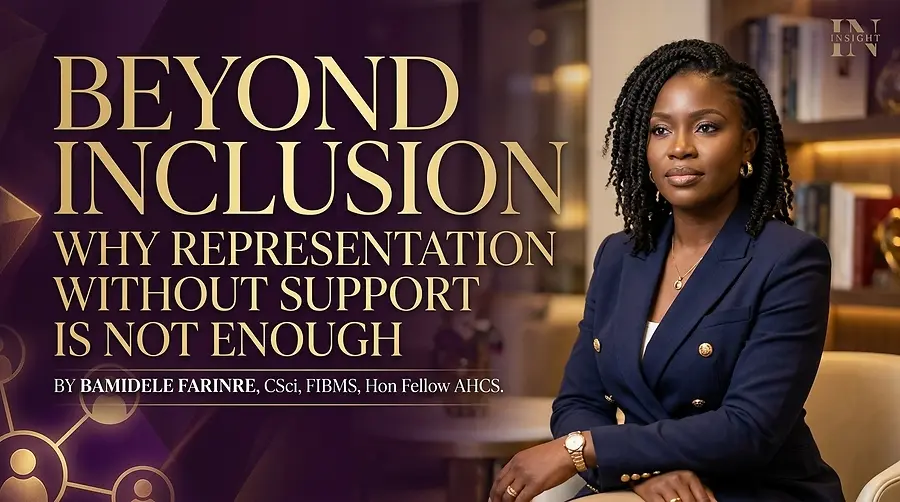
For many years, diversity and inclusion conversations have focused on a critical question:
Who is in the room?
It is an important question. Representation matters. Visibility matters. Access matters.
But increasingly, I find myself asking a different question:
Who is being supported once they arrive?
Because inclusion without support is not the same as belonging. And belonging without opportunity is not the same as progress. If we are serious about creating equitable workplaces, particularly in STEM and leadership, we must move beyond simply counting who is present and start focusing on who is prospering.
When Inclusion Looks Successful on Paper
Many organisations have made genuine efforts to improve representation. We see more women entering leadership pathways. More underrepresented groups entering STEM careers. More initiatives designed to widen participation. This progress should be recognised and celebrated.
However, representation alone does not guarantee positive experiences. A woman can secure a leadership role and still lack sponsorship. A graduate can join a prestigious organisation and still feel isolated. A highly skilled professional can earn a seat at the table and still struggle to have their voice heard.
The numbers may suggest success. The lived experience may tell a different story.
The First-Generation Professional
Consider the first-generation university graduate entering a corporate environment. The achievement is celebrated. Family and friends applaud their success. The organisation proudly recruits diverse talent.
Yet once the excitement fades, they find themselves navigating unfamiliar terrain. They may not have family members who can explain professional norms. They may not have access to informal networks. They may not understand the unwritten rules that others have absorbed through exposure and experience.
Inclusion brought them into the organisation. Support determines whether they thrive within it.
The Woman in Leadership
Throughout my career, I have encountered talented women who reached positions many once thought unattainable. Yet some discovered something unexpected. The challenge was not getting the role. The challenge was sustaining success within it.
Visibility increased. Expectations increased. Scrutiny increased. But support did not always increase alongside those demands.
Leadership can be lonely, particularly when representation is limited. This is why sponsorship, mentorship, and intentional support systems are critical. Without them, inclusion risks becoming symbolic rather than transformational.
My Experience in STEM
As a Black woman in STEM, I have often been aware of the distinction between access and support. There were opportunities I was grateful to receive. Rooms I was fortunate to enter. Positions I worked hard to attain.
Yet there were also moments when I found myself navigating challenges without guidance. Moments when I wished someone had shared insights that others seemed to know naturally. Moments when support would have accelerated progress.
These experiences reinforced an important lesson:
"Being invited into a space is not the same as being equipped to succeed within it."
The Role of Leaders
Support does not happen by accident. It requires intentionality.
Leaders must move beyond asking:
"Who have we recruited?"
And begin asking:
- "Who are we developing?"
- "Who are we sponsoring?"
- "Who are we championing?"
- "Who is being left to navigate alone?"
Real inclusion extends beyond access. It creates environments where people can contribute, grow, and lead.
A Different Measure of Success
Perhaps our success metrics need to evolve. Instead of focusing solely on representation, we should also consider retention, progression, belonging, and wellbeing.
- Who is advancing?
- Who is being supported?
- Who is staying?
- Who feels valued?
- Who believes they belong?
These are equally important measures of inclusion.
Final Reflection
Representation opens doors. Support creates pathways. Sponsorship accelerates growth. Belonging sustains success.
The organisations that will truly shape the future are not those that simply invite diverse talent into the room. They are those that ensure people have the support they need to flourish once they arrive.
Because inclusion without support is not inclusion. It is merely access.
And access, on its own, is never enough.

I am a Chartered Biomedical Scientist and Agile Project Manager with over 18 years of experience in the STEM field. My journey began in Nigeria, where I was inspired to pursue healthcare, and continued in the UK where I developed my passion for microbiology. Despite early setbacks including failing my A-levels, I persevered to earn my biomedical science degree and have since become a multi-award-winning STEM leader.…





