
Bibliography of Aggregate Sources. Part V.
Concluding Our Five-Volume Journey Through American History: From Revolution to Reconstruction

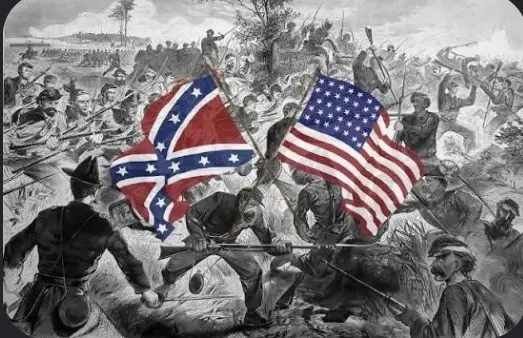
Thank you all again for joining us on this spirited adventure through American history. Next time, we will return to travel and the thrill of solo journeying.
We've covered a great deal in this five-volume series: the beginning of the United States, the interim between the signing of the Constitution and the causes leading to the outbreak of the Civil War (spoiler alert: it was slavery), the end of the Civil War and its immediate aftermath, and, most recently, Jim Crow laws and the Lost Cause narrative. These were only the highlights, presented in a condensed format.
As promised, my list of cited sources follows. All sources are cited according to the 2025 Chicago Manual of Style format and are arranged alphabetically. All sources are either scholarly, peer-reviewed works or court case records taken from copies of the dockets, similar to those we used in law school. However, instead of using Westlaw or LexisNexis, I simply used the Oyez online database, since most people do not have access to the former through a paid subscription, which we, as students, receive through tuition.
\~ Sources ~
Part I
__________________
Adams, Abigail. Letter to John Adams. “A Letter from Abigail Adams to Her Husband.” Philadelphia, Pennsylvania. April 14, 1785. Located at the Virginia Museum of History and Culture, Richmond, VA.
Bass, Robert D. The Green Dragoon: The Lives of Banastre Tarleton and Mary Robinson. 2nd ed. Vol. I of I (revised) vols. Sandlapper Press, 1973. Columbia, SC.
Ellis, Joseph J. His Excellency: George Washington. Original ed. 352 pgs. Knopf Publishing Group/Vintage Press, 2005. New York, NY.
Morgan, M. S. The Case for the Defence of Banastre Tarleton: A British Assessment of Lt. Colonel Banastre Tarleton in the American War of Independence. London, United Kingdom. 258 pgs. Original ed. Admit Hub Ref Service PR, 2020.
Rogers, Clifford J., Ty Seidule, and Samuel J. Watson. The West Point History of the American Revolution: The United States Military Academy. 320 pgs. West Point, NY. Original ed. Vol. I of II vols. in set. Simon & Schuster, 2017.
Tarleton, Banastre, Lt. Gen. History of the Campaigns of 1780 and 1781, in the Southern Provinces of North America. Original ed. Vol. 1 of 1 vol. 562 pgs. Legare Street Press, reprinted 2021 (originally printed 1811). S.I., United Kingdom.
Taylor, Alan. American Revolutions: A Continental History, 1750–1804. 1st ed. W. W. Norton & Company, 2017. New York, NY.
Waters, Andrew. Backcountry War: The Rise of Francis Marion, Banastre Tarleton, and Thomas Sumter. 1st ed. 400 pgs. Westholme, Rutgers University Press, November 12, 2024. Yardley, PA.
Young, Alfred F. Masquerade: The Life and Times of Deborah Sampson, Continental Soldier. Original ed. Vintage, 2005. New York, NY.
\------------------
Parts II–III
—-----------------
Bearman, Peter S. (1991). “Desertion as Localism: Army Unit Solidarity and Group Norms in the U.S. Civil War.” Social Forces 70 (2): 321–342. doi:10.1093/sf/70.2.321.
“The Civil War, 1861” (PDF). American Military History, pp. 199–221. Archived (PDF) from the original on October 17, 2012. Accessed October 21, 2026.
Coates, Ta-Nehisi (June 23, 2015). “What This Cruel War Was Over.” The Atlantic. https://www.theatlantic.com/politics/archive/2015/06/what-this-cruel-war-was-over/396482/.
“Confederate States of America – Declaration of the Immediate Causes Which Induce and Justify the Secession of South Carolina from the Federal Union.” The Avalon Project. Archived from the original on February 20, 2019. Retrieved October 22, 2026.
“Confederate States of America – A Declaration of the Causes Which Impel the State of Texas to Secede from the Federal Union.” The Avalon Project. Archived from the original on August 11, 2011. Retrieved October 23, 2026.
“A Declaration of the Immediate Causes Which Induce and Justify the Secession of the State of Mississippi from the Federal Union.” The Declaration of Causes of Seceding States. 1861. Archived from the original on February 24, 2021. Retrieved October 24, 2026, via the American Battlefield Trust (ABT).
Kelman, Dr. Ari. A Misplaced Massacre: Struggling over the Memory of Sand Creek. 384 pgs. Original ed. Harvard University Press, 2015. Cambridge, MA.
Loewen, James W. (2011). “Using Confederate Documents to Teach About Secession, Slavery, and the Origins of the Civil War.” OAH Magazine of History 25 (2): 35–40. doi:10.1093/oahmag/oar002. ISSN 0882-228X. JSTOR archive: 23210244.
Murdock, Eugene C. One Million Men: The Civil War Draft in the North. 180 pgs. Praeger Press, July 12, 1971.
Neely, Mark E. (June 1986). “The Perils of Running the Blockade: The Influence of International Law in an Era of Total War.” Civil War History 32 (2): 101–118. doi:10.1353/cwh.1986.0012.
Nevins, Dr. Allan. The War for the Union, 1861–1862. 436 pgs. Charles Scribner's Sons Publishing, January 1, 1950. New York, NY, USA, and Berlin, DE.
Nicolay, John George, and John Hay. Abraham Lincoln: A History. Vols. I–X. May 24, 2020. 4,024 pgs. New York, NY.
Grant, Ulysses S. (1886). Personal Memoirs of U.S. Grant. Vol. 2. New York: Charles L. Webster & Co. OCLC 255136538.
Greeley, Horace (1866). The American Conflict: A History of the Great Rebellion in the United States, 1860–'65. Vol. II. Hartford: O. D. Case & Co. OCLC 936872302.
Harris, Dr. William C. (2011). Lincoln and the Border States: Preserving the Union. 430 pgs. University Press of Kansas, September 21, 2011. Lawrence, KS.
Scott, E. Carole. “Southerner vs. Southerner: Union Supporters Below the Mason-Dixon Line.” Warfare History Network. Archived November 12, 2024, on JSTOR. Retrieved October 8, 2026.
Part IV
—-----------
Brown v. Board of Education (https://www.oyez.org/cases/1940-1955/347us483, May 17, 1954). Oyez.org. United States Supreme Court.
347 U.S. 483.
Dred Scott v. Sandford (https://www.oyez.org/cases/1850-1900/60us393, March 6, 1857). Oyez.org. United States Supreme Court. 60 U.S. 393.
Foner, Dr. Eric. Reconstruction: America's Unfinished Revolution, 1863–1877. HarperCollins Perennial Publishing, pp. 38–39 of 752. December 2, 2014. New York, NY.
“Facts of the War.” National Park Service (NPS). Archived from the original on April 4, 2019. Retrieved October 22, 2026.
Greeley, Horace, New York Tribune. Letter to President Lincoln. “Correspondence to the President.” New York, NY. August 22, 1862.
Hagopian, Dr. Kevin Jack. “Triumph of the Will – Film Notes.” New York Writers Institute, University at Albany. Albany, NY, 2002 (notes on file).
Harris, Dr. William C. (2011). Lincoln and the Border States: Preserving the Union. 430 pgs. University Press of Kansas, September 21, 2011. Lawrence, KS.
Holzer, Harold, and Sara Vaughn Gabbard, eds. (2007). Lincoln and Freedom: Slavery, Emancipation, and the Thirteenth Amendment. 282 pgs. Southern Illinois University Press, August 27, 2007. Carbondale, IL.
Nadeau, Ryan (January 5, 2015). “A Prussian Observes the American Civil War.” The Gettysburg Compiler. Archived from the original on January 7, 2022. Retrieved October 18, 2026.
Plessy v. Ferguson (https://www.oyez.org/cases/1940-1955/347us483, May 18, 1896). Oyez.org. United States Supreme Court.
163 U.S. 537.
“U.S. Military Casualties: Principal Wars, 1775–1991.” Defense Casualty Analysis System (DCAS), Department of Defense. Archived from the original on October 20, 2022. Retrieved October 19, 2026.
Rhodes, James Ford (1893). History of the United States from the Compromise of 1850. Vol. I of vols. I–IX. Harper & Bros., pp. 405–409. New York, NY. July 28, 2023.
\------------
Annotation Note:
In spite of the South's shortage of soldiers, most Southern leaders—until 1865—opposed enlisting enslaved people. They used them as laborers to support the war effort. As Confederate representative Howell Cobb said, “If slaves will make good soldiers, our whole theory of slavery is wrong.” Confederate generals Patrick Cleburne and Robert E. Lee argued in favor of arming Black soldiers late in the war, and Jefferson Davis was eventually persuaded to support plans for arming enslaved people to avoid military defeat in 1865. The Confederacy surrendered at Appomattox before this plan could be implemented.
We will now return to travel-oriented articles. Thank you again for joining us at Brooke In The Air Travel and supporting us at brookeintheairtravel.net!

Brooke is the founder and chief operator of Brooke In The Air Travel LLC, a company she formed shortly after graduate school in 2022. She holds a Bachelor’s degree in history and sociology, plus a Master’s degree in history, and has since dedicated her life to travel and unraveling the complex mysteries of flights, connections, hotel bookings, etiquette, and in general “how to travel” with the least hassle…





