Building Brighter Together
How Strategic Partnerships and Trusted Professional Networks Drive Exponential Growth and Create Lasting Opportunities

Building Brighter Together:
The Power of Thoughtful Channel Partnerships
By Andrea Cataneo
Years ago, I started noticing something interesting at conferences and professional events.
The people whose businesses seemed to grow the fastest were not always the loudest in the room, nor were they necessarily the ones working the hardest in the traditional sense. More often, they were the people who understood how to thoughtfully connect with other credible professionals whose strengths complemented their own.
Over time, I realized I was seeing the same pattern in my own career.
For many years, like most professionals, I approached business development one relationship at a time. That still matters tremendously. Real trust is personal, and it takes time to build. But some of the greatest acceleration in my professional life came when I stopped viewing growth as a solo effort and started building intentional channel partnerships with people who served similar audiences from different perspectives.
That distinction matters.
The best channel partners are usually not your direct competitors. If two people offer essentially the same services to the same audience, the audience often feels forced to compare them. But when the relationship is truly complementary, both people become more valuable because each brings something the other does not.
As a capital markets attorney, some of my strongest professional relationships have been with accountants who audit public companies, investment bankers, investor relations professionals, association leaders, and media platforms that serve the same general business community from different angles. We may all work with emerging companies, but we solve different problems.
That creates opportunity.
And importantly, when two respected professionals align thoughtfully, there is a natural transfer of confidence that occurs. If someone I trust deeply introduces another professional into my circle, people tend to approach that person with a greater level of openness from the start. The relationship begins with credibility already partially established.
What I particularly like about this approach is that it is practical and adaptable across industries.
Take the CEO of a medical device company. Instead of focusing exclusively on other CEOs or investors, imagine building relationships with physician associations, specialty medical groups, healthcare podcasters, continuing medical education platforms, or patient advocacy organizations that genuinely care about improving outcomes in the same area the company serves.
Now the conversation becomes larger than the product itself.
Or consider real estate. A top realtor might build meaningful partnerships with home stagers, interior designers, landscapers, or home improvement companies that can materially increase the value and marketability of a property before it goes on the market. Conversely, a home improvement company might strategically align with realtors because a relatively modest renovation investment could dramatically improve the eventual sale price of a home. Both parties benefit because each enhances the value proposition of the other.
I have also seen this work beautifully in professional services. An estate planning attorney, wealth advisor, insurance professional, and accountant may all serve the same families, but through entirely different lenses. Together, they can provide far more comprehensive value than any one professional operating alone.
The important point is this: the strongest channel partnerships are rooted in mutual value, aligned reputations, and long-term thinking. They are not simply transactional referral arrangements.
And in many cases, they start very simply:
A curated dinner.
A webinar.
A small educational panel.
A breakfast gathering with thoughtfully selected guests.
A podcast conversation.
The format itself matters far less than the quality of the people in the room and the intention behind bringing them together.
One of the smartest things professionals can do is look carefully at the relationships they already have and ask a few questions:
Who serves my clients in a complementary way?
Who has built a thoughtful and respected professional network?
Who communicates with integrity?
Who would naturally elevate the quality of the room if we collaborated together?
From there, it becomes surprisingly easy to create value. Two professionals hosting a dinner together suddenly doubles the relationships, perspectives, and opportunities in the room. A webinar where each person educates from their own expertise creates a richer conversation and attracts a broader audience. Even a simple panel discussion can position both people as thoughtful leaders while introducing their respective circles to one another in a meaningful way.
And often, the most valuable opportunities happen afterward. The follow-up conversations tend to be warmer because the relationship began through shared value and thoughtful introduction rather than cold outreach.
For me personally, this changed the way I viewed growth entirely. Instead of seeing business development purely as a “one relationship at a time” process, I began to appreciate the compounding effect of strategic relationships and trusted professional circles. A few strong partnerships can quietly open doors to entirely new opportunities, industries, and communities.
Over the last year and a half, I also stepped significantly outside the traditional lane of my industry, and I have absolutely no regrets about doing so. We all need to stretch ourselves in order to grow, to gain perspective, and sometimes to rediscover capabilities we did not fully realize we had. The experience expanded the way I think about communication, leadership, business development, and relationships, and it reinforced something I now believe strongly: growth often happens when we are willing to enter rooms we once thought were not meant for us.
I also think women sometimes underestimate the strategic power of collaboration in business — not because it is absent from our nature, but because many of us instinctively collaborate beautifully in our personal lives. In business, however, we were often conditioned to believe we needed to build independently in order to prove ourselves. Yet many of the most impressive women I know are exceptional connectors. They bring thoughtful people together. They create opportunities for others. They build trusted circles that continue to create value long after the initial introduction.
That is real influence.
As I reflect on the honor of being inducted into Influential Women, I find myself thinking less about titles and more about contribution—about continuing to create relationships, conversations, and opportunities that elevate everyone involved. The next stage of growth is often found at the intersection of trusted relationships, fresh perspective, and the willingness to build something bigger together than any one person could create alone.
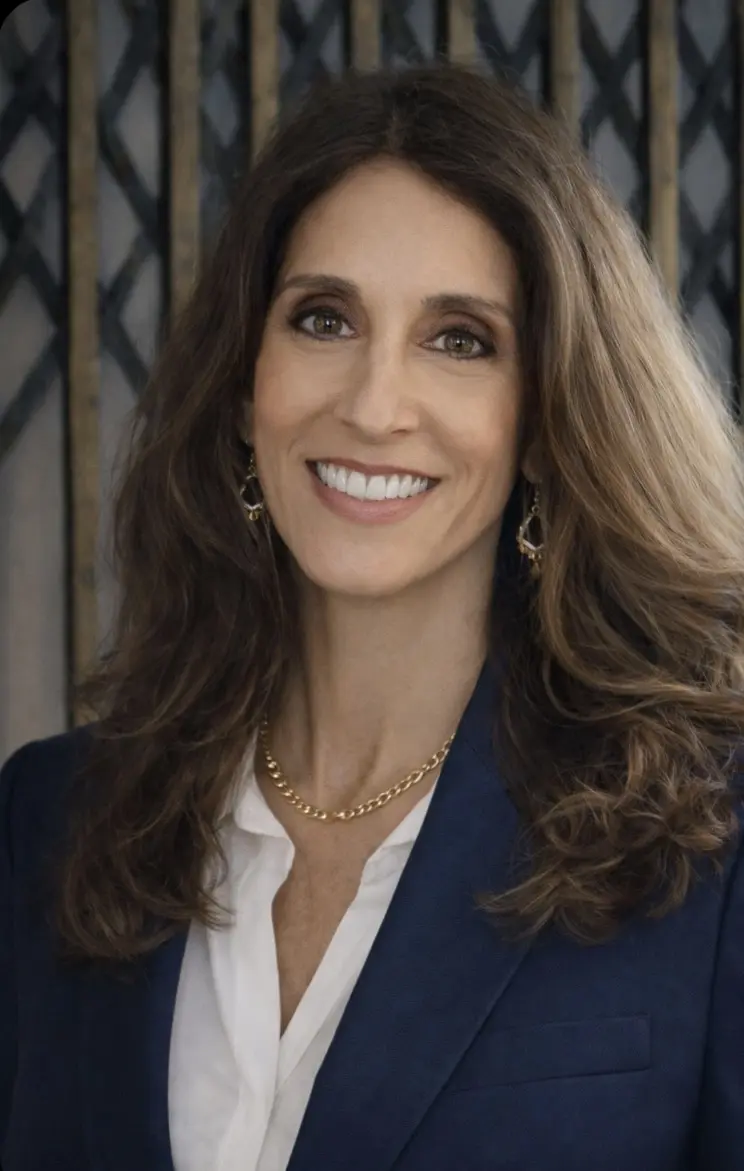
Andrea Cataneo is a nationally recognized capital markets and securities attorney with more than 26 years of experience representing emerging growth companies, investment banks, and public issuers. Over the course of her career, she built a multi-million-dollar practice while raising two young daughters, became the first woman equity partner at a prolific boutique firm in the PIPEs and microcap space, spent nine years in Big Law, and now serves as a Partner at Lucosky Brookman LLP—a firm she describes as a rare combination of entrepreneurial, growth-oriented culture with the sophistication, organization, and resources often associated with an AmLaw 100 firm, but without the layers of bureaucracy that can sometimes slow innovation and collaboration.
Andrea currently serves on the Board of the National Investment Banking Association and recently relocated closer to her grandchildren in what she describes as her “dream chapter” of life and career.
An unapologetically out-of-the-box thinker, Andrea is also close to releasing a book co-written with her husband’s first wife—who has since become one of her best friends. They call each other “Wife-in-Law™” (currently being trademarked!). When you read the book, you’ll understand why.


