
Building Self-Esteem Through Change
Finding Self-Esteem and Belonging When Life-Altering Changes Challenge Your Identity
When Change Becomes Personal
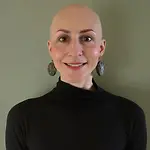
I was 17 years old, beginning my first year of college in Seattle, far from my family in California, when I first experienced alopecia areata, an autoimmune condition in which the immune system attacks hair follicles, resulting in hair loss. For many years, my hair loss was patchy. I would lose hair in spots on my scalp, along with portions of my eyebrows and eyelashes. It came and went, and for the most part, I could hide it.
That changed when I was 31 years old and six months pregnant with my second son. During an already demanding season of professional responsibilities and raising a young family, I began losing more than a patch of hair. My priorities shifted from everything else happening in my life to fighting the hair loss.
I met with dermatologists, a naturopath, and my primary care provider. I explored what I could safely try during pregnancy. I became consumed by fear, stress, and shame. Nearly every day brought another wave of panic.
By the time I was nine months pregnant, I had lost approximately 75% of my hair. On March 1, 2017, I made a decision that changed my relationship with alopecia. I shaved the remainder of my hair. It was the last haircut of my adult life. And surprisingly, it was also a moment of freedom. I could finally release myself from the constant agony of watching my hair fall out. But that didn't mean the experience was over.
From the outside, hair loss might appear to be a cosmetic issue. For me and others with this condition, it is never just hair. It changed the person I saw in the mirror. I no longer recognized myself. It changed how I imagined other people saw me, how I showed up socially, and how I experienced my femininity.
I was navigating something I now recognize as a life-altering event.
Research supports the idea that alopecia areata can have significant psychosocial effects, including challenges related to emotional well-being, social functioning, quality of life, and self-esteem. And while alopecia is part of my story, the experience of having something important change about ourselves is something many of us can relate to: navigating life transitions, adjusting to parenthood or caregiving, facing a health diagnosis or chronic condition, moving through the changes of aging, or recovering from prolonged stress, among other experiences.
Why Life-Altering Changes Can Challenge Self-Esteem
The American Psychological Association defines self-esteem as "the degree to which we perceive the qualities and characteristics of our self-concept positively." In simpler terms, self-esteem is how positively we view and evaluate ourselves. Our self-esteem isn't fixed. Research suggests that stressful life events can affect self-esteem, and major health changes can disrupt how we understand ourselves and our identities. That doesn't mean every major change affects everyone in the same way. But when something changes our health, appearance, relationships, roles, or abilities, it can challenge the familiar ways we've come to know ourselves.
One framework I've found particularly helpful describes self-esteem through four interconnected areas: self-confidence, competence, identity, and belonging. I first encountered this framework through Alison Mann's National Alopecia Areata Foundation webinar on self-esteem and alopecia.
Something clicked for me when I learned about these four areas. Suddenly, I could better understand why losing my hair had affected so much more than my appearance.
1. Self-Confidence: Can I Trust Myself to Navigate This?
When my hair loss became visible, I began questioning how I would handle everyday situations. What happens when someone asks about my hair? Should I wear a wig? Do I explain what's happening? What will people think of me? Situations that once felt ordinary suddenly required decisions I hadn't anticipated. My confidence in navigating social interactions was shaken.
2. Competence: Am I Capable of Handling This?
Alopecia presented a challenge I hadn't chosen and couldn't simply fix. There wasn't a predictable formula or guaranteed outcome. I couldn't apply my usual problem-solving approach and expect everything to work out. I began doubting my intuition, avoiding ambiguous situations, and questioning whether I was capable of handling unfamiliar experiences. The uncertainty surrounding my health began affecting my confidence in other areas of life.
3. Identity: Who Am I Now?
Hair had always been part of the person I recognized in the mirror. Without it, I began asking a question that reached far beyond my appearance: What makes me, me? When something we associate with our identity changes, we may find ourselves reconsidering how we understand who we are.
4. Belonging: Where Do I Fit In?
My visible difference made me wonder whether I would be accepted, understood, or treated differently. I didn't know other women who looked like me. Hair seemed to be the norm, and suddenly I stood out without it. I also experienced relationships changing during a time when I needed support. It was lonely.
Understanding these four areas helped me recognize that I wasn't simply struggling with how I looked; it was a multifaceted challenge.
Building Self-Esteem Through Change
One of the most helpful shifts in my experience was moving away from asking, "How do I solve this problem? What's wrong?" and toward a different question: "How do I care for and support the whole person that I am?" That shift opened the door to new ways of supporting my self-esteem.
Practicing self-compassion helped me respond to difficult experiences with greater kindness rather than constant self-judgment. Sometimes that meant reminding myself: I see you. This is hard. You're doing your best. Self-compassion didn't require me to enjoy losing my hair or pretend the experience wasn't painful. It allowed me to acknowledge the difficulty while treating myself with care.
Building self-trust through small steps helped me begin trying new things and recognizing the difference between what I could and couldn't control. I couldn't control every aspect of alopecia, but I could choose how to respond, what support to seek, and which small steps to take. As I began navigating new experiences, I discovered that confidence and self-trust could grow through action, even when the outcome remained uncertain.
Connecting with my personal values helped me recognize what mattered most beyond my appearance. My values offered direction for decisions, relationships, and how I wanted to live. I've also learned that values can evolve with different seasons of life. Today, I intentionally revisit mine annually to stay connected to what's meaningful.
Finding connection and belonging through family and close friends helped me experience love and support as I am. I also discovered that I needed to see other women living with alopecia. I began following women with hair loss on social media. Over time, my online world became filled with people whose experiences reflected my own, which helped me feel part of a larger community that says, "I see you. I understand. I'm one of you."
Rebuilding healthy self-esteem wasn't about convincing myself that hair didn't matter (because it does). It wasn't about deciding that I was always okay with losing it (because I'm not always okay). It was about acknowledging what I'd lost and recognizing that there is still so much more to who I am.
Questions to Explore During Your Own Season of Change
Whether you're navigating a health diagnosis, a career transition, a changing relationship, aging, or another significant life experience, you might find it helpful to reflect on a few questions:
- What has changed, and how has this experience affected how I see myself?
- What am I learning about myself through this experience?
- What values, strengths, relationships, and roles are true about me?
- What do I need in this season to feel supported, connected, and understood?
There aren't right or wrong answers. The purpose is to create space for awareness, curiosity, and a fuller understanding of yourself.
You Are More Than What Has Changed
If there's one idea I hope you take away, it's this: Change can challenge how we see ourselves, and it can invite us to discover more of who we are becoming. Alopecia changed something very visible about me. For a time, that change challenged my self-confidence, competence, identity, and sense of belonging. I'm still learning how to navigate those challenges.
Not every difficult experience needs to become a lesson or an opportunity for growth. Sometimes we simply need space to acknowledge what we've lost.
When we're ready, we can begin noticing what remains, what supports us, and what may be emerging. Whatever season of change you're navigating, I encourage you to give yourself a few minutes this week to pause and reconnect with the whole person that you are.
You are more than what has changed.
About the Author
Samantha "Sam" Orr is a certified mindbodygreen Health & Wellness Coach and founder of So Thrive Coaching in Seattle, Washington. She partners with individuals navigating seasons of change to build sustainable health habits and with organizations to foster healthier communities through coaching, wellness education, workshops, and speaking. Her approach is grounded in strengths, self-awareness, and evidence-informed behavior change. Learn more at So Thrive Coaching.
References and Further Reading
- National Alopecia Areata Foundation: Alopecia Areata
- Toussi, A., Barton, V. R., et al. (2021). Psychosocial and psychiatric comorbidities and health-related quality of life in alopecia areata: A systematic review. Journal of the American Academy of Dermatology, 85(1), 162–175.
- American Psychological Association: Self-esteem. APA Dictionary of Psychology.
- Reitz, A. K. (2022). Self-esteem development and life events: A review and integrative process framework. Social and Personality Psychology Compass, 16(11), e12709.
- National Alopecia Areata Foundation and Alison Mann (2025). Supporting Your Self-Esteem: Tools for Living with Alopecia Areata. Webinar.
- Hajdarevic, S., et al. (2025). Becoming whole again: Caring for the self in chronic illness. Journal of Clinical Nursing, 34(3), 754–771.
- Kristin Neff. What Is Self-Compassion?
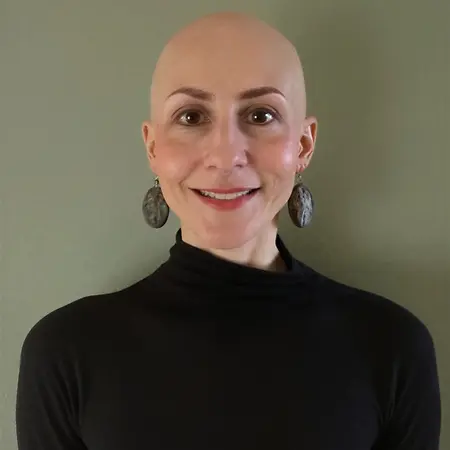
Samantha Orr, PMP, is a Seattle-based Health and Wellness Coach and founder of So Thrive Coaching, established in January 2026. She combines her expertise in behavior change, program management, and whole-person wellness to help clients navigate life transitions and build sustainable habits. With a diverse background spanning technology, community health, and nonprofit leadership, Orr brings strong collaboration and…





