Character & Fitness Clarity - Integrity Matters before Law School
A Personal Statement of Accountability, Clarity, and Preparation Before Pursuing Legal Education



A Prospective Statement Before Any Future Law-School Application
By Adrienne Floyd
There comes a point when protecting your character does not mean pretending that every reaction you have ever had was perfect. Sometimes character is demonstrated by becoming mature enough to revisit those reactions, explain their context, accept responsibility for your portion, and distinguish documentation from interpretation. That is the purpose of this statement. Articulation matters.
My sincere passion is to eventually pursue law school and obtain a rigorous legal education that can strengthen the industries and communities where I hope to contribute. I am particularly interested in legal education that meaningfully engages predominantly Black communities, entrepreneurship, entertainment, intellectual property, business development, and underserved populations. When that season arrives, I want to select a robust law-school program consistent with those aspirations. Until then, preparation matters.
A Necessary Clarification About My Law-School Status
At the time of this publication, I am not enrolled in law school, I do not hold law-student status, and I am not presently undergoing a law-school character-and-fitness review. I am a prospective future law-school applicant. This statement is being written proactively before any future application because legal education is a sincere long-term aspiration, and I believe transparency should precede necessity.
This article is therefore a personal and professional clarification. It is not an admissions disclosure, bar application, legal filing, or response to an investigating authority. I want my written record to distinguish documented events, personal recollections, interpretations, accountability, and lessons learned from rumors or fragmented narratives concerning different periods of my life. If and when I apply, I will answer the questions actually asked by each institution according to its requirements.
I am not presenting myself as an attorney, law student, or person possessing legal credentials I have not earned. I am a businesswoman, creative, professional, and prospective future law-school applicant who has developed a sincere interest in the law through experiences touching business, employment, intellectual property, entertainment, nonprofit development, and advocacy. Formal legal education would be an expansion of that journey. It is not my present status.
Why I Am Choosing Transparency Before I Apply
Because law school is something I may pursue in the future, I believe it is in my best interest to articulate difficult periods of my life in my own words before an application ever exists. Rumors, fragmented social-media posts, and third-party interpretations should not become substitutes for a complete account from the person who actually experienced the events. Where appropriate, I am preserving records and creating written statements that explain my perspective. Clarity is not retaliation.
That does not mean every disagreement deserves publication. Some documentation should remain private or reserved, particularly where releasing it would contribute nothing meaningful to understanding an event. Transparency and discretion can coexist. My objective is not to create an internet courtroom.
I also understand that my account is still my account. Another person may remember a disputed event differently. Documentation can establish certain facts, while other portions may remain recollection or interpretation. Recognizing that distinction is part of the intellectual discipline I want to carry into any future legal education.
Character Requires Me to Examine Myself Too
Credibility cannot be built exclusively by describing what other people did to me. I must examine myself. There were periods when accumulated hurt, professional conflict, rumors, interpersonal disputes, and the exhaustion of repeatedly turning the other cheek affected how I reacted publicly. Some of my social-media responses were emotional.
I understand how someone encountering an isolated post without its history could perceive anger before understanding its source. As a Black woman, I am conscious of the cultural stereotype of the "angry Black woman," but that stereotype cannot become an excuse for me to avoid examining my communication. There were moments when stepping away sooner, communicating differently, or processing privately before posting publicly would have served me better. I own that.
For too long, I sometimes believed keeping peace required silence. Turning the other cheek became, in certain situations, avoiding boundaries that should have been established much earlier. Suppressed frustration eventually became accumulated frustration, and accumulated frustration sometimes became reaction. Therapy, reflection, and a genuine reset became important before I could redirect my energy toward what I could actually control.
That reset mattered. I needed to return to myself before returning fully to the businesses, creative projects, and professional ambitions for which I am responsible. In my own personality, I describe that restoration as getting back to being the HBIC of the businesses I can control outside of corporate America. Beneath the humor and confidence of that phrase is a serious lesson: leadership begins with governing yourself.
What Happened, What Can I Prove, and What Do I Believe?
One of the most important disciplines I have developed is asking three questions:
What actually happened? What can I prove? What is my interpretation?
Those questions increasingly govern how I document controversial experiences. A screenshot can establish particular words appearing in a preserved communication. My description of how those words affected me is personal testimony. My belief about why another person acted a particular way remains interpretation unless independent evidence establishes motive.
Evidence is not assumption. Suspicion is not proof. An allegation is not an adjudicated finding. Likewise, an emotional reaction does not automatically establish that the underlying allegation is either true or false.
I want those distinctions to remain visible throughout my writing.
Why I Am Creating My Own Written Record
Some people may question why I am articulating difficult experiences or preserving them through written statements. My answer is straightforward: incomplete narratives can become permanent narratives when the person who lived an experience never clearly states her position. I would rather create a measured contemporaneous record than someday attempt to reconstruct complicated years entirely from fragments. Documentation allows chronology and emotion to be separated.
This does not mean every rumor deserves an article or every screenshot belongs online. Some evidence can remain reserved. Some disagreements should simply end. Documentation does not require exploitation.
My goal is to create an intelligible record of my own experiences while acknowledging where another person may remember events differently. Where documentation exists, I can identify it. Where I possess only recollection, concern, inference, or interpretation, I should say so. That distinction protects credibility more effectively than exaggeration ever could.
Jacksonville Hurt Me. Jacksonville Did Not Make Me Abandon My Community.
Some of my most difficult experiences arose within Jacksonville communities and through relationships with people possessing varying degrees of popularity, professional access, or local influence. Certain experiences connected to people from different periods of my FAMU and Jacksonville life also hurt me deeply. I will not pretend otherwise. Hurt becomes particularly difficult when it comes from communities you hoped would understand you.
But disappointment with individuals will not make me turn against Black people. Conflict with particular members of my community does not erase my commitment to that community. Nor will painful experiences involving particular FAMU classmates cause me to reject what historically Black institutions have contributed to my education, identity, and understanding of Black excellence. Individuals and institutions are not interchangeable.
That distinction will matter whenever I eventually decide where I want to attend law school. I am interested in legal education partly because I want greater capacity to contribute to communities, businesses, and industries that include Black people—not escape them. Hurt does not eliminate responsibility. My community remains worth serving even when particular people within it disappoint me.
The South That Reminded Me What Community Can Be
My difficult experiences in Jacksonville have never defined my complete understanding of Southern Black culture. My experiences throughout the Carolinas, Atlanta, Memphis, and Texas have continually reminded me why Southern hospitality means so much to me. Across these places, I have encountered expressions of Black community that reinforced my appreciation for fellowship, ambition, creativity, and cultural pride. They reminded me that disappointment in particular people should never become disappointment in my people as a whole.
Southern Black excellence has never existed in only one profession. I see it throughout entertainment, sports, entrepreneurship, education, nonprofit leadership, and community development. I see artists creating intellectual property from lived experience, athletes converting discipline into influence, entrepreneurs creating employment, and families building businesses capable of surviving another generation. Black excellence becomes especially meaningful when individual accomplishment creates opportunity beyond the individual.
Atlanta strengthened my appreciation for the scale at which Black culture, entertainment, education, and business can coexist. Memphis reinforced my respect for Southern music, entrepreneurship, family roots, and the cultural ecosystems capable of growing around Black creativity. My experiences with the Carolinas have continually reminded me of Southern hospitality, family tradition, and community identity. Texas represents another landscape where I see possibilities for entrepreneurship, professional development, education, and generational expansion.
None of these places is perfect. Black communities are not monolithic, and geography does not guarantee integrity, prosperity, or equality. What these experiences gave me was perspective. Southern Black identity is far larger than the interpersonal conflicts I experienced in any one city.
My Sincere Hope for Jacksonville: Learn, Evolve, and Leave the Door Open
My sincere hope is that the Jacksonville communities addressed throughout my writings—including particular Black social, professional, and creative circles whose conduct I have criticized—take something constructive from this reflection. Calling attention to what disappointed or hurt me is not the same as wanting my hometown communities to fail. Quite the opposite. I want Jacksonville to evolve.
I also hope people within Jacksonville's music culture, including rappers and creatives who came before my generation, can examine where previous decisions may have made certain doors harder for subsequent artists to open. That is my perspective on the culture I experienced, not a declaration that every Jacksonville artist failed the city or deliberately obstructed anyone. Every generation inherits opportunities and obstacles from the generation preceding it. The responsibility is to learn from both.
Black communities cannot afford to become hostile to change simply because change arrives through somebody whose personality, education, creativity, or strategy looks different from what has traditionally been celebrated. Sometimes the person challenging a familiar mindset is not attempting to embarrass the community. She may be saying there is an entire world of education, ownership, professional development, and opportunity beyond what we already know. Growth requires enough confidence to consider that possibility.
I have also learned that constantly proving you are "outside" is not synonymous with building. Visibility can be valuable, and genuine networking can create extraordinary opportunities. But there is also power in going home, closing the door, studying, writing, researching, developing intellectual property, strengthening a business plan, and quietly mastering your craft. Being unseen while you build does not mean you stopped progressing.
Networking can also become confused with constant accessibility. Not everyone needs access to your process, and not every room deserves your presence. Healthy networking creates reciprocal opportunity without requiring people to abandon their individual pace. Your race does not have to become somebody else's race simply because you entered the same room.
I hope Jacksonville increasingly creates room for the person who chooses the library over the party, the business plan over appearances, the studio session over being seen outside, and professional credentials alongside creative ambition. Those paths do not have to compete. Black culture becomes stronger when intellectual development, entrepreneurship, entertainment, athletics, and community service are permitted to coexist. We need more lanes, not narrower definitions of success.
And I include myself in that call for growth. There are ways I could have communicated differently, moments when frustration became louder than strategy, and situations where stepping away earlier would have protected my peace. If I am asking a community to examine itself, I must possess enough integrity to examine myself. Accountability cannot be something I demand only from other people.
My criticism, therefore, should not be interpreted as saying Jacksonville has nothing to teach me. Jacksonville taught me tremendously. Some lessons came through opportunity and community; others came through disappointment. Both contributed to the woman, entrepreneur, artist, and prospective future law-school applicant I continue becoming.
Sometimes progress looks like leaving for a season. Sometimes it looks like declining an invitation, entering therapy, returning to school, developing a business others do not understand yet, or simply locking in. There is too much world beyond our immediate circles to believe proximity automatically equals progress. The goal cannot merely be getting outside. The goal should be building something worth bringing home.
My hope for Jacksonville is not humiliation.
Not retaliation.
Evolution.
Black Excellence Must Become Generational Infrastructure
To me, Black excellence cannot stop at individual achievement. It should eventually become generational infrastructure. Knowledge should become mentorship, opportunity should become access, successful businesses should create employment, creative ownership should become intellectual property, and professional advancement should create pathways for people who historically had fewer pathways available. That is how achievement becomes legacy.
Generational wealth is also larger than money. It includes financial assets, but it can also include education, legal literacy, professional networks, intellectual property, institutional knowledge, and confidence entering industries from which previous generations were excluded. Knowledge passed forward is an inheritance too. Opportunity multiplied across generations becomes power.
That is especially important for Black and minority communities that remain underserved. The objective should not merely be gaining access to established spaces and closing the door behind us. We should possess the freedom and resources to build spaces of our own—businesses, nonprofits, creative institutions, athletic enterprises, educational programs, and professional networks where people can create, thrive, grow, and inspire. Representation becomes more durable when communities possess ownership alongside visibility.
Creativity, Expression, and the Right to Build
This is also where my appreciation for constitutional rights intersects with my creative and professional ambitions. The First Amendment protects important freedoms involving speech, expression, religion, assembly, and petition, subject to established legal limitations. Artists, writers, entrepreneurs, and community advocates rely upon those freedoms to communicate ideas, create culture, organize, and challenge institutions. Understanding those protections responsibly is part of what makes future legal education attractive to me.
Black creativity deserves dignity, legal protection, and opportunities for ownership. Our music, businesses, athletic culture, scholarship, fashion, storytelling, and community organizations are not peripheral to American culture. They have helped shape it. Communities should understand both the cultural and economic importance of protecting what they create.
Rights also have legal boundaries. Freedom of expression does not mean every statement is immune from legal consequences or that every form of conduct receives constitutional protection. That distinction is one reason I want eventual formal legal education rather than relying upon slogans about what the law means. Knowing our rights is powerful. Understanding their actual scope is even more powerful.
Popularity Is Not Evidence
Another lesson I have learned is that popularity cannot become an evidentiary standard. Having more followers, stronger community connections, greater professional visibility, or relationships with people working around law does not automatically make someone's account more accurate. Likewise, my feeling marginalized by a social environment does not automatically establish that everyone within it acted maliciously. Both propositions require evidence.
I have sometimes worried that people around me who are in law school, adjacent to legal environments, or interested in legal strategy could attempt to anticipate my actions, construct defenses, or create circumstances later characterized unfavorably toward me. That describes a concern I have experienced; it is not a factual assertion that any particular person has orchestrated such a scheme. My responsible response to that concern is documentation, boundaries, and restraint—not presenting suspicion as proof.
I do not need to remain "ten steps ahead" of another person by becoming consumed with what I imagine they might do. I need to remain several steps ahead of my own reactions. That means preserving relevant records, seeking appropriate professional advice when necessary, and refusing to manufacture certainty where evidence does not exist. That is stronger protection.
I Will Not Allow "Unstable" to Become a Shortcut Around Context
One concern underlying these statements is being characterized as erratic or unstable because someone encounters a reaction without understanding the chronology preceding it. I cannot control every label another person applies to me. I can control whether my own record is coherent, accountable, and grounded in documentation. Context matters.
Defending myself against a characterization does not require pretending every response was ideal. There are reactions I would handle differently today. There were moments when I needed distance before expression. There were also circumstances that genuinely hurt me.
All three things can be true simultaneously.
I can reject inaccurate characterizations while acknowledging conduct I would improve. I can explain context without using context as an excuse. I can say someone hurt me without claiming knowledge of that person's private motives. Accountability and self-defense are not opposites.
From Reaction to Discernment
Therapy and intentional reflection helped me understand that reacting to everything does not protect me. Sometimes it simply gives the original conflict greater access to my life. Peace requires boundaries, and boundaries sometimes require silence. Other circumstances require documentation rather than confrontation.
That shift changed the questions I ask myself. Does this deserve a response? Does it require a boundary? Does it require documentation? Does it require appropriate professional intervention, or does it simply require me to move forward?
Those questions are considerably more useful than asking how I can make everyone understand me.
I cannot.
Adrienne Floyd and AyeDNicole Can Coexist
Part of my clarity involves understanding the difference between my identities without pretending they belong to separate human beings. Adrienne Floyd is the professional, entrepreneur, writer, and prospective future law-school applicant responsible for serious decisions. AyeDNicole is my creative expression as a recording artist. One identity does not eliminate accountability for the other.
Creative expression can be bold. Music can be provocative. Social-media personality can contain humor, cultural language, fashion, and entertainment that would be inappropriate in a corporate boardroom or legal setting. Professional maturity means understanding the room without pretending creativity itself demonstrates deficient character.
I do not want a future legal education to erase the artist. I want it to sharpen the entrepreneur, advocate, and executive behind her. Balance is part of the assignment.
Why Law Matters to My Future
My interest in law is not rooted in wanting sophisticated terminology with which to fight personal enemies. That would be an extraordinarily small purpose for a legal education. I am interested because industries in which I work repeatedly intersect with contracts, intellectual property, corporate governance, employment, entrepreneurship, entertainment, brand protection, nonprofit development, and regulatory responsibility. Legal literacy has practical consequences.
When the appropriate time comes, I hope to pursue the intellectual discipline a robust law-school program can provide. I want to understand how arguments are tested, evidence is evaluated, competing narratives are examined, and legal rules operate beyond what an individual believes is fair. I want greater capacity to contribute responsibly to businesses and communities I care about. That requires substantially more than winning an argument online.
I also want Black and minority communities to possess greater access to knowledge necessary to protect businesses, negotiate agreements, preserve intellectual property, develop organizations, and understand systems affecting opportunity. Young creatives should understand that artistic talent and business literacy can coexist. Entrepreneurs should understand that ownership is strengthened by governance, contracts, and responsible legal planning. Knowledge becomes most valuable when it can travel back into the community.
Character Is Not the Absence of Conflict
My character should not be evaluated through a fantasy in which I have never been angry, embarrassed, hurt, reactive, or wrong. Character is better demonstrated by what I do with those experiences after acquiring enough perspective to examine them. Do I clarify or distort? Do I identify my contribution or blame everybody else?
Do I preserve evidence or embellish it? Do I retaliate or establish boundaries? Do I remain permanently inside the reaction or learn from it? Those questions are more revealing to me than attempting to manufacture a spotless biography.
I am choosing growth over reaction.
That does not mean surrendering my voice.
It means refining it.
My Commitment Going Forward
Going forward, my public writing will distinguish documented facts, firsthand recollections, allegations, interpretations, and opinions. Where I make mistakes, I want enough integrity to correct them. Where serious accusations concern another person, evidence and appropriate context should matter more than anger. Where something belongs privately in my records rather than publicly online, I want the discernment to recognize that distinction.
I will continue protecting my businesses, creative work, professional identity, and personal boundaries. I will continue advocating for Black women without pretending Black women are incapable of error. I will continue supporting Black communities without allowing popularity, class, social proximity, or local influence to determine whose humanity matters. And I will continue preparing myself for the possibility of applying to law school in the future.
If that application day arrives, it should encounter a woman capable of explaining herself without hiding from herself.
For now, my status is simple and intentional:
Prospective future law-school applicant.
Nothing more has been claimed.
Preparation does not require pretending the destination has already been reached.
That is character.
That is accountability.
And that is clarity.
Prospective-Status, Editorial & Legal Notice
At the time of publication, the author is not enrolled in law school, does not hold law-student status, and is not presently undergoing a law-school character-and-fitness review. She describes herself solely as a prospective future law-school applicant. This publication predates any future law-school application unless subsequently updated to state otherwise.
This essay is a personal statement of reflection, clarification, accountability, and professional aspiration. It is not an official admissions statement, character-and-fitness submission, bar disclosure, legal filing, or communication on behalf of a law school. Any eventual application will stand independently and will be completed according to the questions, disclosure obligations, and instructions actually applicable at that time.
References to rumors, interpersonal conflicts, professional disputes, or perceived attempts to manipulate narratives describe the author's experiences, concerns, and interpretations unless supported by separately identified documentation. The author distinguishes documented facts from firsthand recollection, allegation, inference, and opinion. Nothing herein should be interpreted as a finding that an identified person committed unlawful, unethical, or malicious conduct merely because the author suspected, feared, or interpreted conduct in that manner.
The author's discussion of therapy, emotional reactions, and periods of stress is included as personal reflection and growth, not as a clinical conclusion concerning professional or legal fitness. Other participants may remember disputed events differently. The author reserves the ability to clarify or correct factual statements when reliable information warrants doing so.
This publication exists so that the author's own contemporaneous voice, context, and accountability are preserved before any future law-school application exists. It does not claim admission, enrollment, legal credentials, or affiliation with any law school.
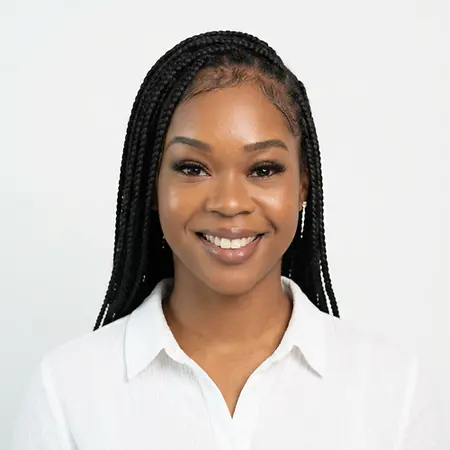
Adrienne Floyd is a treasury and finance professional with an MBA from Florida A&M University, specializing in cash management, financial operations, and data-driven reporting. She has distinguished herself by introducing Power BI reporting solutions within treasury departments, helping transform traditional spreadsheet-based reporting into dynamic KPI dashboards that strengthen visibility, analysis, and strategic…