Civility Defined or Something Like It
Building Civility in Municipal Leadership Through Actionable Dialogue Strategies

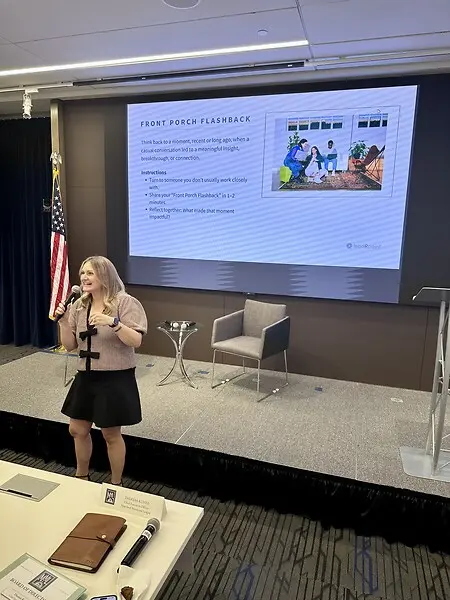
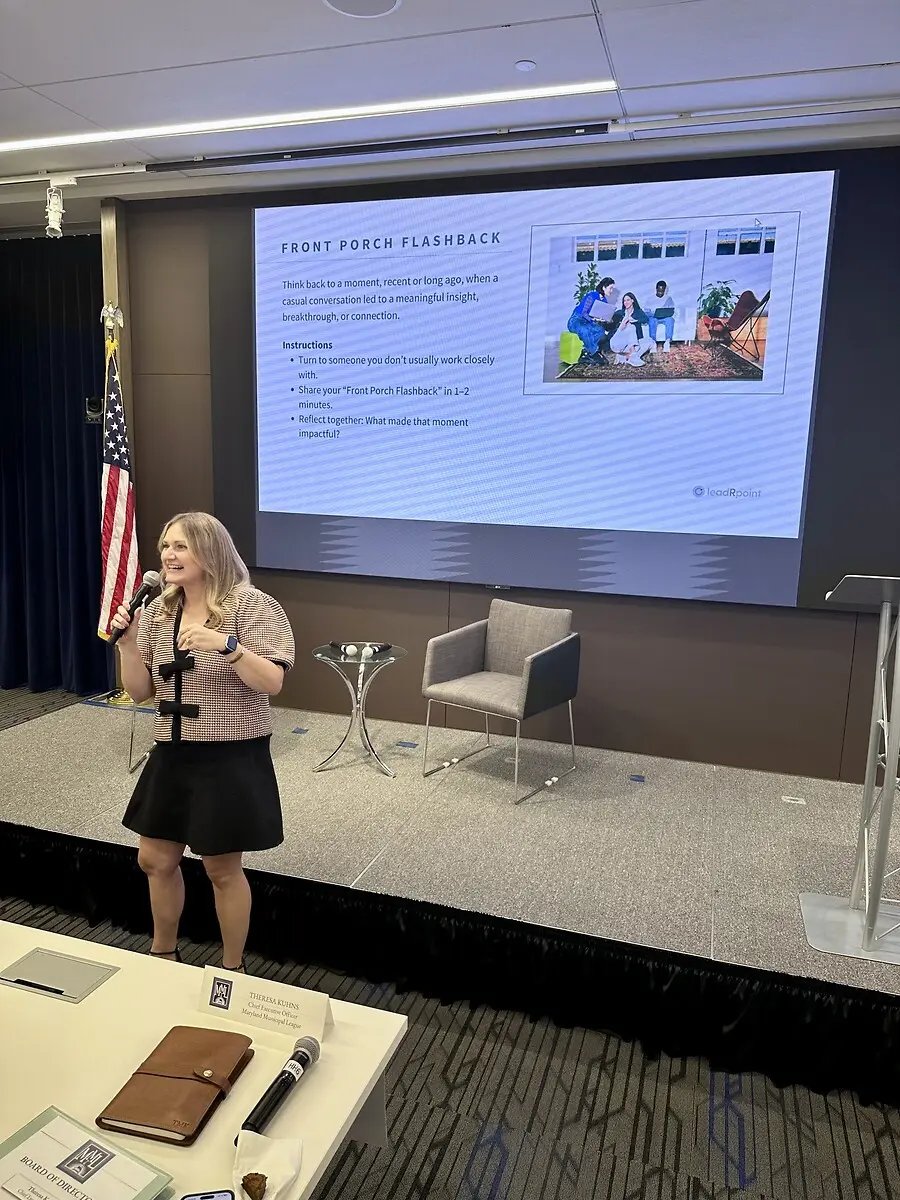
According to Merriam-Webster, civility is defined as "formal politeness in courtesy and speech." When I was given the opportunity to provide training on civility to a group of municipal leaders in Maryland, I felt a moment of hesitation. This hesitation did not stem from the topic's importance, which is highly relevant in today's workplace and political climate, but from the abstract nature of the concept and its varied interpretations among individuals.
Moreover, delivering insights on civility just days after an election, when attendees were likely experiencing a range of emotions, posed a significant challenge. The National League of Cities released its 2024 Incivility Survey results, revealing that nearly three in four respondents had experienced harassment. Encouraging a room full of leaders, who were dealing with post-election fatigue, to maintain an open mind and believe in the possibility of achieving civic harmony through engaging in difficult conversations required careful consideration and a strategic approach.
A nod to Atomic Habits by James Clear: Identifying myself as a civic-minded member of society, I pondered what consistent actions I could take to pave the way toward civic harmony. My solution was to create safe spaces for difficult conversations and equip attendees with the necessary tools to do the same. As the saying goes, "Go forth and multiply."
At the beginning of the presentation, I shared a quote by Jeffrey Alexander: "The discourse of civil society can be as repressive as liberating, legitimating not only inclusion but exclusion." I emphasized that understanding and addressing these challenging discussions is crucial for fostering an inclusive environment. This approach requires recognizing that the civil discourse we aim to cultivate can sometimes inadvertently validate exclusionary practices. Thus, it becomes essential to navigate these conversations with both sensitivity and firmness.
Upon presenting the quote, a participant raised their hand and said, "I am not sure I believe that statement." As the participant spoke further, they identified fringe conversations, specifically those involving hate speech, that should not be given breath. The participant had a valid concern. Progress, however, lies in the ability to engage in difficult conversations. You are not likely to change a person's mind in just one meeting, but over time, small actions can lead to more harmonious council meetings and other positive outcomes.
As the discussion continued, it became evident that truly fostering civil discourse required concrete actions and practical strategies. The aim was not only to acknowledge the validity of diverse perspectives but also to implement actionable steps that would lead to more harmonious civic engagement. This collaboration led to the development of several practices designed to cultivate civility and encourage constructive dialogue among municipal leaders and community members alike.
- Model the behavior you want to see and consider how you engage with people who do not share your views. Let the public see you getting along.
- During a meeting where someone is presenting an unpopular idea, give that person space by implementing the "like this idea for five minutes" rule.
- Redirect difficult conversations using "I" statements, such as "I think," "I feel," or "I believe."
- Tell stories to personalize your perspective, explain why you feel a certain way, and remain open-minded and curious about others' viewpoints while avoiding assumptions.
- Establish clear and consistent meeting norms tailored to various scenarios. This should involve setting expectations for participation, communication, and follow-up actions to ensure productive and efficient meetings.
Although these actions are minor, when implemented consistently, they can promote civility. This list is not exhaustive, so I encourage you to consider additional small actions you can take to contribute to the collective effort to create more harmonious communities.
Resources
Books
- Boatright, Robert, et al., editors. A Crisis of Civility? Political Discourse and Its Discontents. Routledge, 2019.
- Clear, James. Atomic Habits: An Easy & Proven Way to Build Good Habits & Break Bad Ones. Avery, 2018.
- Forni, P. M. The Civility Solution: What to Do When People Are Rude. St. Martin's Press, 2008.
Websites
- SHRM. "Promoting Civility in the Workplace." Society for Human Resource Management, 2024. https://www.shrm.org/topics-tools/tools/express-requests/promoting-civility-in-the-workplace
- NLC. "How the Upcoming Election Is an Opportunity to Improve Local Civil Discourse." National League of Cities, 2024. https://www.nlc.org/article/2024/10/30/how-the-upcoming-election-is-an-opportunity-to-improve-local-civil-discourse/

Stacie Spragins is the Founder and Principal Consultant of leadRpoint, a consulting firm serving the nonprofit and public sector with nearly 20 years of professional experience. She specializes in community outreach, strategic planning, and leadership development through her "Front Porch Thinking" approach. With prior roles at the Maryland Municipal League and Anne Arundel County Public Schools, Stacie holds dual…