Conditioner Curious? Moisture Solutions for Healthy Locs
Why Cream Conditioners Are Damaging Your Locs: A Guide to Healthier Alternatives

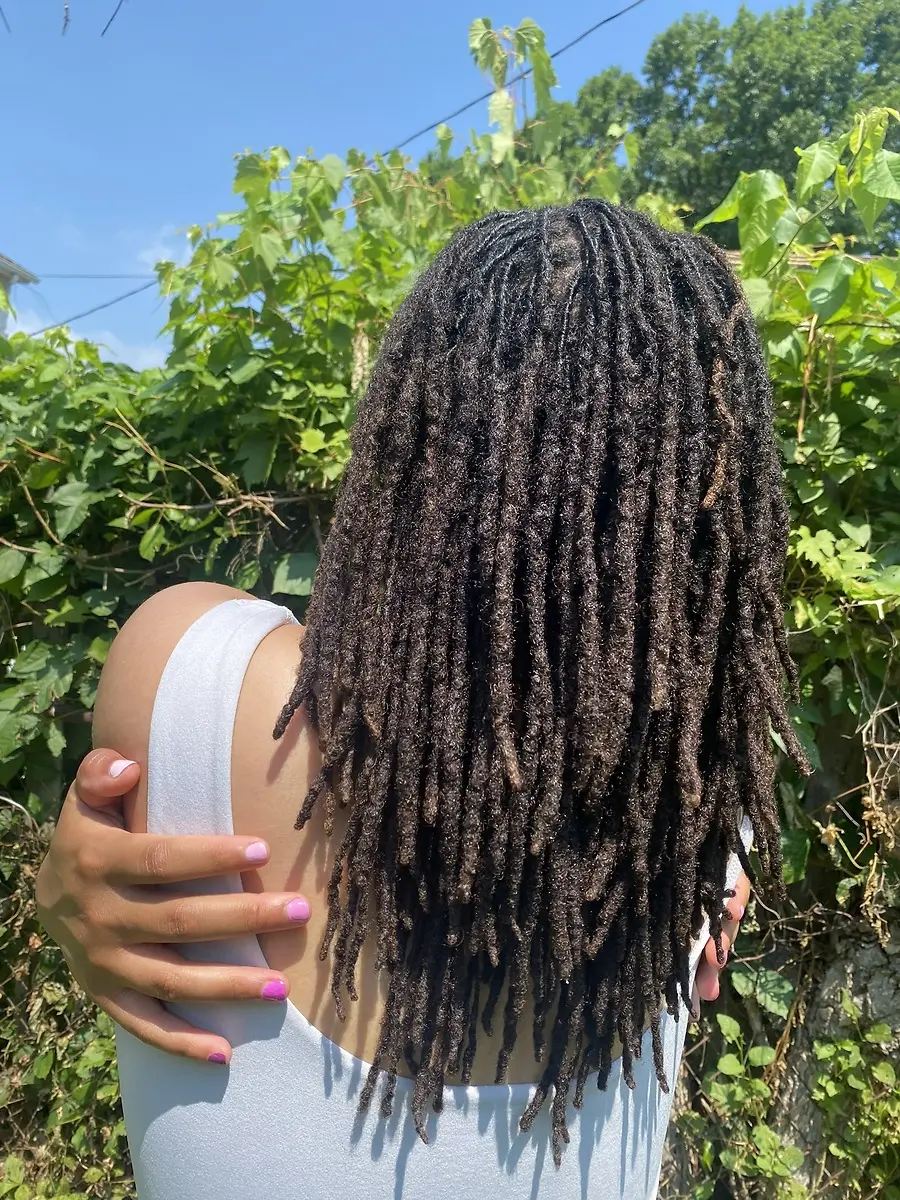
Winter is creeping in, and with it comes the season of dry, brittle hair. This one is for all my loc’d ladies and gents: how many of you are still using cream conditioners like you’re rocking loose natural hair? It’s okay—come to the front. This is a safe space.
When I started my first set of locs in 2021 while growing out a buzz cut, I approached the unknown with my usual methodology: enthusiastic, curious, and ready to research like it was a dissertation. With no close friends or family who were loc’d, I relied on 200 open tabs and a lot of overthinking. I don’t treat my hair with reckless abandon—any major appearance change is DEFCON 1, requiring precision and a near-zero margin of error.
But after all the research and contemplation, I’m still baffled that so many people with locs don’t know the basics:
- Don’t wear tight styles for extended periods,
- You can brush your locs (but that’s a conversation for another day), and
- Stop using cream conditioners!
Maybe because locs are marketed as low-maintenance, people let questionable habits slide. But let’s talk about it.
The Conditioner Question
A recently loc’d friend asked me the classic: “What kind of shampoo and conditioner do you use?”
Here’s what I told her:
“Because I have locs, I don’t use conditioner. I keep it simple—African black soap bar for the first two washes and castile soap for the last. I use water to moisturize and seal with oil when needed.”
Her follow-up:
“I have locs too and condition regularly. Why don’t you?”
My response:
I’ve never used cream conditioners on my locs for a few reasons:
- They’re designed to detangle and soften loose hair—the opposite of what you want for loc integrity.
- Like gel, they create residue and make it easier for lint, dirt, and product to get trapped deep inside the loc.
- Because you can’t fully access the interior of a loc, you can’t easily wash residue out.
- Many conditioners contain silicones, preservatives, detergents, and synthetic fragrances that weaken the hair and can be tough to rinse out.
And honestly? I’m a true believer that learning from other people’s mistakes is elite. A quick search shows countless Reddit rants, cosmetologist blogs, and scientific breakdowns explaining why conditioner and locs don’t mix. Yes, some swear it doesn’t affect their hair—but conditioners almost always include ingredients linked to buildup, dryness, hormone disruption, and slow growth over time.
If You’re Conditioning Your Locs… Stop. Here Are Better Options.
If you’re already using conditioner on your locs or thinking about it, breathe. You’re not alone—and you’re absolutely in the right place.
I’ve had my locs for over four years now (August 14th, to be exact), and I’ve learned a few things worth sharing. Those of us with locs can replace traditional “conditioning” with practices that keep hair soft, moisturized, shiny, and strong without residue, harmful chemicals, or compromised texture.
The game changers:
1. Hot Oil Treatments
2. Herbal Rinses
3. Steaming
Let’s break them down.
Hot Oil Treatments
If you survived the Natural Hair Twitter era—or spent hours with OG YouTube girlies—you’ve definitely heard about hot oil treatments. They were a staple right alongside co-washing (which might be the very reason some folks think conditioner is loc-safe).
Hot oil treatments open the hair cuticle and allow moisture, nutrients, and antioxidants to penetrate the scalp and hair shaft without harmful additives.
Oils I recommend (organic when possible):
- Jamaican black castor oil
- Shea butter
- Coconut oil
- Almond oil
Just remember: oils can build up too. Always wash thoroughly after treatment to keep your scalp clean.
Herbal Rinses
Herbal rinses are wildly underrated, mostly because Western hair care culture—Black or otherwise—hasn’t traditionally embraced herbal medicine. Our healthcare system was built on allopathic practices, so many people simply never learned there were alternatives.
An herbal rinse is a nutrient-dense infusion made from herbs that nourish the scalp, strengthen the hair, soothe irritation, and boost shine, softness, and bounce.
My go-to herbs:
- Lavender
- Calendula
- Eucalyptus
- Rosemary
- Chamomile
- Neem
- Peppermint
- Plus 16 oz of vinegar as the base
How to infuse:
- Simmer on the lowest heat for 7–12 hours, or
- Store in a mason jar in a dark place for 2–6 weeks for a deeper infusion
(And yes—you can find organic herbs and oils in our Marketplace!)
Steaming
Steaming introduces moisture directly into the hair and scalp. It softens, boosts shine, and helps oils and herbal infusions penetrate more deeply. The heat lifts the cuticle, allowing hydration to reach inner layers of the hair shaft.
How to steam safely:
- Limit to 15–20 minutes
- Only every 2–4 weeks
- Pair with a nourishing hair mask, your herbal rinse, or light oils
Oversteaming can lead to breakage, so moderation is key.
Final Thoughts
Be relentless and intentional with your hair care—just like you are in every other area of your life.
Your loc journey deserves attention, patience, and practices that honor the structure and strength of your hair.
Xoxo, Amber