Current widely-used aircraft!
A Comprehensive Guide to Modern Commercial Aircraft in Service Today

You’ve heard me talk about different aircraft for a while now. A description of the aircraft used in 2026 (and recent years, excluding those pending retirement) is needed.
These descriptions are grouped by range, from short-range regional-haul aircraft to mid-range hops and finally long-haul (often international) aircraft. The order is ascending, from least to greatest in terms of capacity, fuel storage, and global prestige.
First up are the Embraer aircraft, notably the ERJs, which stands for Embraer Regional Jet, not to be confused with the newer E-Jet family, also produced by Embraer. Embraer is a Brazilian aerospace company that markets to airlines for short and ultra-short regional hops. These aircraft are often configured in a one-class layout with few, if any, amenities. Embraer also specializes in private aviation, producing the Legacy-series business jet, and military aircraft, including the C-390 Millennium tanker and cargo aircraft.
The ERJ-135 is the smallest regional jet in use by airlines today, carrying a maximum of only 37 passengers. The ERJ-135 is primarily popular with regional airlines and charter operators, as major air carriers have generally upgraded their ERJs to at least the 145 variant.
The ERJ-140 carries 44 passengers and is popular with American Airlines and its subsidiary, American Eagle. It comes in “LR” and “ER” variants, meaning Long Range and Extended Range. The aircraft was developed as a scope-clause solution for pilots.
The ERJ-145 is similar to the ERJ-140 but larger, more advanced, and newer, with more powerful engines capable of carrying up to 50 passengers.
In Europe, turboprop aircraft never lost popularity as they did in the United States; this is highlighted by ATR.
The ATR series comes in two varieties: the ATR 72, with a 70-passenger capacity, and the smaller ATR 42, with a 40-passenger capacity. ATR, short for Aerei da Trasporto Regionale (literally meaning “Regional Transport Aircraft”), is a Franco-Italian aerospace manufacturer headquartered in Blagnac, France, a suburb of Toulouse where Airbus is based. The ATR series is incredibly popular with the Iberia, Air France, and KLM Cityhopper groups.
The final series of regional aircraft is the CRJ series. CRJ stands for Canadair Regional Jet and was produced by Bombardier and later Mitsubishi until 2020, though many are still flying today, especially with United Express and Delta Connection. The CRJ family comes in several “flavors,” including the CRJ-100, CRJ-200, CRJ-440, CRJ-550, CRJ-700, CRJ-900, and the long-range, 105-passenger CRJ-1000, which bordered on proper airliner size. The CRJ-550 is a unique variant developed by United Airlines as an improvement over the CRJ-200, which earned the derogatory nickname “Satan’s Chariot” for its cramped interior, one-class configuration, and hot cabin atmosphere.
Moving into proper airliners, the Airbus A220 is an appropriate segue. The A220 originally began as a Bombardier project intended to compete with larger jets such as those produced by Airbus. Originally known as the Bombardier C-Series, it was later acquired by Airbus at a bargain price and rebranded as the A220-100. The latest variant is the A220-300. The A220 is widely used by Air France, JetBlue, Aer Lingus, Delta Air Lines, and airBaltic. The A220-100 can carry between 100 and 120 passengers, while the A220-300 can carry up to 160 passengers.
Airbus next entered the short- and medium-haul market with the A320 family, whose smallest member is the A319. Known affectionately as the “BabyBus,” the A319 is actually a highly advanced aircraft. The A319 is popular with United Airlines, Delta Air Lines, EasyJet, Lufthansa, and American Airlines. Variants include the “LR” (Long Range) and the “NEO” (New Engine Option), which gives airlines a choice between two engine types when purchasing the aircraft. The A319 typically seats 119 passengers in a two-class configuration and around 140 passengers in a one-class configuration.
Next is the A320 proper. It is offered in “CEO” (Current Engine Option) and “NEO” (New Engine Option) variants, as well as “LR” variants. JetBlue, for example, uses the A321LR to fly from New York to London. The A320 typically seats between 120 and 150 passengers, depending on airline configuration. The A321 is a stretched version of the A320 and the primary reason the XLR version could be created. The XLR is a brand-new variant that enables transatlantic flying in what would otherwise be considered a medium-range aircraft. It is especially popular with airlines such as IndiGo, American Airlines, EasyJet, and China Eastern Airlines.
The A330 represents Airbus’s modern entry into long-range travel. Developed alongside the Airbus A340 and incorporating fly-by-wire controls, the A330 was designed for medium- to long-haul travel and cargo operations. The A330 comes in four primary configurations: the -200 and -300 from the “classic” line, and the -800 and -900 from the “NEO” line. The classic variants carry around 210 passengers, while the newer NEO versions can carry up to 330 passengers. Common operators include China Eastern Airlines, Delta Air Lines, Air Canada, Cathay Pacific, and Turkish Airlines.
The A340 had a technically longer range than the slightly smaller A330 and, until the A380, was the last four-engined airliner produced for commercial customers. Operators have included Lufthansa, Mahan Air (allegedly), and Conviasa. Depending on the variant and airline configuration, the A340 can carry up to 370 passengers.
The A350 is arguably one of the most advanced aircraft ever constructed. It is capable of carrying between 330 and 410 passengers over distances exceeding 8,000 nautical miles. Common operators include Singapore Airlines, which uses its specialized A350-900ULR (Ultra Long Range) variant, Qatar Airways, Air France, and Cathay Pacific.
Now we come to the A380-800, the largest passenger aircraft currently in service. Featuring two passenger decks, the A380 can carry between 525 and 644 passengers depending on airline configuration. Theoretically, it can carry up to 800 passengers in an all-economy layout, though no airline operates such a version. The A380 can transport passengers over 8,500 nautical miles and, although steadily decreasing in numbers, remains popular with Qantas, Qatar Airways, Lufthansa, Emirates, Singapore Airlines, and British Airways. For more detailed information, see my article dedicated specifically to the A380.
Boeing aircraft are Airbus’s direct competitors, and the 737 family reflects this rivalry, especially the 737 MAX 8 and MAX 9. These aircraft are designed to compete directly with the Airbus A320neo and A321neo, offering similar range and passenger capacity.
The 757 is also fading from passenger service but remains commonly known as the “Flying Pencil” because of its distinctive shape and ability to rocket off short runways. The 757 comes in the -200 and -300 variants. The -300 is especially popular with United Airlines and serves as a stretched, high-capacity version. The 757 generally has a range of around 3,980 nautical miles and a passenger capacity of 200 to 280 across all variants. Passenger operators in 2026 include United Airlines, Delta Air Lines (757-200 only), Azur Air, and Icelandair.
Next is the 767, a true long-haul widebody workhorse for many fleets. The 767 served as a predecessor to the 777 series. The family includes the 767-200, 200ER, 300, 300ER, 400ER, the dedicated 767-300F freighter, and several military variants. Depending on configuration, the 767 can carry between 181 and 375 passengers over distances ranging from 3,800 to 7,500 nautical miles. The aircraft remains popular with United Airlines, LATAM Airlines, Japan Airlines, All Nippon Airways (ANA), Delta Air Lines, and Icelandair.
The 747 is the original “Queen of the Skies” and the only other superjumbo jet capable of rivaling the A380 in size and capacity. The remaining passenger operators of the 747 include Lufthansa, Korean Air, and Air China. Lufthansa has already scheduled its 747-400s for retirement this year, leaving only the 747-8 Intercontinental as the remaining passenger variant. The 747-8I has a maximum range of 7,330 nautical miles and can carry between 410 and 467 passengers depending on seating configuration. It is the latest iteration of the venerable 747 and incorporates technology from the 787 Dreamliner program.
Speaking of the Dreamliner, the 787 program introduced the concept of the modern “advanced airliner” and became the aircraft Airbus designed the A350 to compete against. The 787 debuted numerous technological innovations, including raked wingtips, chevron engines, fly-by-wire systems, and a carbon-fiber fuselage. The aircraft comes in 787-8, 787-9, and 787-10 variants. Depending on airline configuration, the 787-8 carries approximately 248 passengers, the 787-9 around 298 passengers, and the 787-10 between 290 and 330 passengers. Common operators include United Airlines, Singapore Airlines, Air New Zealand, American Airlines, Japan Airlines, and All Nippon Airways (ANA).
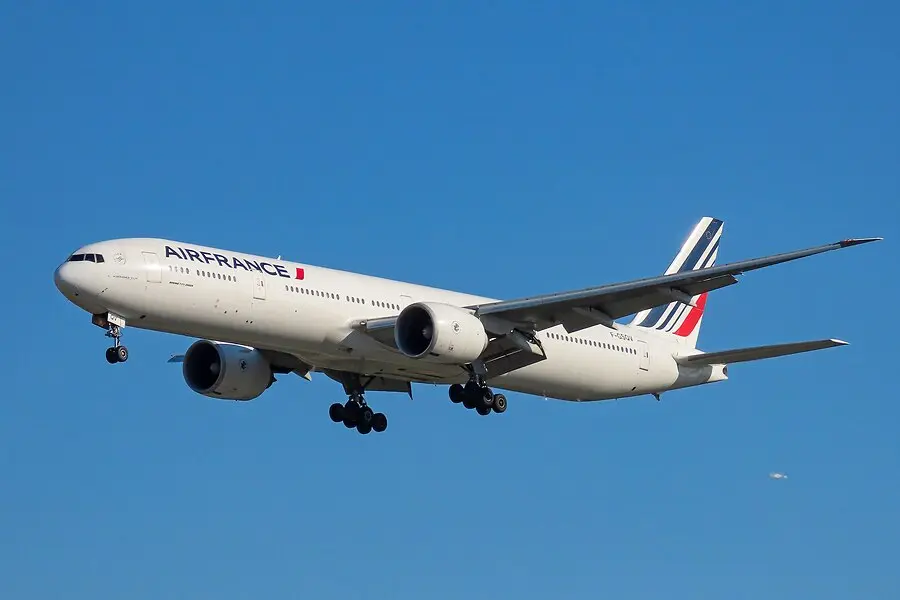
Lastly, we come to the favorite aircraft of many airlines and the flagship for several carriers: the Boeing 777, particularly the 777-300ER variant. The 777 is so successful that it is now evolving into the 777X series. The aircraft comes in the 777-200, 200ER, 200LR “Worldliner,” 300, and 300ER variants. Nicknamed the “Triple Seven,” the aircraft can reach nearly anywhere on Earth depending on the variant and airline. Passenger capacity ranges from approximately 305 passengers in the -200 series to 392 passengers in the -300ER. The 777 has a minimum range of roughly 5,200 nautical miles, while the 777-300ER can reach nearly 7,000 nautical miles.
Thank you all for reading, and I hope you learned a great deal about the modern commercial aircraft commonly seen today. Learn even more at brookeintheairtravel.net!