
Employing the Whole Person
Why Recognizing Your Employees' Full Humanity Is the Key to Better Leadership and Workplace Success


When I entered the workforce, the expectation was simple: you clocked in at 8:00 a.m. and left the rest of your life at the door. Things like personal challenges, family issues, and health concerns just did not belong at work. You could check on life at lunch and again after 5:00 p.m., but the expectation was that whatever was happening outside those walls should not affect your performance inside them.
I remember when I was pregnant and going through a divorce at the same time, and how almost no one at the office knew. Not because I was particularly private by nature, but because I had been taught that life stopped when you walked through the door. Many of us in supervisory and leadership positions operated that way for decades. But looking back, I find myself asking if that was ever the right way to function.
The workforce has changed, and so has our understanding of humanity in general. Today’s workforce spans multiple generations, and expectations around work and life have shifted dramatically. Some of that change is driven by technology. With cell phones, texting, Instagram, and more, life doesn’t pause just because we’re at work. But the deeper truth is that humans don’t come with an on/off switch.
We are complex, emotional, evolved beings, and we carry our histories, hopes, dreams, stressors, and responsibilities with us. Pretending otherwise doesn’t make us more productive.
For most of my career, compartmentalization was treated as a professional virtue. I can’t count the number of times I’ve been praised for always seeming calm, no matter what is going on in my professional or personal life. Leaders around me have been praised for being “steady” or “unaffected,” as though emotional neutrality is a sign of strength. What I’ve learned, however, is that compartmentalization is not a sustainable skill but rather a coping mechanism. And like all coping mechanisms, it has limits. I found mine when I found out I had cancer.
People can’t realistically separate their personal lives from their work lives because those lives are not separate. A parent caring for a sick child, an employee navigating a breakup, a caregiver supporting an aging parent, a young professional struggling with finances, or a leader diagnosed with an illness—all these experiences shape how we show up. They influence our energy, our focus, and our capacity. Ignoring that reality doesn’t make it disappear. It simply forces people to carry their burdens alone.
What I’ve come to understand, slowly and through lived experience, is that employing the whole person doesn’t mean prying into private matters or expecting emotional transparency. It means acknowledging that people are human first and employees second. It means creating environments where life is not treated like an inconvenience. Where support is available without stigma or consequences. Where flexibility is a tool, not a concession. Where leaders model empathy instead of emotional distance. And where people feel safe being honest about what they need.
In practical terms, it might mean having multiple overlapping shifts to allow for the person who needs to leave early or come in later to juggle family responsibilities or caregiving. It can mean hybrid or remote schedules for a team member who has medical issues, family needs, or personality differences that can make highly social environments more draining. Other adjustments could include written follow-up after meetings for team members who process information differently.
This could even mean looking at the office setup. A few years ago, many organizations moved to open-concept offices to encourage collaboration. But for an introvert or someone who requires quiet concentration, being surrounded by constant conversation may reduce productivity rather than enhance it. The same environment that energizes one person can drain another.
Employing the whole person means understanding that each of us has different backgrounds, different family structures, different motivations, and different working styles. If we want to keep the best team members and get the best work, we have to stop treating our team as identical automatons. Often, small adjustments create significant benefits for both the team member and the organization.
Fortunately, some team members are comfortable advocating for what they need at work, while others are not. Age can play a role, but personality, experience, and organizational culture often matter just as much. So how do we go about getting this information from our less vocal team members?
The first and most important method is paying attention. Notice the team member who is constantly 10–15 minutes late or the person who sits in the corner wearing headphones in the open-concept bullpen. There will be signs that a person is not fitting the cookie-cutter mold created for their position.
Next, it’s about asking questions. Once you’ve noticed the person sitting in the corner with headphones, check in with them to see how things are going. You don’t have to immediately jump to accommodation, but the act of checking in with your team member and letting them know that you notice them is huge in and of itself.
As you delve in and ask questions, be sure to work with your human resources department or a consultant to navigate any questions you are not legally allowed to ask. Instead of asking if a team member has children, you can ask what is preventing them from getting to work on time. Rather than asking if a person has a diagnosed issue such as ADHD, ask them if there is anything that can be done in the workplace to help them focus and/or feel more comfortable.
When we employ the whole person, we don’t actually lower our standards. We are strengthening them! People who feel seen and supported are more likely to be engaged at work and feel loyalty to the team. They are not spending energy pretending to be fine; instead, they have that energy to spend contributing.
Leaders emerging today have an opportunity to redefine what professionalism looks like. They can do this not by abandoning boundaries or turning workplaces into therapy rooms, but by recognizing that humanity is not a distraction from work. Humanity is the foundation of it, especially in service industries like the ones I’ve been in for decades.
Employing the whole person is not a trend or a workplace perk. It is a recognition of reality. People do their best work when they are treated as human beings, and organizations that understand that will be better positioned to attract, retain, and support great team members for years to come. It’s a long-overdue correction, and it’s one of the most meaningful shifts we can make as leaders.
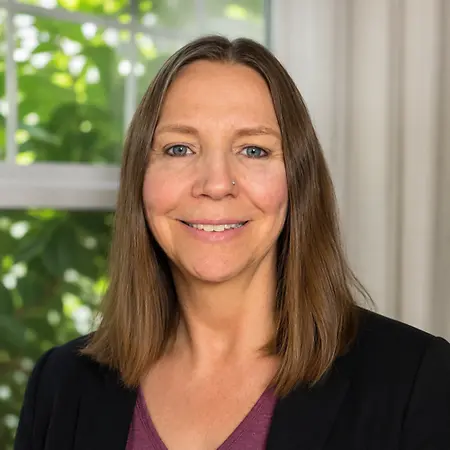
Caren Fewell is a seasoned executive leader with more than three decades of experience in community management, organizational leadership, and board governance. As Founder of BoardPath Advisors, she partners with HOA and nonprofit boards to strengthen decision‑making, clarify roles, and build durable governance practices. Her background includes leading large-scale community management operations, guiding…





