Frankfurt Flughafen! - 2026 update and T3 opening!
Europe's Gateway: Exploring Frankfurt Airport's History, Terminals, and Global Significance

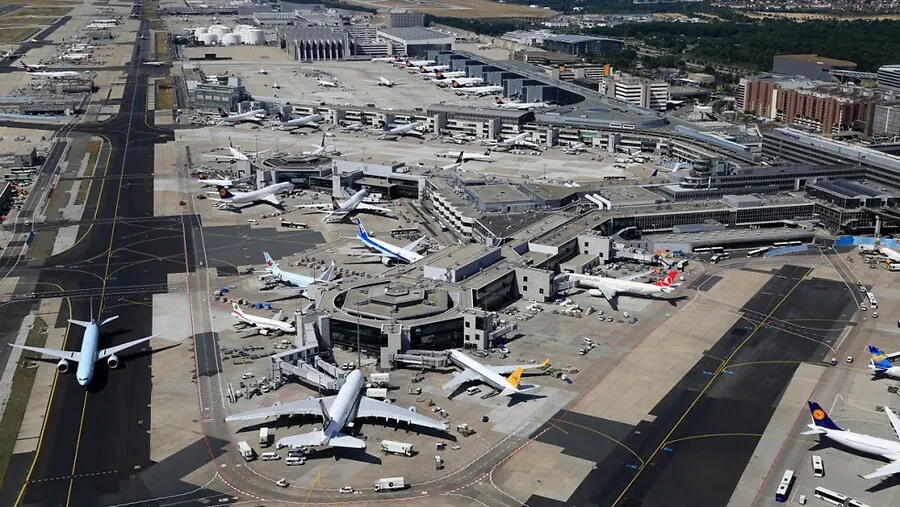
With my recent trip to Frankfurt, Germany, it's time to analyze one of the busiest and largest airports in Europe-and indeed, the world-Frankfurt Flughafen.
Frankfurt Flughafen, as the airport is known in German, serves as Lufthansa's primary hub. Its only other major hub is reserved for the Airbus A380 sub-fleet which is located at Munich International Airport.
IATA Code: FRA
ICAO Code: EDDF
History of Frankfurt Airport
Its official English name, according to the German Aeronautical Publication (GAP), is Frankfurt Main Airport.
Frankfurt Airport is the busiest airport in Germany by passenger traffic and the sixth busiest in Europe-after Istanbul Airport; London Heathrow; Paris Charles de Gaulle; Amsterdam Schiphol; and Adolfo Suárez Madrid-Barajas Airport.
Globally, Frankfurt ranked as the 22nd busiest airport by total passenger traffic in 2023. In 2024, the airport handled 61,564,957 passengers. Historically, it has also been a cargo powerhouse, handling 2.076 million tons of freight in 2015, with similar figures in 2016, making it one of the busiest cargo airports in Europe.
As of 2022, Frankfurt Airport served approximately 330 destinations across five continents-making it one of the airports with the most direct routes in the world.
Early Origins
The southern portion of the airport grounds was formerly home to Rhein-Main Air Base, a major United States Air Force installation from 1947 until 2005. After its closure, the property was transferred to Fraport and is now the site of Terminal 3.
Frankfurt's aviation history dates back to 1909, when DELAG (Deutsche Luftschiffahrts-Aktiengesellschaft), the world's first airline, was founded in Frankfurt am Main. In 1912, the Airship Base at Rebstock opened in Bockenheim, primarily serving airships.
With the founding of Deutsche Luft Hansa in 1926, civilian air travel expanded rapidly. Plans for a larger airport in the Frankfurt City Forest were approved in 1930 but delayed due to the Great Depression. After 1933, construction resumed under the new government.
The modern airport officially opened on July 8, 1936. On July 14, 1936, LZ 127 Graf Zeppelin landed there. By 1937, passenger numbers had grown to 70,000 annually.
Historical Note
On May 6, 1937, the LZ 129 Hindenburg, flying from Frankfurt to New York, exploded in Lakehurst, New Jersey, killing 36 people. The tragedy effectively ended the era of scheduled airship travel.
Frankfurt Airport celebrated its 90th anniversary in July 2026.
World War II
After the outbreak of World War II, control transferred to the Luftwaffe. Airships were dismantled, and facilities converted for military use. The airport was heavily damaged by Allied airstrikes in 1944, and by 1945, retreating German forces destroyed remaining infrastructure before U.S. forces took control.
Berlin Airlift Era
In 1948, during the Berlin Blockade, Frankfurt became one of the primary bases for Allied aircraft supplying West Berlin. The intense use of "Raisin Bombers" (known in English as "Candy Bombers") damaged runways, leading to construction of additional infrastructure. The airlift ended in 1949.
Cold War Growth
In 1951, restrictions on German air travel were lifted. Passenger numbers quickly rose:
- 1952: Over 400,000 passengers
- 1961: 2.2 million passengers
In 1972, Terminal Mitte (now Terminal 1) opened. It was assumed to meet demand for 30 years.
Planning for a third runway (Startbahn West) began in the 1970s and sparked significant environmental protests. The runway opened in 1984, though its north-south orientation limits its operational flexibility.
Terminal Expansion (1990s-2000s)
Terminal 2 opened in 1994, increasing capacity to 54 million passengers annually. The SkyLine people mover system was introduced to connect terminals.
In 1999, Frankfurt Airport's long-distance railway station opened, integrating high-speed ICE rail service directly into the airport.
Rhein-Main Air Base officially closed in 2005, freeing land for future development.
Lufthansa's Airbus A380 maintenance facility was constructed between 2005 and 2007. The airline's first A380 entered service in 2010 and was named Frankfurt am Main.
Modern Era
The Squaire
In 2011, The Squaire opened atop the long-distance railway station. With 140,000 square meters of space, it is considered one of Germany's largest office buildings. Major tenants include KPMG and two Hilton hotels. (Square and Air combined, a corny joke on Frankfurt's part but it worked for marketing purposes.)
Fourth Runway
Runway Northwest opened on October 20, 2011, increasing hourly capacity from 83 to 126 aircraft movements. However, court rulings in 2011 and 2012 banned scheduled night flights between 11 p.m. and 5 a.m., significantly affecting cargo operations.
Terminal 1
Terminal 1 (formerly Terminal Mitte) is the largest terminal, with a capacity of approximately 50 million passengers annually. It includes concourses A, B, C, and Z.
Pier A-Plus opened in 2012 to accommodate wide-body aircraft such as the Boeing 747-8 and Airbus A380.
Terminal 1 primarily serves Lufthansa and its Star Alliance partners.
Terminal 2
Opened in 1994, Terminal 2 has a capacity of 15 million passengers annually. It primarily serves:
- Oneworld alliance airlines
- SkyTeam alliance airlines
- Independent carriers such as Emirates and Etihad Airways
Terminal 2 is scheduled for refurbishment beginning in 2026, with airlines relocating to Terminal 3.
Terminal 3
Construction began in 2015 on the former Rhein-Main Air Base site and is now, as of 2026, open.
- Final capacity: 25 million passengers annually
- Phase One opening: NOW. To clarify, T3 just opened a few months ago as of this writing.
- Estimated cost: €3 billion
The SkyLine people mover will be extended to connect Terminal 3.
FraPort had announced in 2021 due to the pandemic that T3's opening would be postponed to this year, 2026.
According to FraPort, 56 airlines have moved to T3 from T2 in staggered waves. Some of these airlines are lesser known but others are global giants including Etihad, Emirates, Qatar Airways, British Airways, Air France, Condor, Delta Airlines, Japan Airlines, and American Airlines just to name a few.
Runway Configuration
Frankfurt Airport operates four runways:
- Three east-west runways
- One north-south runway (Runway 18 West, departures only)
The separation between the North and Northwest runways (1,400 meters) allows simultaneous parallel landings, significantly increasing capacity.
Geography
Frankfurt Airport lies approximately 12 kilometers southwest of central Frankfurt near the Frankfurter Kreuz interchange, where Autobahns A3 and A5 intersect.
It sits within the Frankfurt City Forest and partially extends into neighboring municipalities including Kelsterbach and Mörfelden-Walldorf.
Its central location in Europe makes it a major intermodal transport hub, with strong motorway and Deutsche Bahn rail connections. Cologne, Stuttgart, and the Ruhr Area are all within two hours by ground transport.
Airport City
Frankfurt Airport has developed into a full-scale "Airport City," featuring:
- Frankfurt Airport Center (FAC 1 and 2)
- The Squaire
- Main Airport Centre
- Sheraton and Hilton hotels
- Gateway Gardens business district
Gateway Gardens, formerly U.S. military housing, now hosts Lufthansa subsidiaries, Condor, Sun Express, DB Schenker, and more.
Frankfurt Flughafen is more than an airport-it is a true aviation city, a historical landmark, and one of Europe's most critical transportation nodes.
And if you're planning your next international journey, remember to book your travel consultation at Brooke In The Air Travel via brookeintheairtravel.net