From “I Can Figure It Out” to “What Do I Want to Do Next?”
Life changes the plan. We get to decide what comes next.

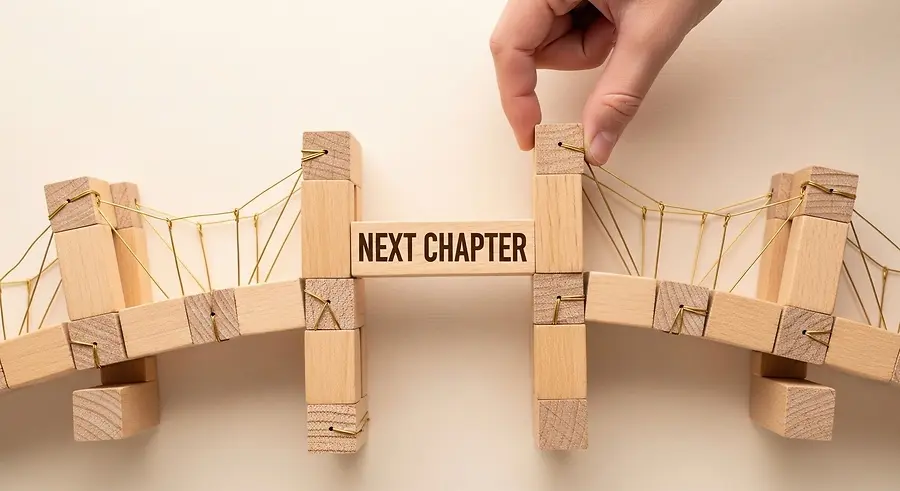
There is a particular kind of strength that comes from being the person who can always figure it out. When there isn't a roadmap, you make one. When something needs to be done, you find a way. When the answer isn't obvious, you learn. When circumstances change, you adapt. For many professionals, especially those who have spent years being dependable, capable, and willing to take on whatever is needed, this becomes more than a skill. It becomes an identity.
I can handle it. I can figure it out. I'll make it work.
And that mindset can take a person remarkably far. It builds resilience, resourcefulness, creativity, problem-solving, compassion, and the ability to walk into unfamiliar territory and find a way forward. But there comes a point when a different question deserves to be asked.
Not “Can I do this?” but “Do I want to?”
That distinction can be transformative. Being capable of carrying something does not mean it has to be carried forever. Being good at something does not necessarily mean it is where the next chapter should be spent. Having successfully navigated one path does not mean that path has to determine the next one.
Career transitions can make people question their experience.
What if the career path was too unconventional? Were there too many different responsibilities? Was the organization too small? Was there enough leadership experience? Was the career progression linear enough? These questions can cause people to overlook something much more important: what they actually learned.
Working without a large team can develop creativity. Unclear expectations can develop judgment. Being responsible for many different functions can develop a broader organizational perspective. Navigating difficult situations can develop compassion and emotional intelligence. Having to continually learn can develop adaptability. The absence of a traditional career path does not mean the absence of valuable experience. Sometimes the most important skills are built in circumstances that never came with a formal training program or an impressive title. They were built by figuring things out.
One of the most limiting beliefs during a transition can be the idea that confidence must come before taking the next step.
It doesn't. Confidence can come from looking backward and recognizing how much has already been navigated. It can come from realizing that every unfamiliar challenge once felt unfamiliar and was eventually learned. It can come from knowing that the next opportunity does not have to be perfectly understood before taking the first step toward it. The goal isn't to know exactly what will happen. The goal is to trust the ability to learn, adapt, and respond when it does. That is a much more durable kind of confidence.
Perhaps one of the greatest opportunities created by change is the chance to reconsider what has been driving decisions.
For some people, career choices have been shaped primarily by necessity: providing stability, meeting obligations, solving the immediate problem, being the dependable one, or simply doing what needed to be done. There is nothing wrong with that. Those choices often build incredible strength. But eventually, circumstances may create enough space to ask a different set of questions: What kind of work is meaningful to me? Who do I want to learn from? What kind of environment allows me to do my best work? What challenges energize me rather than simply requiring me to push through? What do I want to become better at? What would I choose if I weren't simply choosing what was necessary? Those questions aren't selfish. They are intentional.
It is easy to view a career transition as a reset button. But experience doesn't disappear because a position changes. The relationships built, problems solved, lessons learned, mistakes made, systems created, people helped, and challenges overcome all come forward. The next chapter gets to be built from the foundation. A transition can be an opportunity to stop asking, “How can I prove that I can do this?” and start asking, “Where can what I know make the greatest difference?” That is not starting over. That is choosing with experience.
Life does not always follow the plan. Sometimes circumstances change gradually. Sometimes they change unexpectedly. Sometimes they open doors that would never have been considered otherwise. The change itself may not be something that was chosen, but what happens next can be. That is where the opportunity lies. Not in pretending every change is easy and not in forcing a positive spin onto something difficult. Every transition doesn't need to become a dramatic reinvention either. Sometimes the most powerful response to change is simply to pause long enough to realize:
There are choices now that weren't visible before.
The ability to figure things out is valuable. But perhaps an even greater skill is learning when to stop simply figuring out what needs to be done and starting to decide what is worth doing. For anyone standing at a crossroads, the next step doesn't have to be perfectly clear. Look at what has already been built and recognize the skills that came from the challenges. Trust the ability to learn what isn't known yet. Then, instead of asking only what can be done, make room for the question that matters more:
What do I want to do next?
Sometimes life changes the plan. That doesn't mean the future has been decided. It may simply mean there is finally an opportunity to choose it.


