From Patient to Judge: Why Healthcare Innovation Needs Lived Experience
Patient perspectives are essential to creating meaningful healthcare innovation that truly serves those it's designed to help.

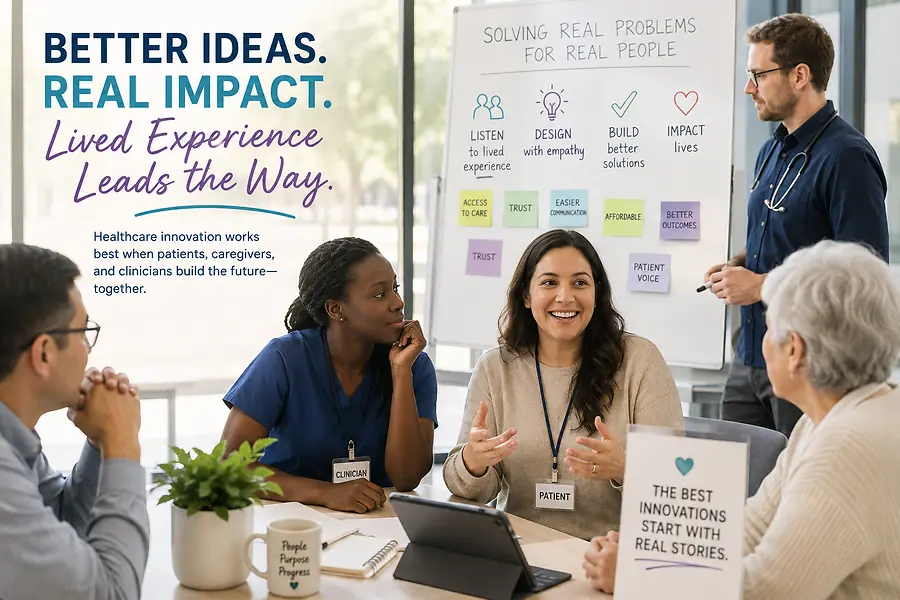
Building the Future of Healthcare With Patients, Not Just for Them
When I was invited to serve as a judge for the MediMate Hackathon, I felt both honored and humbled. Not long ago, I was navigating one of the most difficult healthcare journeys imaginable as a patient. Today, I have the opportunity to help evaluate ideas that could shape the future of healthcare.
That perspective matters.
Healthcare innovation is often driven by incredible engineers, developers, researchers, clinicians, and entrepreneurs. Their expertise is essential. But there is another perspective that is just as valuable: the perspective of the patient.
Patients and caregivers experience healthcare differently from those who build it. We know what it feels like to search for answers in the middle of the night, struggle to understand complex medical information, coordinate care across multiple providers, and advocate for ourselves or a loved one during some of life's most stressful moments.
Technology should reduce that burden—not add to it.
As a judge, I looked beyond technical excellence. I asked questions such as:
- Does this solve a real problem?
- Is it intuitive for patients and caregivers?
- Will it improve trust, communication, or decision-making?
- Is it accessible to people with different abilities, backgrounds, and levels of health literacy?
- Can it make healthcare more compassionate, not just more efficient?
Innovation isn't just about creating something new. It's about creating something meaningful.
My own experience surviving septic shock, cardiac arrest, multiple amputations, and a long recovery inspired me to create Phoenix Health Compass and Phoenix Navigator. I experienced firsthand how difficult it can be to navigate the healthcare system. Those experiences continue to shape how I evaluate new ideas and reinforce why I believe patients should be involved throughout the innovation process—not only as users, but also as collaborators, advisors, testers, and leaders.
The future of healthcare shouldn't be built solely for patients.
It should be built with patients.
Every conversation, every prototype, every pilot, and every hackathon is an opportunity to create solutions that are more compassionate, accessible, and effective because they are informed by lived experience.
I'm grateful to have been part of the MediMate Hackathon and to contribute to a community of innovators committed to improving healthcare. I look forward to seeing how these ideas continue to grow and, more importantly, how they improve the lives of patients and families around the world.
Together, we can build a healthcare system that is not only smarter—but more human.


