The Architect's Blueprint: Growing through Chaos
From Heroic Fixers to Systemic Stewards: Transforming Organizational Chaos Into Resilience

In the nonprofit and philanthropic sectors, leaders often treat chaos as either a storm to weather or a fire to extinguish. When an organization enters crisis—whether through leadership transition, funding instability, or cultural toxicity—boards and staff frequently search for a fixer. They seek a hero to absorb the disruption, restore order, and stabilize the system.
For many women in leadership, this fixer role is a familiar and dangerous trap. We are often socialized to become the designated first responders for organizational distress—neutralizing anxiety while carrying the collective burden ourselves. Yet this model of heroic leadership is often a Survival Script: a performance rooted more in hypervigilance than in strategic vision.
True organizational growth requires more than heroic intervention. It requires Systemic Stewardship.
Chaos as a Diagnostic Tool
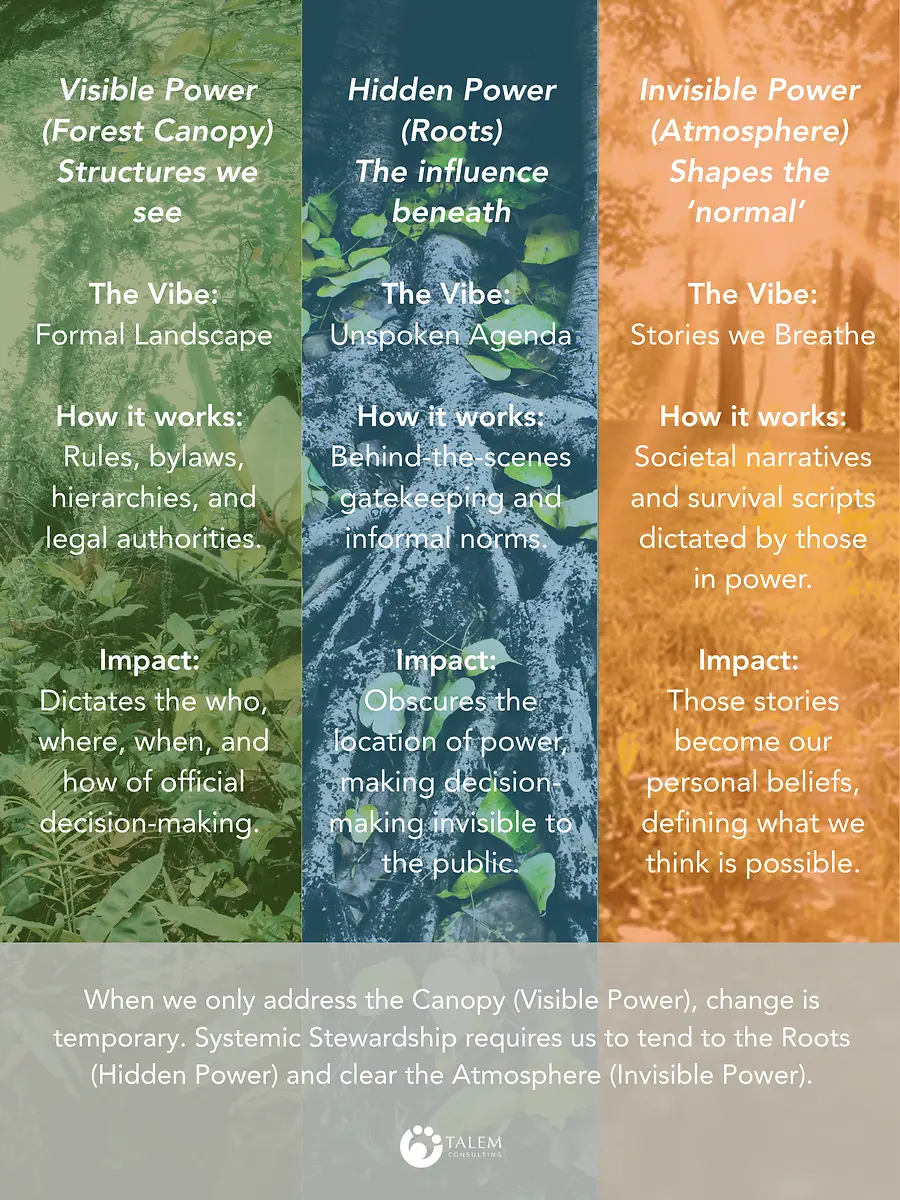
To lead effectively through upheaval, leaders must begin to see chaos not simply as disruption, but as a diagnostic tool that reveals deeper misalignments of power. When an organization feels chaotic, the three dimensions of power are often in conflict:
Visible Power
Formal structures such as rules, bylaws, hierarchies, and policies fail to provide sufficient clarity or direction. This often triggers a leader’s instinct to micromanage in an effort to regain control and restore safety.
Hidden Power
Unspoken agendas, gatekeepers, and informal influence structures complicate progress. Leaders may feel forced to navigate these invisible barriers alone, creating exhaustion and strategic isolation.
Invisible Power
This is where survival scripts thrive. These internalized narratives tell leaders they must work harder, move faster, sacrifice more, and endure greater suffering in order to remain credible or valuable.
When leaders address chaos only at the visible level—by changing policies, replacing personnel, or restructuring teams—they often achieve only temporary relief. Systemic stewardship requires a deeper intervention: dismantling the hidden and invisible power structures that keep organizations trapped in cycles of dysfunction and reactive survival.
The Mycelium Model: From Heroics to Resilience
Traditional leadership frameworks often emphasize personal resilience: how individuals can withstand more pressure, perform better, or survive longer under strain. Systemic stewardship reframes the goal toward ecosystem resilience.
Imagine your organization as a forest floor.
Above ground, a fallen tree may appear to symbolize destruction. But beneath the surface, the mycelium network is active—redistributing nutrients, communicating across systems, and stabilizing the environment so regeneration can occur.
Similarly, sustainable growth during organizational chaos happens when leaders stop trying to function as solitary oaks resisting every storm and instead begin cultivating the mycelium:
- Networks of trust
- Shared leadership
- Transparent communication
- Collective care
This is how organizations evolve from fragile systems dependent on singular heroes into resilient ecosystems capable of adaptation and renewal.
Three Operational Shifts for the Systemic Steward
To move from hypervigilant fixer to transformative steward, leaders must embrace three critical operational shifts:
1. Deconstruct the Fixer Instinct
Recognize the impulse to save the day as a survival strategy rather than a leadership virtue. Every time you independently solve systemic problems to shield your team, you may unintentionally limit their agency and development.
Stewardship is not about being indispensable. It is about building systems that no longer require heroic intervention.
2. Audit the Ecosystem
Identify where power bottlenecks exist.
Ask critical questions:
- Is information being hoarded?
- Are hidden cultural norms silencing key voices?
- Are decision-making structures overly centralized?
During periods of disruption, leaders have a unique opportunity to create what might be called a Shared Power Library—transparent processes, frameworks, and systems that decentralize authority and strengthen organizational autonomy.
3. Prioritize Collective Care
Crisis often triggers scarcity thinking, fear-based decisions, and intensified hypervigilance. Systemic stewardship demands that leaders intentionally prioritize human sustainability over short-term performance metrics.
Organizations that fail to protect and nurture their people during crisis rarely sustain meaningful growth once immediate pressures subside.
Collective care is not a soft strategy. It is structural resilience.
The Invitation
Chaos is not merely something to survive. It is an invitation to redesign.
When leaders shift from a fixer mindset to stewardship, they do more than manage crisis—they democratize power, strengthen resilience, and create systems capable of long-term transformation.
This shift moves organizations beyond transactional survival and into sustainable systemic evolution.
So rather than asking, “How do I fix this?” consider asking:
“How do I build a system where this problem no longer has the power to destabilize the collective?”
That is the work of stewardship.
That is the future of transformative leadership.


