
The Power of Sharing Experience
Breaking the Cycle: How Sharing Knowledge and Mentorship Can Help Communities Build Stronger Futures


How Can We Build When Everyone Has to Keep Starting From Scratch?
The Power of Sharing Experience, Knowledge and Guidance
By Sarah Mae Mason
Founder, Visionary Connections LLC
Creative Writer & Community Empowerment Advocate
How can we expect people to build stronger futures when so many are constantly starting from scratch instead of building upon the experiences and lessons of those who came before them?
This is a question I have asked myself many times throughout my life.
Over the years, I have encountered countless talented, intelligent, capable, and hardworking individuals who struggled to move forward, not necessarily because they lacked ambition, ability, or potential, but because they did not always have access to the right guidance, education, resources, opportunities, or support they needed along the way.
We often tell people what they should accomplish in life:
Get an education. Find a good job. Manage your money. Build good credit. Raise your children well. Take care of your health. Become financially stable. Start a business. Purchase a home. Prepare for retirement. Build generational wealth.
These are all meaningful goals, and there is nothing wrong with encouraging people to pursue them. However, somewhere between telling people what they should accomplish and expecting them to figure out how to accomplish it, one important question is often overlooked:
Who taught them how? Who explained the process? Who helped them understand their options? Who showed them where to begin, what to prepare for, or where to turn when something did not go as planned?
We cannot always assume that because something is considered common knowledge, everyone has had the opportunity to learn it, and we certainly cannot assume that everyone begins life with the same foundation, environment, resources, or support system.
There Is a Difference Between Information and Guidance
We live in a time when information is more accessible than ever. With a simple internet search, we can find articles, educational programs, organizations, services, and opportunities covering almost every aspect of life. But access to information does not automatically mean someone understands how to use it.
There is a difference between knowing something exists and knowing how to navigate it.
Someone may understand that having good credit is important without knowing how credit scores are calculated, how to establish credit responsibly, or what steps to take when their credit needs improvement.
A young adult may understand that independence comes with responsibilities without knowing how to review a lease, compare insurance policies, file taxes, establish a budget, or prepare for unexpected expenses.
A parent may be doing everything within their ability to provide for their children while also managing employment, childcare, transportation, healthcare, education, household responsibilities, and personal challenges.
Someone may be interested in starting a business but have little understanding of registration requirements, operating expenses, financial planning, customer relationships, or available business resources.
These individuals do not lack motivation; they are trying to navigate unfamiliar territory without a clear roadmap!
Sometimes, what people need most is not another reminder of what they should have done or what they should already know.
Sometimes, they need someone willing to say:
Here is what I learned. Here is what I wish someone had explained to me. Here is a resource that may help you. Here is a mistake you might be able to avoid. Here is one place you can begin.
The value of guidance is priceless!
It does not guarantee that someone will never experience hardship or make mistakes, but it can help them make more informed decisions, recognize available options, and approach unfamiliar situations with greater confidence.
The Education Life Gives Us Has Value
Some of the most valuable lessons we learn in life will never appear on a diploma, certificate, or résumé.
I believe in the importance of formal education. I also believe that education extends far beyond the classroom.
There is tremendous value in what we learn through employment, parenting, caregiving, volunteering, entrepreneurship, relationships, community involvement, and the everyday responsibilities of navigating life.
For more than 25 years, I have worked and served in different service environments while also volunteering, mentoring, coaching, writing, researching resources and opportunities, and assisting people who needed them!
Along the way, I have learned that education does not always come from someone standing in front of a classroom.
I have learned from my grandmothers, family, friends, teammates, classmates, coworkers, supervisors, coaches, and mentors.
I have learned from people of different ages, backgrounds, professions, and walks of life.
I have learned through motherhood, caregiving, employment, and community service.
I have learned from opportunities that opened doors and from experiences that required me to find another way forward.
I have learned through accomplishments, disappointments, difficult decisions, and mistakes.
And I am still learning.
Not every experience is pleasant, and not every lesson comes easily! Some lessons take years to fully understand. Others become clearer when we encounter someone facing a situation we once had to navigate ourselves.
Over time, I began to recognize that even the most challenging experiences could offer knowledge worth sharing.
This does not mean we should have to experience hardship in order to grow, nor does it mean every hardship happens for a reason.
It simply means that when we do gain understanding through our experiences, we have an opportunity to use that knowledge constructively.
The question is not only what we have learned, but what we choose to do with what we have learned.
Experience Should Be Passed Forward
Imagine how much further people could progress if more of us made an intentional effort to share what we have learned—the good and the lessons!
What if something that took one person ten years to understand could help another person find direction much sooner?
What if we taught young adults about credit, contracts, budgeting, and financial responsibilities before they were expected to manage everything independently?
What if parents knew where to find childcare assistance, educational support, family resources, and community services before their circumstances became overwhelming?
What if aspiring entrepreneurs had access to practical guidance about business operations before investing money they could not afford to lose?
What if we made it easier for people to understand systems and processes instead of expecting them to learn everything through trial and error?
Of course, no amount of guidance can prevent every mistake, remove every barrier, or guarantee a particular outcome.
People will still face challenges. Circumstances will change, and some systems will remain difficult to navigate.
However, practical education and early access to support can make a meaningful difference.
One conversation can introduce a person to an opportunity they never knew existed.
One resource can help a family understand its options.
One explanation can help someone avoid an unnecessary expense.
One shared experience can help another person recognize a warning sign or prepare for a difficult decision.
Simply knowing where to begin can make an overwhelming situation feel more manageable.
Sharing experience is not about doing everything for someone. It is about helping them develop the knowledge, skills, and confidence to do more for themselves.
Stronger Communities Begin With Stronger Foundations!
When we discuss strengthening communities, we often focus on employment, education, housing, public safety, healthcare, and economic development.
These are essential parts of community stability, but we must also remember that communities are made up of individuals, families, and households, each with different needs, experiences, and circumstances.
When people are constantly trying to meet their immediate needs, planning for the future can become much more difficult.
It is hard to focus on career advancement when transportation is unreliable.
It is difficult to pursue education when childcare is unavailable.
It is challenging to establish financial stability when someone has never been taught how to budget, manage debt, or understand the financial systems affecting their household. These factors can make it overwhelming to seek assistance when the application process, eligibility requirements, or available services are difficult to understand.
Challenges cannot always be solved through general education alone. Many require affordable services, accessible opportunities, stronger institutions, and meaningful policy changes.
Practical education is essential!
Practical education means teaching people how to communicate effectively, manage conflict, understand different environmental expectations, and develop and build professional and personal relationships.
We should be discussing money management, credit, housing responsibilities, consumer awareness, and long-term financial planning.
We should be helping people understand parenting resources, educational options, healthcare navigation, emotional well-being, and the importance of healthy relationships and boundaries.
We should be introducing young people to life skills, decision-making, self-advocacy, and problem-solving before they are expected to manage adult responsibilities.
We should also be helping individuals understand how to identify trustworthy resources, ask informed questions, complete applications, and seek assistance before a manageable problem becomes a crisis.
Most importantly, this knowledge needs to be presented in ways people can understand and apply.
Not everyone learns the same way. Not everyone has the same reading level, access to technology, schedule, or support system.
That is why accessibility matters.
Practical guides, workbooks, educational materials, community workshops, mentorship, and resource navigation can all help bridge the gap between information and understanding.
The goal should not be to overwhelm people with everything they need to know.
The goal should be to give people a foundation they can build upon, one practical step at a time.
Why This Became Part of My Purpose
My personal, professional, and community experiences have helped shape the work I am building through Visionary Connections LLC.
At the heart of that work is a belief that has continued to grow stronger throughout my life:
A person's challenges are not always the result of a lack of ability. Sometimes, what is missing is access to the right guidance, education, training, resources, and support!
I have witnessed how much of a difference it can make when someone takes the time to explain a process, share an opportunity, offer encouragement, or connect another person with a helpful resource.
I have also seen how difficult life can become when individuals are left to navigate unfamiliar responsibilities and complicated systems without sufficient guidance.
These observations have influenced my desire to create practical educational guides, workbooks, and resources that individuals, families, schools, nonprofits, and community organizations can use to strengthen everyday life skills and expand access to knowledge.
I want the lessons learned through years of experience, service, and observation to become something useful beyond a conversation.
Something a person can read, revisit, share, and apply.
Something a parent can pass along to a child.
Something a mentor can use to guide a young adult.
Something a community organization can place in the hands of someone who needs direction.
I do not believe I have every answer, and I do not believe any one person, business, or organization can meet every need.
That is precisely why I believe in the power of connections.
One person may have valuable experience.
Another may know about an available resource.
Someone else may have professional expertise, an opportunity to offer, or a relationship that opens a door.
Another person may simply have the patience, compassion, and encouragement someone needs to take the next step.
When people are willing to share what they know and connect others to what they need, we create more opportunities for learning, growth, and progress.
This is also why service has become such an important part of my personal and professional philosophy.
To me, service is much greater than customer service, a profession, or a job title.
Service is reflected in how we communicate, how we treat others, how we share knowledge, and how we contribute to the well-being of the people and communities around us.
It is about recognizing that what we know, what we have experienced, and what we are capable of offering may be valuable to someone else.
And sometimes, the smallest act of service can become part of a much larger impact.
We Do Not Have to Know Everything to Share Something
One thing I have come to understand is that people sometimes underestimate the value of their own experiences.
They may hesitate to mentor, teach, or share what they know because they do not consider themselves experts.
One does not have to know everything to share something valuable.
Perhaps you understand the college application process because you have already navigated it.
Perhaps you have learned how to establish or rebuild credit.
Maybe you know how to prepare for an interview, apply for housing, locate community resources, or understand a workplace process.
Perhaps you have learned how to advocate for your child within an educational system.
Maybe you have experienced a setback that taught you the importance of planning, asking questions, or recognizing when additional support is needed.
These experiences can become valuable teaching opportunities.
Of course, we should also recognize the limits of our knowledge. Sharing experience does not mean presenting ourselves as qualified professionals in areas where specialized training or expertise is required.
There is wisdom in knowing when to share what we have learned and when to connect someone with a person or organization better equipped to help.
That, too, is service.
We do not have to be the solution to every problem.
Sometimes, being a connection to the right solution is just as meaningful.
Somewhere, someone may be facing today what you spent years learning how to navigate.
Your experience may not provide every answer, but it could help them ask better questions, recognize options, or find their next step.
What may seem like an ordinary lesson to you could be valuable guidance to someone encountering that situation for the first time.
Starting From Experience Instead of Starting From Scratch
Imagine communities where knowledge does not stop with the person who learned it.
Imagine parents sharing practical life lessons with their children while remaining open to learning from them.
Professionals taking time to mentor young adults entering the workforce.
Business owners sharing useful knowledge with aspiring entrepreneurs.
Older generations passing down wisdom, experiences, and lessons while younger generations contribute new ideas, perspectives, and skills.
Community organizations collaborating and sharing resources instead of working in isolation.
Schools incorporating more practical life-readiness education alongside traditional academics.
Neighbors helping neighbors understand available services, opportunities, and systems.
Imagine how much stronger our foundations could become if more people had access to guidance before reaching a point of crisis.
This is not about suggesting that every generation will face the same circumstances or that the lessons of the past will always apply in exactly the same way.
Times change. Systems change. Opportunities and challenges evolve.
That is why knowledge should continue to grow.
The next person should have the opportunity to begin with what others have already learned, apply those lessons to their own circumstances, develop new understanding, and eventually pass that knowledge forward.
That is how experience becomes education.
That is how education becomes preparation.
That is how preparation can create opportunity, and that is how service can contribute to stronger individuals, families, and communities.
We should not expect every person to figure everything out alone.
We should not criticize people for what they were never taught or assume that everyone has had access to the same opportunities.
We should not continue rebuilding the same foundations generation after generation without making an effort to preserve and share what we have learned.
Instead, we can be more intentional about creating pathways for others.
We can share knowledge without judgment.
We can offer guidance without taking away someone's independence.
We can connect people to resources without making them feel ashamed for needing assistance.
We can create educational tools that make complicated information easier to understand.
We can encourage people to recognize their abilities while also acknowledging the barriers they may face.
We can remember that progress is not always measured by how far one person gets ahead, but also by what we help make possible for those coming behind us.
We may not be able to remove every obstacle, but we can help others become better prepared to navigate the road ahead.
Because the lessons we worked so hard to learn should not have to end with us.
The goal is not simply to help people start over.
The goal is to help the next person start from experience instead of starting from scratch.
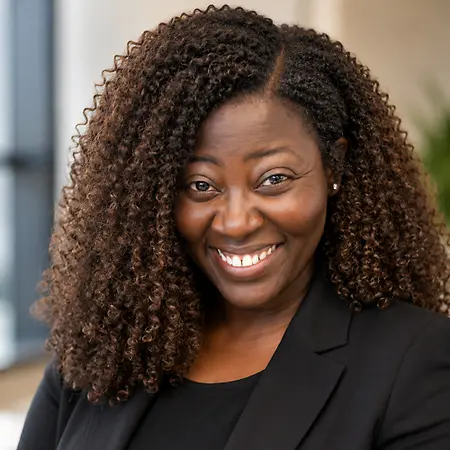
Sarah Mae Mason is the Founder of Visionary Connections LLC. , Service Industry Extraordinaire, Creative Writer, Community Empowerment Advocate, Coach and Mentor dedicated to connecting individuals, families, and communities to resources, opportunities, practical education tools, workforce training and ongoing supports that promote stability, growth and self-sufficiency! With more than 25 years of professional and…





