I Am Not a Coach. I Am a Guide.
Why I Choose to Be a Guide, Not a Coach
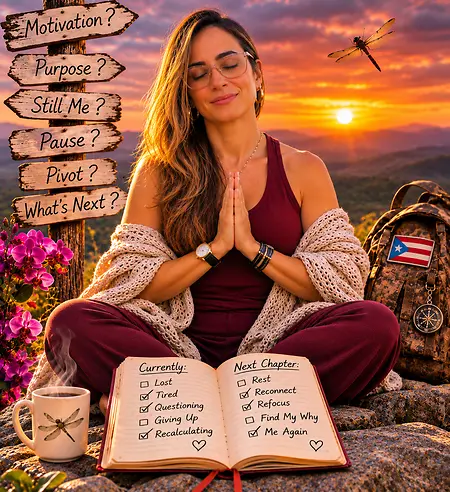
There is a word I keep encountering in conversations about personal growth, healing, education, and professional development.
Coach. Life coach. Wellness coach. Transformation coach. Spiritual coach. Business coach.
It seems that everywhere I turn, someone is offering to coach someone else toward a better version of themselves.
And while I recognize that many people doing this work are knowledgeable, compassionate, and genuinely dedicated to helping others, I have come to realize something important about my own identity.
I am not a coach. I am a guide.
For some people, that distinction may seem insignificant. For me, it represents an entirely different philosophy of human growth. It speaks to how I understand education, healing, autonomy, creativity, and the relationship between the person seeking support and the person walking beside them.
Because I do not believe my purpose is to tell another human being who they should become. I believe my purpose is to help create the conditions in which they can discover that for themselves.
When Did Everyone Become a Coach?
I understand why the word coach became popular. In athletics, coaching traditionally involves helping individuals or teams develop skills, improve performance, and work toward defined goals. The concept eventually expanded into business, leadership, personal development, and wellness. Today, coaching encompasses many approaches, including those that emphasize listening, collaboration, and self-discovery rather than instruction.
I respect that. But language carries meaning, and the words we choose influence how we understand our relationships.
When I hear the word coach, my mind returns to sports. Training. Performance. Competition. Goals. Improvement. Someone standing on the sidelines, evaluating progress and encouraging someone toward a particular outcome.
There is a place for that. But it is not the relationship I want to create. I am not standing on the sidelines of another person's life, calling out instructions. I am walking beside them. And that difference matters to me.
A Guide Does Not Own the Destination
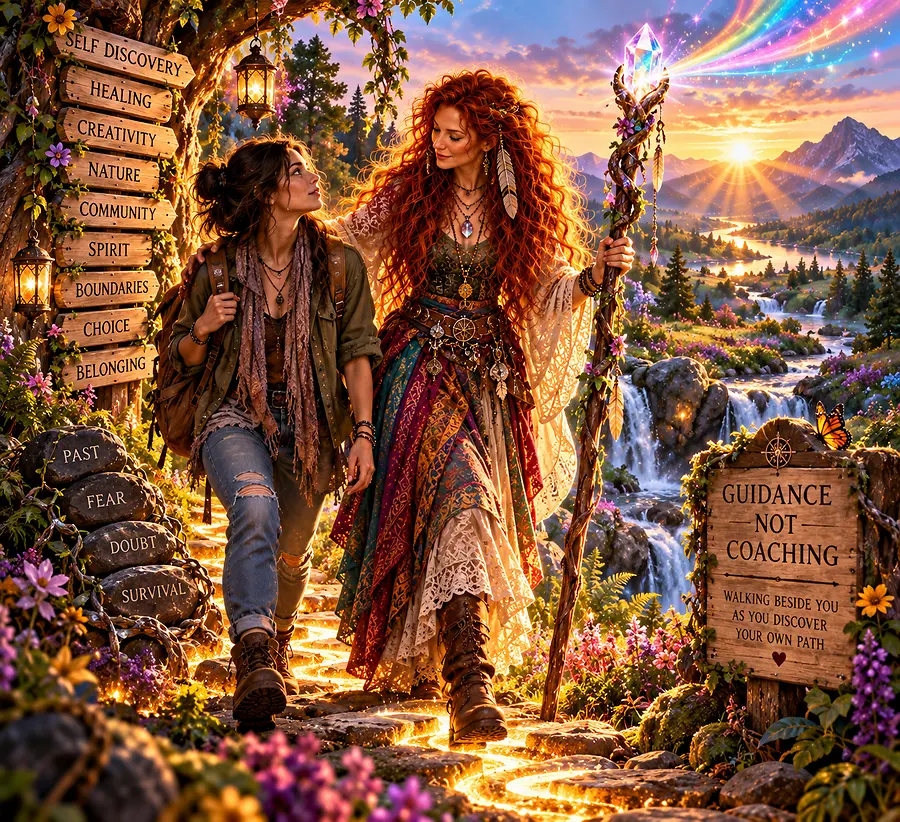
Imagine standing at the beginning of a woodland trail. You have never walked this particular path before. There are several directions you could take. Some lead toward open meadows. Others disappear into thick forests. Some are steep and challenging. Others are quiet and gentle.
Now imagine someone approaching you and announcing that they already know exactly where you need to go. They have a map. They have a schedule. They have a destination. And they expect you to follow.
Perhaps their chosen route is beautiful. Perhaps it worked wonderfully for someone else. But what if it is not your path? What if you are not ready to climb that mountain? What if you need to sit beside the stream? What if there is something important you want to explore along the way?
A guide approaches the journey differently. A guide might ask:
- Where would you like to go?
- What are you hoping to discover?
- What do you already know about this landscape?
- What would help you feel prepared?
- Would you like someone to walk beside you for a while?
A guide may offer knowledge, experience, perspective, and practical resources. A guide may point out obstacles or possibilities that someone has not yet noticed. But the journey still belongs to the person walking it.
Guidance is not about taking control of someone's direction. It is about helping them recognize their freedom to choose.
People Are Not Projects to Be Fixed
One of the reasons I feel so strongly about this distinction comes from my work with trauma-informed education and personal transformation.
People who have experienced prolonged trauma may have spent years being told what to think, what to feel, what to believe, and how to behave. Some have lived in environments where their choices were limited. Where their voices were dismissed. Where their boundaries were ignored. Where disagreement came with consequences.
For those individuals, reclaiming autonomy can be an important part of recovery. The last thing I want to do is reproduce another relationship in which someone else is positioned as the authority over their life.
I do not want to replace one set of expectations with another. I do not want to tell someone how quickly they should heal. I do not want to measure their worth by how much progress they make. And I certainly do not want to suggest that their experiences have somehow made them less valuable as human beings.
People are not broken objects waiting for someone more knowledgeable to repair them. They are human beings with histories, strengths, vulnerabilities, wisdom, and the capacity for continued growth.
Sometimes they need information. Sometimes they need encouragement. Sometimes they need professional support beyond what an educator or guide can provide. And sometimes they simply need a space where their voice matters.
Education Taught Me the Importance of Discovery
My philosophy of guidance is deeply connected to my identity as an educator.
Some of the most meaningful learning does not happen when an instructor provides every answer. It happens when a learner becomes curious. When someone asks a question. When they experiment. When they make a discovery. When they recognize a connection they had not previously considered. When they develop confidence in their own ability to understand the world.
I have long been drawn to educational approaches that recognize the importance of the learning environment, observation, exploration, and personal agency. Maria Montessori's philosophy, for example, emphasized preparing environments that support independent discovery. The educator observes, responds, introduces appropriate materials, and respects the learner's developing capabilities.
That does not mean abandoning structure or expertise. It means using knowledge to support another person's learning rather than replacing it.
I see a similar principle in my work as a guide. My responsibility is not to manufacture someone else's transformation. It is to offer an environment where learning, reflection, creativity, and self-discovery become possible.
The most meaningful lesson is not always the one we are given. Sometimes it is the one we discover for ourselves.
Healing Does Not Follow a Performance Schedule
There is another reason I hesitate to frame personal transformation through the language of coaching. We live in a society that frequently treats growth as something to be measured. Set a goal. Follow a program. Track your progress. Reach the next milestone. Become more productive. Become more successful. Become a better version of yourself.
Those approaches can be useful in many areas of life. But healing is not always linear. Grief does not follow a calendar. Trust cannot be demanded. Rest is not wasted time. And someone who needs to slow down is not necessarily failing to move forward.
This understanding is central to my work with the seasons. Nature reminds us that growth includes periods of activity and stillness. There are times to plant. Times to nurture. Times to harvest. Times to release. And times to rest.
We would never stand over a seed in winter and demand that it bloom immediately. Yet we frequently expect human beings to transform according to schedules that leave little room for their circumstances.
A guide understands that sometimes the most meaningful thing we can do is honor the season someone is experiencing.
Not every season of life is meant for climbing mountains. Some are meant for learning how to rest beneath the trees.
The Wisdom of Walking Beside Someone
There is something profoundly different about walking beside another person rather than standing above them.
Walking beside someone creates room for conversation. For listening. For shared curiosity. For mutual respect. It allows us to acknowledge that although one person may have particular knowledge or experience, the other remains the expert on their own lived experience.
I may understand educational theory. I may bring decades of experience in creative work, community development, and personal transformation. I may offer reflections drawn from my studies, spiritual exploration, and the lessons life has taught me. But I do not know another person's inner world better than they do.
I cannot decide what meaning they should make of their experiences. I cannot determine what spiritual path they should follow. I cannot tell them which dreams are worth pursuing. And I cannot promise that a particular practice will produce a particular outcome.
What I can do is listen. Ask questions. Share knowledge. Introduce possibilities. Encourage creativity. Help people explore their values and choices. And respect their right to decide what belongs in their lives.
That is guidance.
Sometimes the Guide Learns Too
I also believe that genuine human connection allows learning to move in more than one direction.
The people who enter our lives bring experiences we have not lived. Perspectives we have not considered. Cultural knowledge we may not possess. Questions we may never have thought to ask.
A guide who believes she already has every answer has stopped being curious. And curiosity is essential to meaningful learning.
I do not want to create relationships built around the illusion that I stand above someone because I have accumulated education or experience. I want relationships grounded in mutual dignity.
I may bring particular knowledge to the table. The person sitting across from me brings a lifetime of experiences, understanding, and possibilities. We can learn from one another without pretending our roles or responsibilities are identical.
Wisdom is not diminished when it is shared. It grows when we remain willing to listen.
Why Creativity Matters in Guidance
I have always believed that people need more than words to explore who they are.
Sometimes understanding emerges through painting. Sometimes through music. Sometimes through gardening. Sometimes through cooking a meal. Sometimes through writing. Sometimes through sitting quietly beneath a tree.
Creative activities can offer opportunities to express feelings, explore possibilities, and experience a sense of agency. They allow people to experiment without requiring every experience to produce a measurable result.
A painting does not have to be beautiful to be meaningful. A journal does not have to be eloquent to be useful. A garden does not have to be perfect to teach patience. And a person does not have to explain every emotion to deserve understanding.
This is why creativity, nature, education, and community are woven throughout my work. They offer different doorways into learning and reflection. The individual decides which doorway feels right.
Building a Circle Instead of a Hierarchy
When I began developing Mama Star's Healing Circle, I wanted the name to reflect the philosophy behind the work.
A circle carries a particular meaning for me. People gather together. They can see one another. They can listen. They can contribute. There is room for different experiences and perspectives.
A circle does not erase the importance of facilitation, boundaries, or responsibility. But it offers a different image from a system in which one person stands above everyone else.
I envision educational gatherings where people explore creativity, nature, seasonal wisdom, personal reflection, and community connection. Spaces where individuals are encouraged to ask questions. Where their autonomy is respected. Where participation is an invitation rather than a demand. Where learning is not a competition. And where nobody is expected to become someone else's idea of a successful human being.
My role within that vision is to guide, educate, facilitate, and help create meaningful experiences. Not to dictate someone's transformation.
The Difference Between Leading and Controlling
I want to make one distinction especially clear.
Being a guide does not mean refusing leadership. It does not mean having no expertise. It does not mean avoiding difficult conversations or pretending that every choice carries the same consequences.
Good guidance sometimes requires honesty. It may involve explaining risks. Providing information. Challenging assumptions respectfully. Establishing boundaries. Or encouraging someone to seek qualified professional care when their needs extend beyond the scope of educational guidance.
But there is a difference between leadership and control. Leadership can empower people to make informed decisions. Control attempts to make those decisions for them. Leadership creates opportunities. Control restricts them. Leadership recognizes human dignity. Control treats obedience as evidence of success.
I know which kind of relationship I want to cultivate.
I Am Not Here to Create Followers
Perhaps this is the heart of what I have been trying to express.
I am not interested in collecting followers who believe I possess the answers to their lives. I am interested in encouraging people to rediscover their own voices.
I want people to leave a conversation feeling more capable of asking questions. More curious about their possibilities. More confident in their ability to make choices. More connected to their creativity. More aware of their values. More willing to honor their boundaries. And more comfortable recognizing that their journey does not have to resemble anyone else's.
If someone eventually reaches a point where they no longer need my guidance, I would not consider that a failure. I would consider it something worth celebrating. Because the purpose was never to make them dependent upon me. It was to support their ability to walk their own path.
A guide does not measure success by how long someone follows her. She recognizes growth when they discover the confidence to walk for themselves.
So, No. I Am Not a Coach.
I am an educator. An artist. A writer. A facilitator. A lifelong learner. A woman who has walked through many seasons of life and continues discovering what each one has to teach.
And I am a guide.
I bring my knowledge, creativity, experience, and curiosity to the work I do. I offer questions rather than predetermined identities. Possibilities rather than promises. Encouragement rather than pressure. And opportunities for discovery rather than instructions for becoming someone else's ideal.
I do not believe another human being needs me to tell them who they are. I believe they deserve the freedom, support, and opportunity to discover that for themselves.
Perhaps that is what guidance has always meant to me. Not standing at the summit and shouting directions to those below. But walking beside someone through the forest. Sharing what I know. Listening to what they know. Noticing the beauty along the way. And remembering that when the path divides, the choice of direction belongs to the person whose life is being lived.
I am not here to tell you who to become. I am here to remind you that the journey belongs to you. And if you would like someone to walk beside you for a while, I would be honored to share part of the path.
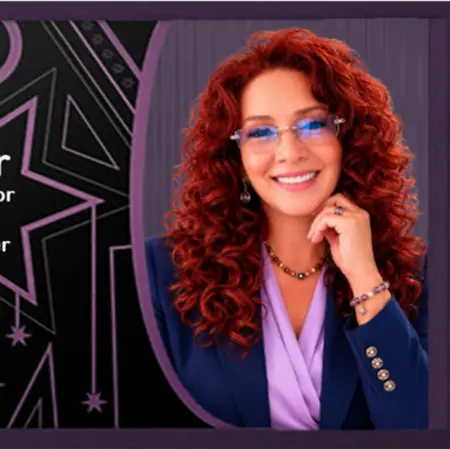
Mylee Star Hawk, MAED, founded Mama Star's Healing Circle to support healing through education, art, and community. With 25+ years in education and community support, Star specializes in addressing generational trauma through creative expression, culinary arts, and spiritual practices. An ordained minister and master chef pursuing a doctorate in Transpersonal Psychology, she integrates education, creativity, and…