I Belong in This Conversation
Embracing Your Unconventional Path: Why Your Unique Experience Makes You Essential
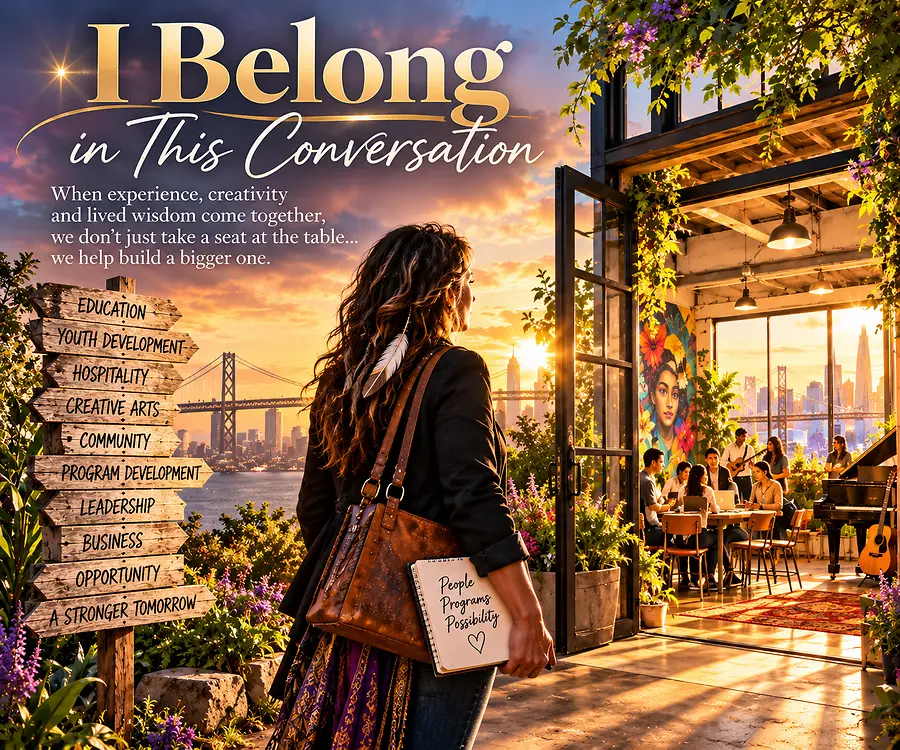
For much of our lives, many of us walk into rooms wondering whether we belong there.
Do I have enough experience? Do I have the right degree? Did I take the traditional path? Am I too old? Too different? Too unconventional? Will they understand why my career does not fit neatly into one little box?
And perhaps the most damaging question of all:
Am I enough to be here?
Something has changed for me. I am no longer walking into rooms asking people to decide whether I belong there. I am walking into them knowing:
I belong in this conversation.
There is a difference. It is not arrogance. It is not believing I know everything. It is certainly not believing that someone else's experience matters less than mine. It is simply recognizing the value of what I have lived, learned, built, survived, studied, created, and carried with me.
Experience Does Not Always Travel in a Straight Line
My career has never fit conveniently inside a single title. I have worked in education. I have worked with young people. I have developed programs and curriculum. I have worked in career development. I have spent decades in culinary arts and hospitality. I have worked backstage in theater, creating environments where every prop, sound, light, costume, and detail helped tell a story. I am an artist. I am a writer. I have built businesses. I have developed community initiatives. I have led teams. I have created brands. I have designed experiences.
And somehow, for years, I thought the fact that these things did not fit neatly together made my professional story harder to explain. Now I understand something different.
They were never separate.
Each experience taught me another way to understand people. The kitchen taught me how to manage pressure, timing, resources, expectations, and human connection. The theater taught me that environments tell stories before anyone says a word. Education taught me that people learn differently and that information means very little if we cannot make it accessible. Working with young people taught me the importance of being seen. Community work taught me that solutions imposed from the outside rarely work as well as solutions built with the people who will live inside them. Business taught me sustainability. Art taught me possibility. Life taught me resilience.
None of it was wasted.
Some Knowledge Comes From Books. Some Comes From Living.
Education matters deeply to me. I have devoted years of my life to it, and I continue learning today. But there is another form of education that does not arrive with a transcript.
Lived experience.
There are things we learn because life places us inside them. Instability. Loss. Starting over. Being underestimated. Having to find solutions when there is no obvious path forward. Learning how to survive and then eventually asking:
What can I do with what I learned?
Lived experience does not make us experts on another person's story. My experience will never mean that I automatically understand someone else's. But it can teach humility. It can teach us to listen differently. It can remind us that the person sitting in front of us is more than the crisis currently surrounding them. And perhaps most importantly, it can teach us that people should never be reduced to what happened to them.
The Difference Between Managing Problems and Building Possibility
Years ago, while working with young people, I developed cooking and art programs. On paper, they might have looked like activities. But something happened inside those spaces. Young people created things. They learned skills. They worked together. They discovered abilities. They experienced accomplishment. They began seeing themselves and the community around them differently.
That experience stayed with me. Because sometimes the question is not simply:
What service does this person need?
Sometimes we also need to ask:
What can they create?
What can they contribute?
What are they capable of becoming?
Those are very different questions. And they create very different environments.
We Need New Structures for Old Problems
Our communities continue struggling with problems we have been discussing for generations. Homelessness. Disconnection. Youth instability. Poverty. Isolation. Educational barriers. Lack of opportunity. Trauma.
We build programs. We build facilities. We build systems. And sometimes we continue applying old structures to problems those structures have never successfully solved.
Perhaps innovation begins when someone is willing to ask:
What if we built something different?
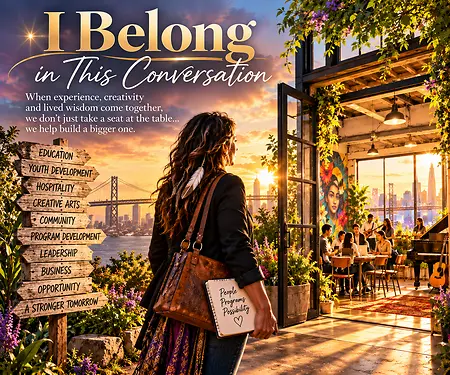
What if a youth facility did not feel institutional? What if the first floor became a community café where young adults learned how to run a business? What if young artists sold their work on the walls? What if there were a little stage where musicians, singers, poets, and storytellers could discover their voices? What if an old piano sat in the corner waiting for someone to play it? What if elders came in and became mentors? What if businesses met future employees there? What if university students completed internships alongside young people learning workforce skills? What if people came through the doors not because they were in crisis, but because something wonderful was happening inside?
Suddenly, we are no longer merely operating in a community. We are becoming part of the community.
Builders Think Differently
I have realized that I am a builder. When I look at an empty space, I rarely see only what is there. I see what might happen there. I see people. I see relationships. I see programs. I see art. I see food. I see education. I see partnerships. I see problems that need solving. I see resources that can be connected. And almost immediately, my mind begins asking how all those pieces affect one another.
How does the program affect the young person? How does the young person affect the community? How does the facility support the program? How does the business model support sustainability? How do partnerships create opportunity? How do we measure whether any of it actually works?
And then another question:
How do we build it so it continues after the person who created it is gone?
Because leadership should never be about becoming indispensable. The strongest thing we can build is something that eventually does not need us.
Build it. Stabilize it. Document what works. Develop the next keeper. Then, perhaps, take what we learned and build again somewhere else. Not by copying everything exactly. Communities are different. People are different. Needs are different. But the principles can travel.
Listen first. Build relationships. Create belonging. Develop opportunity. Measure what works. Change what does not. And never confuse protecting an old program with protecting the mission.
Stop Asking Permission to Bring Your Whole Self
Perhaps this is the lesson I am finally learning. For years, I tried to explain my career by separating it into pieces. Educator. Chef. Artist. Writer. Manager. Founder. Community builder. Creative.
But I no longer want to cut myself into pieces so someone else can understand me more easily. All those experiences belong at the same table. They are precisely why I see things the way I do.
There will always be people with different qualifications, experiences, and strengths. That is how it should be. The goal is not to prove that we are better than everyone else in the room. The goal is to understand what we bring to it. And then bring it fully.
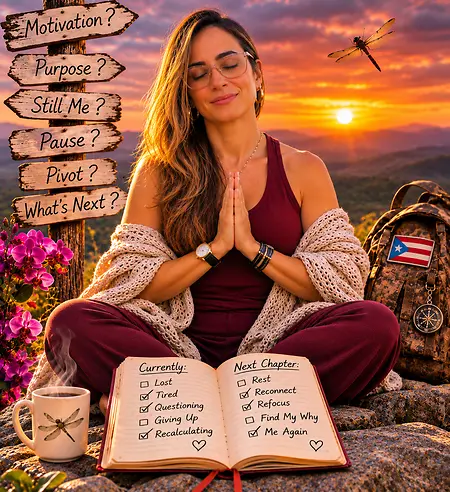
Maybe you are sitting outside your own metaphorical room right now. Considering a job. Starting a business. Returning to school. Writing the book. Building the program. Changing careers. Speaking up for an idea. Beginning again after life knocked everything sideways.
And perhaps part of you is still asking:
Who am I to do this?
Maybe it is time to ask another question.
Who am I not to?
You do not have to know everything. You do not have to have followed the traditional road. Sometimes the people who build new roads are precisely the ones who never quite fit comfortably on the old ones.
So walk into the room. Bring the education. Bring the mistakes. Bring the creativity. Bring the years. Bring the scars. Bring the lessons. Bring the strange collection of experiences that somehow made you exactly who you are.
And when that old voice asks whether you belong there, answer it:
I belong in this conversation.
Not because I know everything. Not because I am better than anyone else. But because I have something worth contributing. And so do you.
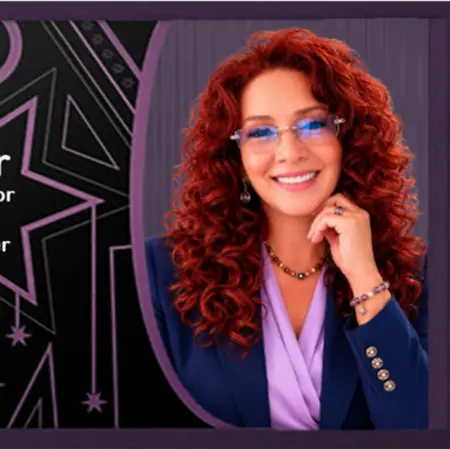
Mylee Star Hawk, MAED, founded Mama Star's Healing Circle to support healing through education, art, and community. With 25+ years in education and community support, Star specializes in addressing generational trauma through creative expression, culinary arts, and spiritual practices. An ordained minister and master chef pursuing a doctorate in Transpersonal Psychology, she integrates education, creativity, and…