I Didn’t Wait Until I Was Ready—and Neither Should You
Why waiting to feel ready is the biggest mistake entrepreneurs make—and how to start anyway.

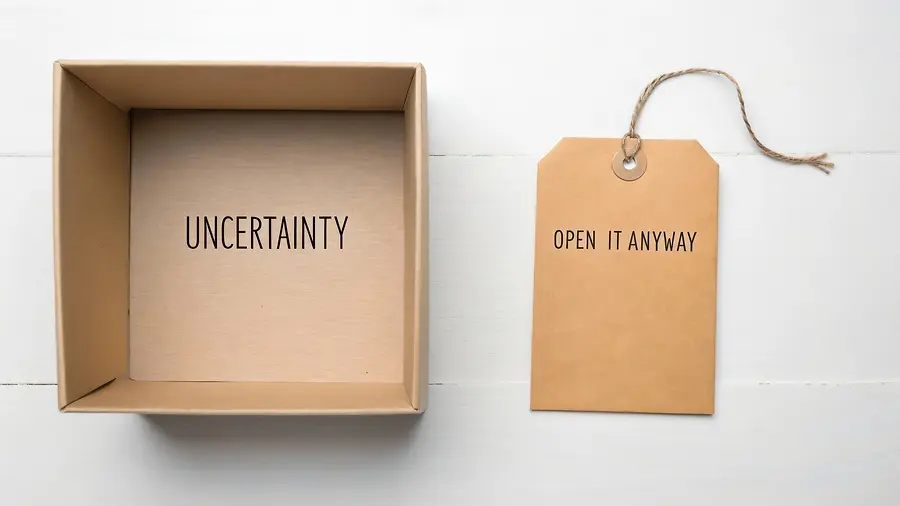
If You Don't Feel Ready, Start Anyway
If you had told me a few years ago everything I would need to learn to build CliqFit, I probably would have been overwhelmed.
Building technology. Making product decisions. Marketing. Talking to users. Creating partnerships. Figuring out what works, what doesn't, and what needs to change. Making decisions when there isn't an obvious right answer.
The list goes on.
I didn't wake up one morning suddenly knowing how to be a CEO.
There was no moment when I thought, Okay, now I'm completely ready to do this.
I started with an idea I couldn't stop thinking about.
And then I started figuring it out.
That may be the biggest thing entrepreneurship has taught me so far: you don't have to feel ready to start. Sometimes starting is how you become ready.
It Started With Walking
The idea behind CliqFit actually came from something incredibly simple.
Walking.
Living in New York, I was walking everywhere. It was already built into my day, and I started thinking about how much movement we do without necessarily thinking of it as "fitness."
At the same time, I kept coming back to something I think a lot of people experience: we know movement is good for us, but knowing that doesn't automatically make it motivating.
Going to the gym can feel like another thing on your to-do list. Hitting a step goal can be exciting for a while, but eventually the number is just a number.
So I started asking myself different questions.
What if movement felt like a game?
What if your friends were part of it?
What if there was competition?
What if the movement you were already doing could give you a chance to win something?
That curiosity eventually became CliqFit.
The idea was to make fitness more social, competitive, rewarding, and, most importantly, fun.
At the time, I was thinking about the product.
What I didn't realize was how much building it would change me, too.
I Was Learning While I Was Building
There's something funny about becoming a founder.
Your title can change overnight. Your confidence doesn't necessarily change with it.
Suddenly, you're the person people are looking to for an answer.
And sometimes you don't have one.
In the beginning, I think I put pressure on myself to know everything. I thought being a good founder meant having the solution immediately.
Now I'm much more comfortable saying:
I don't know yet.
The important word is yet.
Because "I don't know" can be followed by "I'll figure it out."
And I've had to figure out a lot.
I've had to ask questions I worried were obvious. I've had to learn things I had no previous reason to know. I've made decisions and later realized there was a better way. I've gotten feedback that changed how I looked at something entirely.
I've learned that none of those things make you less capable.
They're part of building.
There is a strange expectation that we should become experts before we're allowed to begin. But if everyone waited until they knew everything, very few interesting things would ever get built.
Some lessons only exist on the other side of starting.
Confidence Came Later
People often talk about confidence as though it's something you need to collect before doing something scary.
Once I'm confident enough, I'll apply.
Once I'm confident enough, I'll start the business.
Once I'm confident enough, I'll walk into that room.
My experience has been almost the reverse.
I had to do things before I felt completely confident doing them.
And then I did them again.
And eventually, the things that once intimidated me became things I knew how to handle.
That's when I realized:
Confidence isn't always what allows you to take action. Sometimes action is what creates confidence.
That lesson goes far beyond starting a company.
I think a lot of us are waiting for some future version of ourselves to give us permission to do what we already know we want to do.
We're waiting to be more experienced, more connected, more certain, more prepared.
But that future version of you has to come from somewhere.
You build her.
The First Version Doesn't Have to Be Perfect
CliqFit today isn't exactly what I pictured when the idea first came to me.
And I'm glad it isn't.
I've watched people use it. I've listened to feedback. I've seen which ideas people respond to and which ones need more work. We've added new games, competitions, challenges, and ways for people to engage.
Some things worked.
Some things didn't.
Some things led to completely new ideas.
That's one of my favorite parts of building now.
I don't expect the first version of an idea to be perfect.
I expect it to teach me something.
As founders, it can be tempting to defend an idea simply because it was ours. But I've learned that being committed to your vision doesn't mean being unwilling to change it.
The goal isn't to protect the first version. The goal is to build the best version.
Listen to people.
Take feedback seriously.
Pay attention when something isn't working.
But also learn to trust your own instincts.
That's a balance I'm still learning.
Stop Looking Sideways
This one is difficult.
There will always be someone who seems further ahead.
They raised more money.
They have more users.
They have a bigger team.
They know more people.
They seem to have figured out something you're still trying to understand.
Social media makes it incredibly easy to compare your behind-the-scenes with somebody else's announcement.
I've done it, too.
But every time I spend too much energy looking sideways, I lose focus on what I'm actually trying to build.
I'm not trying to build someone else's company.
I'm building CliqFit.
And my timeline doesn't have to look like anyone else's.
The comparison becomes even less useful when you remember that you're usually comparing your current chapter with a tiny, polished piece of somebody else's story.
You don't know what happened before the announcement.
You don't know how many times they heard no.
You don't know what almost didn't work.
You don't know how uncertain they felt while doing it.
So I've learned to bring my attention back to what's directly in front of me.
What's the next problem?
What's the next opportunity?
What's the next step?
Then take it.
Keep Moving
It's somewhat fitting that I built a company centered around movement, because movement has become a pretty accurate metaphor for entrepreneurship.
You don't need to see the entire road before taking the next step.
And not every step is exciting.
Some days, building a company feels huge.
Other days, progress is fixing one problem.
Sending the email you've been putting off.
Having an uncomfortable conversation.
Changing something you spent weeks building because users told you it wasn't working.
Hearing no and trying again.
Those days count, too.
I've stopped believing that progress always needs to look impressive.
Sometimes progress is simply refusing to stand still.
So if you're sitting on an idea because you don't think you're ready, I understand that feeling.
But I would ask you one question:
What exactly are you waiting to feel?
Because I never woke up one morning magically feeling like a CEO.
I became more capable by doing the work.
I became more confident by having the conversations.
I learned to make decisions by making them.
I learned to build by building.
And I'm still learning.
I don't think that part ever really stops.
So ask the question.
Send the email.
Walk into the room.
Build the first version.
Let it be imperfect.
Let yourself be new at something.
You don't need to know how the entire story ends before you're allowed to begin it.
The woman who begins the journey does not need to already be the woman capable of finishing it.
You become her along the way.


