
I Spent Years Investing in Others. Then Life Challenged Me to Invest in Myself.
How Losing Your Job Can Help You Rediscover Your Strengths and Redefine Your Career


There is something incredibly humbling about having to reintroduce yourself to the professional world after a layoff, especially when you've spent years building a career, developing people, leading teams, and helping organizations become better versions of themselves.
You go from being the person people turn to for answers, guidance, and solutions to suddenly wondering what your own next step should be.
And if I'm being completely transparent, experiencing that once is difficult enough. Experiencing it twice within three years? Well, let's just say life has a way of making sure you've learned the lesson before moving on to the next chapter.
But somewhere between updating my résumé, navigating rejection, questioning my next move, and trying to figure out what this new season of life was supposed to teach me, I came to an important realization.
I may have lost my job, but I hadn't lost the skills, experiences, relationships, or strengths that made me valuable in the first place.
And neither have you.
When Your Career Becomes Part of Your Identity
For more than 15 years, I've built my career around people. Whether I was leading customer experience teams, developing training programs, improving processes, or coaching employees through their own professional challenges, there was always a common thread connecting the work I did.
I genuinely enjoyed helping people recognize their potential and find ways to become better at what they do.
Over the years, I had the opportunity to work with organizations like LinkedIn, IGS Energy, and Best Choice Products. Each experience added something different to my professional toolkit. I learned how to lead, communicate, solve problems, build programs, navigate change, and, perhaps most importantly, recognize strengths in others that they didn't always recognize in themselves.
Ironically, when I found myself on the receiving end of a layoff, extending that same recognition to myself wasn't nearly as easy.
It's interesting how quickly we can forget our accomplishments when the title we've attached them to disappears.
We start questioning our value based on how many interviews we've landed, how many applications we've submitted, or how many rejection emails have found their way into our inboxes.
But a job title is something an organization gives you. Your strengths are something you carry with you.
It took me some time to truly appreciate the difference.
Sometimes Your Greatest Strengths Are the Ones You've Been Overlooking
One of the biggest lessons I've learned throughout this experience is that we often underestimate the skills that come most naturally to us.
For me, those strengths have always included communication, storytelling, relationship building, creative problem-solving, and helping people see possibilities beyond their immediate circumstances.
Throughout my career, I had used those strengths to help employers achieve their goals. I built programs, supported teams, developed people, and contributed to the success of organizations.
But after my layoffs, I started asking myself a different question.
What would happen if I invested that same energy, creativity, and belief into building something of my own?
That question changed the way I began looking at my career.
Instead of focusing exclusively on the positions I had held, I started looking at the capabilities I had developed and how they could translate into different industries, opportunities, and experiences.
My leadership experience wasn't limited to managing a team. It could translate into mentoring, consulting, facilitating conversations, and building communities.
My background in customer experience wasn't limited to improving service operations. It had taught me how to understand people, identify their needs, and create meaningful experiences.
And my ability to connect with people and tell stories? Well, that eventually became the foundation for something I never imagined creating.
A podcast.
Turning a Personal Setback Into a Platform for Others
When I launched One More 1:1, it wasn't because I suddenly had all the answers about navigating a career transition.
Quite the opposite.
It came from knowing firsthand how frustrating and isolating the experience could be.
After spending years working in professional environments, including LinkedIn, I understood the importance of networking, visibility, and building meaningful professional relationships. I also understood that a résumé, no matter how impressive, could never fully capture someone's personality, passion, potential, or the value they could bring to an organization.
I kept thinking about all the talented professionals who had incredible stories to tell but were being reduced to job titles, bullet points, and an "Open to Work" banner.
I wanted to create a space where people could be seen and heard beyond their employment status.
So I took something I had always loved doing—having meaningful conversations and connecting with people—and turned it into a platform.
One More 1:1 was born from the belief that sometimes one more conversation can change everything.
And in many ways, creating it helped change something in me, too.
It reminded me that I didn't need to wait for someone to offer me a position to continue using my gifts. I could create opportunities to contribute, connect, learn, and make an impact right where I was.
Reinvention Doesn't Mean Starting Over
Another thing I've learned is that career reinvention doesn't require abandoning everything you've already accomplished.
Sometimes it simply means finding new ways to apply what you already know while giving yourself permission to learn something different.
For me, that has included continuing my education at Western Governors University, exploring marketing and user experience design, and becoming more intentional about developing skills that complement my professional background.
It's also meant stepping into leadership as the Vice President of Advertising and Promotions for WGU's American Marketing Association student chapter.
I love that this chapter of my life allows me to combine skills I've spent years developing with new interests and opportunities.
The leadership experience is still there. The communication skills are still there. The ability to organize, strategize, collaborate, and connect people is still there.
I'm simply using those strengths in different ways.
And perhaps that's one of the most liberating things about this experience.
I no longer feel that my professional identity has to fit neatly into a single job title or career path.
I can be a leader, a student, a storyteller, a creator, and someone who is still figuring a few things out along the way.
Those identities don't compete with one another. They complement one another.
Five Things I'd Encourage Anyone Navigating a Layoff to Remember
If you're currently navigating a layoff or questioning what comes next, here are a few things I wish more professionals understood.
1. Take inventory of your strengths, not just your responsibilities. Your résumé tells people what you've done. Your strengths help explain how you did it and what makes your approach valuable. Think about the problems people consistently trusted you to solve and the contributions that made you proud.
2. Don't confuse rejection with a lack of value. The job market can be unpredictable, competitive, and downright exhausting. Not being selected for an opportunity doesn't automatically mean you're unqualified or incapable. Sometimes the opportunity simply isn't the right fit.
3. Give yourself permission to explore. You don't have to spend the rest of your career doing exactly what you've always done. Look for opportunities to apply your existing strengths in new industries, projects, or roles. You may discover interests and abilities you never had the space to explore.
4. Invest in relationships, not just applications. Some of the most meaningful opportunities begin with a conversation. Stay connected to people, be willing to share your story, and remember that networking is about building genuine relationships, not simply asking someone for a job.
5. Don't wait for permission to create something meaningful. Whether it's starting a business, launching a podcast, volunteering, mentoring, pursuing an education, or contributing to your community, there are countless ways to continue developing professionally while searching for your next opportunity.
Your ability to make an impact doesn't begin and end with an employer.
The Strength to Begin Again
I won't pretend that navigating layoffs has been some beautifully orchestrated journey of self-discovery.
There have been difficult moments, uncomfortable questions, and plenty of uncertainty.
And while I'm proud of the things I've created and the ways I've continued growing, that doesn't mean I've figured everything out.
What I have learned is that resilience isn't always about bouncing back quickly or having a perfectly mapped-out plan.
Sometimes it's about being willing to believe in yourself when your circumstances make that difficult.
Sometimes it's recognizing that the strengths you've used to build someone else's vision are just as valuable when you begin building your own.
And sometimes it's realizing that the end of one professional chapter doesn't have to mean the end of your story.
If there's one thing I hope someone takes away from my experience, it's this:
You are more than the position you held, the company you worked for, or the circumstances that led to your departure.
Your knowledge still matters. Your experience still matters. Your voice still matters.
And the strengths that helped you get this far may be the very things that help you discover what's next.
As for me, I'm still writing that next chapter.
But this time, I'm making sure I remember who holds the pen.
I'll leave you with the same question I had to ask myself: "If you stopped defining yourself by the job you lost, what might your strengths give you the courage to create next?"
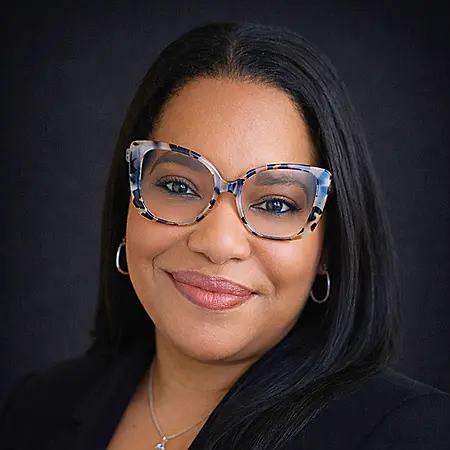
NaKisha Stephens is a learning and development leader with 15+ years of experience in employee development and corporate leadership. She advanced from call center operations to leadership roles at Best Choice Products, LinkedIn, and IGS Energy, directing training and enablement programs. NaKisha founded One More 1:1 to help professionals in career transitions showcase their skills and potential beyond traditional…





