
I Stopped Asking If I Belonged in the Room
From Proving Your Worth to Leading with Confidence: A Journey Beyond Imposter Syndrome


For a long time, I walked into rooms feeling like I needed to prove why I deserved to be there. I needed to know the answer. I needed to be prepared for every possible question. I needed to understand the problem before anyone else did and have a solution ready before someone could question whether I was capable of finding one. I do not think I realized how much energy I was spending trying to prove something that my work had already proven.
There is a strange thing that can happen as you grow in your career. From the outside, people see the accomplishments. They see the promotion, the title, the responsibilities, the recognition, and the opportunities. What they may not see is that sometimes your confidence does not grow at the same speed as your career. You can be given more responsibility while privately wondering whether you are ready for it. You can be the person everyone comes to for answers and still question your own. You can accomplish the thing you once hoped for and immediately move the finish line instead of allowing yourself to recognize how far you have come.
I know what that feels like because I have done it.
For years, preparation became one of the ways I protected myself from being questioned. I wanted to know every detail because I never wanted to be caught without an answer. There is nothing wrong with being prepared. I still believe strongly in doing your homework, understanding the details, and knowing what you are talking about before you walk into an important conversation. But there is a difference between preparing because you value excellence and preparing because you are afraid someone will discover you are not supposed to be there.
It took me a long time to understand that difference.
At some point in my career, something began to shift. It was not when I received a promotion. It was not when Vice President was added to my title. It was not when I wrote a book, started building something of my own, or reached some imaginary level where I suddenly felt like I had arrived. The change was much quieter than that. I began to understand that I had earned my seat through years of doing the work.
I had been in the difficult conversations. I had walked into situations where things were not working and had to figure out why. I had made decisions that were not always popular but were necessary. I had built processes, torn apart processes that were no longer working, developed people, made mistakes, changed my mind, learned from those mistakes, and kept going. There was no single moment that qualified me. It was the accumulation of all of those moments.
That realization changed the way I show up.
I stopped believing that leadership meant having the quickest answer in the room. I stopped thinking that saying “I do not know” somehow diminished my credibility. I became more comfortable saying, “I do not know yet, but I am going to figure it out.” There is confidence in those words that I did not understand earlier in my career. There is also credibility in being willing to listen to the people around you and recognize that their expertise may be exactly what is needed.
The longer I lead, the less interested I am in being the smartest person in the room. I am much more interested in creating a room where the smartest thinking can happen.
That means listening to the person who has not spoken yet. It means asking another question when the first answer does not make sense. It means being willing to challenge something that has been done the same way for years. It also means being willing to hear that my own idea may not be the best one. None of that makes me less of a leader. It makes me a better one.
For women especially, I think there can be an enormous amount of pressure to prove that we are ready before we are willing to raise our hands. We want to be completely prepared. We want the experience, the knowledge, the credentials, and the confidence before we take the opportunity. Then, when we finally get into the room, some of us spend even more time proving that the person who gave us the opportunity did not make a mistake.
I know I did.
There is a cost to living that way. When you are constantly trying to prove that you belong, you can become afraid to be wrong. You can hesitate before sharing an idea because you want to make sure it is perfect. You can overexplain decisions you are fully qualified to make. You can take criticism more personally than you should because it feels like confirmation of the doubt you were already carrying. You can even minimize your accomplishments because acknowledging them feels uncomfortable.
Eventually, I had to ask myself a different question. Instead of asking, “Have I done enough to belong here?” I started asking, “What am I here to contribute?”
That question changed everything.
When you stop making the room about proving yourself, you have more space to actually lead. You listen differently. You speak differently. You become less concerned about how you are being perceived and more concerned about whether the right decision is being made. You can disagree without feeling threatened. You can receive feedback without allowing it to redefine your value. You can change your mind when someone brings you better information because being right is no longer the same thing as being worthy.
That is the kind of confidence I want to carry.
My career has been built in revenue cycle management, an area that most people outside of healthcare probably never think about until something goes wrong. I happen to love it. I love understanding how all the pieces connect. I love finding the breakdown in a process and figuring out how to make it better. As my responsibilities have grown, though, I have learned that the numbers are usually only part of the story. Behind almost every operational problem is a communication problem, a process problem, a training opportunity, or a person who needs clarity and support.
The numbers can tell me that something is wrong. Leadership requires me to understand why.
Sometimes that means asking uncomfortable questions. Sometimes it means holding someone accountable. Sometimes it means recognizing that the person did exactly what the process taught them to do and the process is what needs to change. Sometimes it means admitting that a decision I made contributed to the problem. A title does not teach you how to recognize the difference. Experience does.
Experience also teaches you that leadership can be lonely in ways people do not always talk about. There are decisions you will make that not everyone will understand. There are conversations you cannot avoid simply because they are uncomfortable. There will be times when caring about someone means telling them something they do not want to hear. There will also be times when you have to stand behind a decision while still questioning privately whether you made the right one.
That does not mean you are weak. It means you understand the weight of leadership.
I have learned that I can lead with heart without lowering my expectations. For years, I think many women were given the message that we had to choose. We could be compassionate or we could be strong. We could care about people or hold them accountable. We could be approachable or authoritative. We could be ambitious or grateful for what we already had.
I no longer accept those choices.
I can care deeply about someone and still expect them to perform. I can understand why something happened and still say it cannot continue. I can listen to someone's perspective and still make a decision they do not agree with. I can admit when I am wrong without giving away my authority. I can celebrate what I have accomplished and still want more for myself. None of those things contradict one another.
There is freedom in reaching the point where you stop performing leadership and simply lead.
That freedom has also changed my relationship with success. Becoming a Vice President was meaningful to me. Writing my book was meaningful to me. Building Holloway Leadership & Learning has been meaningful to me. I am proud of those things, but I understand them differently now. They did not suddenly make me capable. They did not give me permission to call myself a leader. They were visible milestones along a much longer journey that most people never saw.
People did not see every late night spent figuring something out. They did not see every time I questioned myself before walking into a difficult conversation. They did not see the mistakes I replayed in my head, wondering what I could have handled differently. They did not see the times I had to make a decision without having every piece of information I wanted. They did not see every lesson I learned from people who worked for me, beside me, or above me.
That is where the leader was built.
Today, when I walk into a room, I am not thinking about how I can prove I deserve to be there. I am thinking about what I can contribute. I am thinking about what I can learn. I am paying attention to the people who may not be speaking and wondering what they see that the rest of us are missing. I am asking better questions because I am no longer afraid that asking a question will expose something I do not know.
That does not mean I never question myself. I do. There are still rooms that intimidate me. There are still moments when I wonder whether I am ready for the next thing. Growth has a way of continuously putting us into spaces where we are beginners again, and I actually hope that never stops. I never want to become so comfortable with what I know that I stop being curious about what I do not.
The difference is that I no longer confuse being uncomfortable with being unqualified.
If I could sit across from the younger version of myself today, I would tell her that she does not need to wait until she feels completely ready. She does not need to know everything before she speaks. She does not need to work twice as hard simply to convince herself that she deserves what she has earned. I would tell her to keep preparing, keep learning, keep asking questions, keep caring about people, and keep holding herself accountable. But I would also tell her to trust what all of those experiences are building in her.
And maybe most importantly, I would tell her to stop waiting for someone else to confirm that she belongs.
There will always be another room. There will always be someone with more experience, a bigger title, a different expertise, or an accomplishment you have not reached yet. If you use those things as the measurement for whether you belong, you will spend your entire career trying to earn a seat you may already be sitting in.
I do not walk into every room believing I have all the answers now. I walk into it knowing I have something to contribute, something to learn, and enough confidence in myself to know the difference.
I stopped asking if I belonged in the room.
I started asking what I was going to do while I was there.
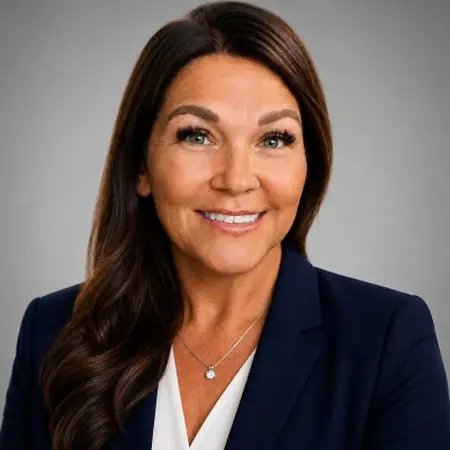
I am the Vice President of Revenue Cycle Management at Forge Specialty Partners, with more than 25 years of experience across dental healthcare, revenue cycle management, and leadership. My career began on the clinical side of dentistry and evolved into Revenue Cycle Management, giving me a unique perspective on how clinical operations, the patient experience, and financial performance are interconnected. My…





