Explore how technology, leadership, and human judgment converge to transform Revenue Cycle Management. Discover why automation alone cannot fix broken processes and how organizations can balance innovation with accountability.
Her Story
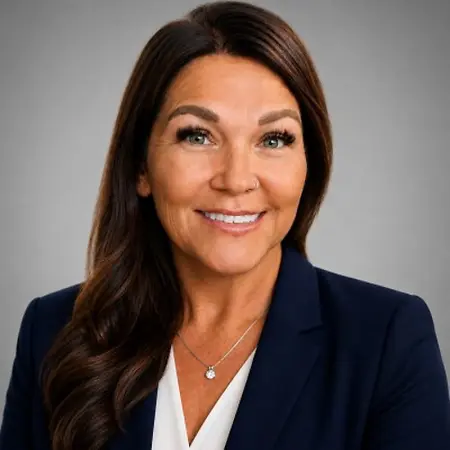
About Jackie
My journey in dentistry began more than 25 years ago as a dental assistant, and I spent nearly a decade on the clinical side before transitioning into Revenue Cycle Management. I never had a roadmap that said the journey would eventually lead to executive leadership, but each step gave me a different perspective on our industry and helped shape the way I lead today. Having worked on both the clinical and administrative sides of dentistry, I understand that RCM is about much more than submitting claims and collecting money. It is an interconnected ecosystem of people, processes, technology, financial performance, and the patient experience. Throughout my career, I have had the opportunity to build and develop teams, partner with executive leadership, improve financial performance, implement new technologies, and redesign processes that no longer serve the people or organizations relying on them. I am especially passionate about innovation and the opportunities automation and artificial intelligence are creating, while remaining grounded in my belief that technology should enhance great people and processes, not replace them.
Leadership has become one of the most meaningful parts of my journey. I believe great leaders build people rather than diminish them, coach rather than simply criticize, and help others recognize strengths in themselves they may not yet see. That philosophy inspired me to write The Leader I Chose to Become and begin developing the Leading with Heart and Delivering Excellence Leadership Academy. I also created Dental RCM Uncovered as a way to share practical strategies, real-world experiences, and leadership lessons with others in the dental industry. I believe there is tremendous value in sharing not only what works, but also what does not and what we learn along the way. My education has complemented that journey, including a Bachelor of Science in Psychology from Auburn University with a minor in Computer Programming, an associate's degree in Business Management from Rasmussen University, and a Certificate of Specialization in Leadership and Management from Harvard Business School Online.
Looking back, every role, challenge, mistake, mentor, and opportunity has contributed to the person and leader I am today. I am proud of how far my career has taken me, but I am even more interested in what I can do with the experience I have gained along the way. My goal is to continue developing others, challenge our industry to think differently, embrace opportunities to make things better, and leave the teams and organizations I serve stronger than I found them. To me, success is not simply about how far we rise, but what we do with the opportunities we are given and how many people we help rise along the way.
Her Interview
Ten minutes with Jackie
01What do you attribute your success to?
I attribute much of my success to my family. They have been my greatest source of motivation, strength, and perspective throughout my life and career. I have experienced significant loss along the way, including losing my father when I was young, my only sibling, my sister, in 2019, and more recently, my mother. Each of them helped shape the person I am today, and their memory continues to influence how I live, lead, and persevere. My children give me an equally powerful reason to keep moving forward. I want them to see through my journey that success is not about everything going according to plan or never making mistakes; it is about how we respond to the difficult moments, what we learn from them, and our willingness to continue growing.
My career began as a dental assistant and took me through clinical, administrative, and leadership roles before eventually leading to executive leadership. That journey has required hard work, continuous learning, humility, resilience, and a willingness to grow even when growth was uncomfortable. I have learned that a mistake, setback, or difficult chapter does not define us; what matters is what we choose to do next. Success, to me, is not simply about a title or how far I have progressed professionally. It is about honoring the people who helped shape me, creating opportunities for others, and setting an example for my children that they can be proud of. If my journey teaches them to face difficult things, learn from their mistakes, remain humble, and keep moving forward, that will be one of the greatest measures of success I could ever achieve.
02What’s the best career advice you’ve ever received?
The best career advice I have ever received is to never stop learning and never become so comfortable in what you know that you are no longer willing to grow. No matter your title or how much experience you have, there will always be something you do not know and something you can learn from the people around you. Some of the most valuable lessons in my career have come from people at every level of an organization. I believe strong leaders are confident enough to make decisions but humble enough to ask questions, listen to different perspectives, and admit when they do not have the answer.
I have also learned not to turn away from an opportunity simply because I do not feel completely ready for it. Some of my greatest growth has come from stepping into something new, trusting what I already know, and being willing to learn the rest along the way. That mindset has stayed with me throughout my career. I never want a title to make me believe I have arrived. I want to remain curious, coachable, and open to new perspectives because the moment we believe we have nothing left to learn is often the moment we stop growing.
03What advice would you give to young women entering your industry?
My advice to young women entering this industry would be to never stop learning, find your voice, and do not be afraid to use it. Learn every part of the business you can, not just what falls within your job description. Ask questions, stay curious, and understand not only how things work but why they work that way. I would also tell them not to wait until they feel completely ready before pursuing an opportunity. There were times in my own career when I questioned whether I had enough experience, knew enough, or belonged in certain rooms. I eventually learned that you do not have to know everything to deserve a seat at the table. You need to be prepared to contribute, willing to listen, and humble enough to continue learning once you get there.
Find mentors and learn from the people around you, but never feel that you have to become someone else to be successful. There is strength in leading with compassion, humility, and heart while still holding people accountable and making difficult decisions. Most importantly, do not allow a mistake, a difficult season, or someone else's opinion of your potential to determine the direction of your career. Advocate for yourself, support other women along the way, and when you reach a position where you have the ability to open a door for someone else, hold it open. Success becomes much more meaningful when we use what we have learned and the opportunities we have been given to help someone else move forward.
Your career does not have to follow a perfect path to become an extraordinary one.
04What are the biggest challenges or opportunities in your field right now?
I believe some of the greatest challenges in Revenue Cycle Management today are also our greatest opportunities. The industry is changing rapidly, particularly with advancements in technology, automation, and artificial intelligence. We have opportunities to automate repetitive tasks, improve the accuracy and speed of insurance verification and claims processing, identify trends in accounts receivable, and use data more effectively to make decisions. At the same time, technology alone will not solve the challenges facing RCM. You cannot automate your way out of a broken process. Organizations still need strong workflows, clear ownership and accountability, and teams that understand not only what they are doing, but why they are doing it. When technology is implemented thoughtfully, it can reduce manual work and allow RCM professionals to focus their time and expertise where they can have the greatest impact.
The increasing complexity of the payer environment is another significant challenge. Insurance requirements, reimbursement structures, credentialing, denials, and administrative requirements continue to evolve, requiring RCM professionals to become more knowledgeable and proactive rather than simply reacting when something does not pay. I also see a tremendous opportunity to change how organizations view Revenue Cycle Management. RCM should not operate as an isolated department; it is an ecosystem connecting the clinical team, administration, billing, insurance, technology, financial performance, and the patient experience. Decisions made throughout the practice can ultimately affect whether a claim is paid, how quickly revenue is collected, and the experience a patient has. The organizations that recognize those connections and bring their people, processes, and technology together will be better positioned for the future.
05What values are most important to you in your work and personal life?
The values that matter most to me, both professionally and personally, are integrity, humility, compassion, accountability, continuous growth, and service to others. At the center of all of them is something very simple: how we treat people matters. Life and leadership have both taught me that you can be strong without losing compassion and hold people accountable without diminishing them. I have made mistakes, faced difficult seasons, experienced loss, and had moments when I had to learn, adjust, and keep moving forward. Those experiences have made humility especially important to me. Regardless of my title or experience, I never want to become someone who believes she has all the answers. I want to listen, ask questions, own my decisions, admit when I am wrong, and remain willing to change when there is a better way. I expect accountability from the people I lead, but I believe I have a responsibility to model it first.
My family has also shaped how I think about the person and leader I want to be. As a mother, I know my children will learn far more from how I live than from anything I tell them, and I want them to see someone who works hard, treats people well, keeps her word, gets back up after difficult moments, and never stops growing. I try to bring those same values into my leadership by coaching rather than simply criticizing, seeing potential in people even when they may not see it in themselves, and being willing to have difficult conversations because I care about their growth. I believe in giving people grace, but I also believe grace and accountability can exist in the same conversation. Ultimately, I want to lead with heart and deliver with excellence. To me, that means caring deeply about people while maintaining high expectations, pursuing excellence without losing my humanity, and leaving the people in my life and the teams I have the privilege to lead better because I was part of their journey.
Her Content Hub
Articles by Jackie
You Cannot Automate Your Way Out of a Broken Process
Technology is essential to Revenue Cycle Management's future, but people and processes remain the true drivers of success.

Technology is changing Revenue Cycle Management at an incredible pace. Automation, artificial intelligence, advanced analytics, and new platforms are creating opportunities to improve processes, strengthen financial performance, reduce unnecessary manual work, and give teams better tools to do their jobs. I am excited about that future, but I also believe there is something we need to be careful not to lose in our excitement about innovation: you cannot automate your way out of a broken process. Technology can make a good process faster, make information more accessible, identify patterns, and eliminate repetitive tasks so people can focus their attention where their knowledge and experience matter most. What it cannot do is fix unclear ownership, poor communication, lack of accountability, or a team that does not understand why a process exists. Automating a broken process may simply allow us to make the same mistakes faster.
Having worked on both the clinical and administrative sides of dentistry has shaped how I view Revenue Cycle Management. RCM is much more than a billing department; it is an ecosystem. The revenue cycle begins long before a claim is submitted. Scheduling, patient demographics, insurance verification, treatment planning, clinical documentation, coding, collections, claim submission, payment posting, accounts receivable, credentialing, payer relationships, and the patient experience are all connected. When something breaks down in one area, the impact eventually appears somewhere else. When a claim is denied, the easiest response is often to ask what billing did wrong, but I believe the better question is, “Where did the process break down?” Sometimes the answer is billing, but sometimes the issue began days or weeks earlier. Effective RCM requires us to look beyond departmental boundaries and understand the entire journey.
I take the same approach when evaluating new technology. My first question is not simply what it can automate; I want to understand the problem we are trying to solve. If we cannot clearly define the problem, understand the current workflow, establish ownership, and determine what success looks like, adding another piece of technology may only add another layer of complexity. Sometimes the right solution is automation, but sometimes it is education, clearer accountability, a better process, or simply eliminating a step that no longer serves a purpose. Innovation is not just about adopting the newest technology. It is about being willing to examine how we work and recognize what actually needs to change.
There is understandable concern about what artificial intelligence and automation will mean for the workforce, but I see tremendous opportunity. I believe we should be asking how we can use technology to remove unnecessary work from talented people rather than how we can use it to replace them. Our teams should not spend hours completing repetitive tasks that technology can perform accurately and efficiently. We should be developing people who can analyze information, solve problems, communicate effectively, understand payer behavior, recognize trends, and make thoughtful decisions. That means leadership has to evolve alongside technology as well. If technology removes some of the transactional work, we have a responsibility to prepare our people for what comes next. We cannot invest heavily in artificial intelligence while forgetting to invest in human intelligence.
Throughout my career, I have learned that some operational problems that initially appear to be process problems are actually leadership problems. When something repeatedly breaks down, we have to ask whether expectations and ownership are clear, whether people have been properly trained, whether we are measuring the right things, and whether leaders are willing to address issues when expectations are not being met. Accountability matters deeply to me, but I do not believe accountability and compassion are opposites. We can hold high expectations while supporting people, address mistakes without diminishing the person who made them, and coach someone while still requiring improvement. I believe in leading with heart and delivering with excellence, and that philosophy applies just as much to Revenue Cycle Management as it does to leadership.
The future of RCM will undoubtedly include more automation, artificial intelligence, better analytics, and technology we have not yet imagined. We should embrace those advancements without losing the critical thinking, accountability, leadership, compassion, and human judgment that make them effective. The organizations that thrive will not simply be the ones with the most technology; they will be the ones that successfully bring people, processes, technology, data, financial performance, and the patient experience together. I am excited about where our industry is going, but I believe our greatest innovations will come from more than asking what technology can do for us. We first have to be willing to ask whether we are doing the right things, in the right way, for the right reasons. The future of RCM may be powered by technology, but it will still be led by people.
Join Influential Women and start making an impact. Register now.