In the Age of AI, Your Event Staff Are Your Only Source of Real-Time Human Intelligence.
Why Your Event Staff Holds the Key to Unlocking Hidden Consumer Insights and Exponential ROI

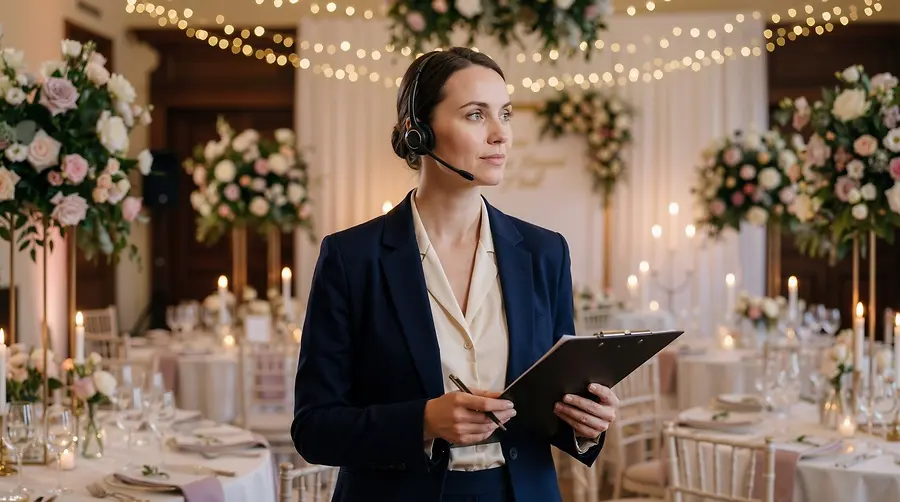
Your Most Expensive Marketing Channel Is Underperforming Because You’re Ignoring the People Running It
Experiential marketing is often the largest single line item in a brand’s budget. Yet, it remains the least optimized.
While brands obsess over every pixel of a digital ad and every millisecond of a landing page load time, the “human interface” of the brand—the event staff—is frequently treated as an afterthought.
The Data Tells the Story: According to the Event Marketing Institute, 91% of consumers have a more positive opinion about a brand after an event, and 85% are more likely to purchase. Furthermore, PwC reports that 73% of consumers point to experience as a top buying factor, yet few brands actually measure the nuance of that experience.
The ROI potential is massive, but there is a structural blind spot: the people closest to the consumer are the furthest from the strategy.
The Reality on the Ground
At a golf tournament or a high-traffic festival, consumer behavior doesn’t follow a slide deck. People don’t just consume; they react.
They challenge brand claims.
They reveal specific pain points in casual conversation.
They signal buying intent through body language and tone—things a tracking pixel cannot see.
Event staff are the only ones positioned to capture this Human Intelligence (HI). They are the first to notice when a “proven” talking point falls flat or when a specific demographic shows unexpected interest.
The $100 Billion Blind Spot
Most brands treat event staff as a cost center for “execution.” They are briefed, deployed, and then ignored.
The result? Qualitative data dies the moment the event ends.
The cost? You are paying for a high-touch channel but only extracting low-touch metrics like “impressions” and “samples handed out.”
From a business standpoint, this is a failure of resource optimization. You are essentially running a multi-million-dollar focus group and throwing away the recordings.
Shifting the Model: From Temp Labor to Strategic Assets
When brands bridge the gap between field staff and strategy, the ROI shifts from linear to exponential. This requires a new framework for training:
Signal detection: training staff to identify “high-value objections” versus “casual curiosity.”
Adaptive messaging: giving staff the agency to pivot the script based on real-time audience shifts.
Structured feedback: moving away from “It went well” to “30% of visitors asked about X, and 50% were confused by Y.”
My Evolution: From Execution to Influence
Early in my career, I stayed on script. I delivered the experience exactly as it was written in the PDF. But I quickly realized that the PDF didn’t account for the reality of the consumer.
I began to treat my role as a field researcher. I started:
Synthesizing patterns: identifying the exact moment a lead “checked out” of the pitch.
Direct-to-brand reporting: providing leadership with “vibe checks” that challenged their assumptions about the target demographic.
This shift changed everything. I wasn’t just “staff” anymore; I was a consultant providing real-time market intelligence. I became a partner in performance, not just a line item in the budget.
The Bottom Line
In a world saturated with digital noise, the live environment is the last frontier of genuine human connection.
Brands that treat their event staff as an untapped intelligence layer will build more responsive strategies, better products, and higher ROI. Those that don’t will continue to spend millions on events, only to wonder why the needle isn’t moving.
The most valuable insights aren’t hidden in your Google Analytics dashboard. They are being spoken aloud right now, in a conversation on the event floor.
Are you listening?


