Influential Women Hurt Too: Vulnerability Behind the Influence
Finding Strength in Heartbreak: A Journey Through Loss, Resilience, and Reclaiming Your Magnificence



Every day is not going to be Sunday.
And sad love songs know exactly what to say to keep you crying.
There are days when the music seems to understand your pain better than the people around you. Days when the silence becomes deafening, the memories become unwelcome visitors, and the simplest things remind you of someone whose absence you are still learning to accept.
And you ask yourself, sometimes aloud, sometimes through tears:
Why is this so hard?
This is typically not the narrative of an influential woman.
Or is it?
Where is the resilience? Where is the strength and resolve? Where is that woman who has weathered storms, climbed mountains, rebuilt her life, inspired others, and somehow always found the courage to begin again?
Gone?
Surely not.
But some days, it certainly feels that way.
At this stage in my life? Really, Michelle? Really, God?
What is this?
Another November. Another loss.
It feels like losing my beloved Shek all over again.
Same address. Different apartment.
Different circumstances. Different memories. Different kind of goodbye.
But somehow, the heart recognizes the familiar ache.
And perhaps that is one of the most difficult truths about loss: grief does not always distinguish between the person who dies and the person who leaves. The circumstances may be different, but the emptiness can feel painfully familiar.
One loss reminds you of another. One goodbye awakens the echoes of a previous farewell. And suddenly, you find yourself grieving not only what has ended, but everything you had hoped would remain.
Try climbing the leadership ladder, building a brand, pursuing your academic dreams, and creating a legacy while simultaneously recovering from the loss of someone you genuinely loved and believed loved you.
Now, that is the test of all tests.
Every fiber of your influential self will be challenged.
Your confidence. Your concentration. Your motivation. Your sense of judgment. Even your ability to trust yourself.
You can sit in a professional meeting and articulate a compelling vision for organizational transformation, then return home and struggle to understand why you cannot seem to transform your own emotional circumstances.
You can encourage someone else to persevere while privately questioning whether you have the strength to endure another day of disappointment.
You can speak eloquently about resilience and still cry yourself to sleep.
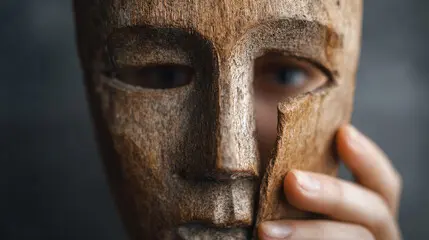
And somewhere between the professional accomplishments and the private heartbreak, you begin to wonder whether the woman everyone sees is the same woman you recognize in the mirror.
But perhaps influence was never meant to make us immune to pain.
Perhaps true influence is not about how convincingly we demonstrate strength when everything is going well, but how courageously we navigate the seasons when nothing seems to make sense.
And perhaps resilience does not always look like standing tall.
Sometimes, resilience looks like getting out of bed.
Sometimes, it looks like going to work, fulfilling your responsibilities, and returning home to face emotions you spent the entire day holding together.
Sometimes, it looks like refusing to make another phone call, not because you have stopped caring, but because you have finally recognized that caring for someone should not require abandoning yourself.
And sometimes, resilience looks like sitting quietly with God and admitting:
Lord, I am hurting. I do not understand this. And I do not know how long it will take me to feel like myself again.
There is no shame in that prayer.
There is no weakness in acknowledging that someone mattered deeply to you.
And there is certainly no disgrace in admitting that losing them hurts.
For weeks, I felt as though I were walking beneath a dark shadow.
A cloud of despair and regret seemed to follow me everywhere. Love and anger became uncomfortable companions. Memories collided with disappointment, and questions without satisfactory answers occupied far too much space in my thoughts.
How could something that once brought so much comfort become a source of such profound sadness?
How could someone whose presence once made life feel lighter leave behind a heaviness that seemed impossible to shake?
And perhaps the most uncomfortable question of all:
How did I allow myself to become so invested in someone that losing them made me feel as though I were losing parts of myself?
That question required more than tears.
It required reflection.
And reflection, when we are being truthful with ourselves, is not always a pleasant experience.
Acknowledging hurt is difficult. Acknowledging our own contributions to painful circumstances can be even harder.
It requires us to examine the choices we made, the boundaries we overlooked, the warning signs we rationalized, and the moments when our desire to love and support someone may have exceeded our commitment to protecting our own well-being.
But reflection must never become an excuse to accept responsibility for another person's choices.
We can acknowledge where we might have acted differently without assuming ownership of every disappointment.
We can recognize that our generosity needed stronger boundaries without concluding that generosity itself was a mistake.
And we can accept that we genuinely loved someone without convincing ourselves that love obligated them to remain.
For me, healing has required accepting a few uncomfortable truths.
I loved genuinely.
I gave generously.
I believed in what I thought we shared.
And despite my best intentions, things did not work out the way I had hoped.
That is painful.
But it does not make my love foolish, my kindness worthless, or my future any less promising.
The ending of a relationship does not invalidate the sincerity of the love we gave.
Nor does it mean that we must spend the rest of our lives defending our intentions, rehearsing our disappointments, or waiting for someone else to acknowledge the depth of our hurt.
There comes a time when we must decide that, even without all the answers, we will continue living.
Not because the pain has disappeared.
Not because the memories have lost their significance.
And certainly not because we have suddenly mastered the art of moving on.
But because there is still a life to live.
There are still dreams to pursue.
There are still books to write, scholars to inspire, opportunities to embrace, and parts of ourselves we have yet to discover.
And perhaps, somewhere along the journey, we will learn that moving on does not require us to stop loving what was. It requires us to stop sacrificing what can still be.
I have often spoken about the importance of resilience, perseverance, courage, and personal responsibility.
These are not merely words I use to motivate others. They are principles I genuinely believe in.
But I am learning that the true test of our principles comes when life demands that we practice them under circumstances we would never have chosen.
It is easy to speak about faith when the prayers are being answered exactly as we hoped.
It is considerably more difficult when the answer appears to be silence, separation, or another painful lesson.
Yet faith was never a guarantee that storms would not come.
Faith is the conviction that even when the rains descend, the winds howl, and everything familiar seems to be shifting beneath our feet, we are not without hope.
I do not have to understand every loss to believe that my life still has purpose.
I do not have to pretend to be happy; I believe that joy will return.
And I do not have to be completely healed to begin moving forward.
Some days, I will make remarkable progress.
Other days, a familiar song, an unexpected memory, or the quiet of an ordinary evening may bring the tears rushing back.
That does not mean I have failed.
It means I am human.
And I am learning that healing is not a performance for others' approval. It is a deeply personal journey that deserves patience, honesty, and grace.
There is no cookie-cutter recipe for recovering from loss.
No universal timetable.
No magical declaration that immediately restores the heart.
But somewhere deep within me, beneath the disappointment, the exhaustion, and the unanswered questions, I know something that heartbreak has temporarily made difficult to remember.
I am still here.
The woman who has overcome adversity before is still here.
The woman who believes in the transformative power of education, service, faith, and purpose is still here.
The woman who loves deeply, gives generously, and believes that kindness matters is still here.
And the woman who has spent years encouraging others to recognize their magnificence must now extend that same compassion, patience, and encouragement to herself.
I do not want this experience to make me bitter.
I do not want disappointment to rob me of my capacity to love.
I do not want another person's choices to determine the kind of woman I become.
But I do want to become wiser.
I want to learn that grace and boundaries can coexist.
That kindness does not require self-neglect.
That loving someone does not mean financing their comfort at the expense of my own peace.
And that sometimes, the most courageous act of love is choosing to release what we cannot repair alone.
I once believed that rehearsing painful experiences might keep us trapped in them.
Now I understand that there are times when revisiting difficult chapters helps us identify what needs to change.
Not to reopen every wound.
Not to relive every disappointment.
But to recover our footing, reclaim our perspective, and remind ourselves that the story is not over.
We were not created merely to survive the storms of life. We were created with the capacity to rise beyond them.
And when life brings us to our knees, perhaps that is not always the end of our strength.
Sometimes it is where faith begins to do its deepest work.
So, to the woman who is building a career while nursing a broken heart...
To the woman who is raising children, pursuing a degree, leading an organization, or rebuilding her finances while privately grieving someone she thought would always be there...
To the woman who has encouraged everyone else but can barely find the words to encourage herself...
I see you.
You do not have to be magnificent every minute to remain a magnificent woman.
You do not have to deny your hurt to demonstrate your strength.
And you do not have to rush your healing to prove that you have moved on.
Cry when you need to.
Pray when you cannot find the answers.
Rest when the weight becomes too heavy.
Reflect honestly, forgive yourself where necessary, and establish the boundaries that will protect the woman you are becoming.
But please, do not abandon your dreams because someone has departed from the journey.
As for me, I am still finding my way.
Some days are harder than others.
Some memories still sting.
Some questions remain unanswered.
And yes, there are moments when another sad love song knows exactly what to say to keep me crying.
But I am slowly resurfacing.
Brushing off the heaviness.
Recovering my footing.
Reclaiming my peace.
And preparing to spread my wings once more.
I may not be soaring today.
I may still be standing in the rain.
But I have not forgotten that I have wings.
And with faith, courage, and the grace to take this journey one day at a time, I will soar again.
Because not every day is Sunday.
But Sunday will come again.
Sail On. Soar Above. Be Magnificent.
© Michelle K. Agard | The Magnificence Framework™

Michelle K. Agard, M.A. Ed, is an educational leader, consultant, and entrepreneur with more than 36 years of experience spanning teaching, educational leadership, curriculum development, educational policy, and strategic planning across the United States and the Caribbean. She is the CEO & Educational Consultant for Brevard Academic Consulting Group and Founder & CEO of KB BEST Educational Services, the foundation…