Learning Each Other's Language
How Understanding My Son's Autism Transformed My Approach to Leadership and Human Connection

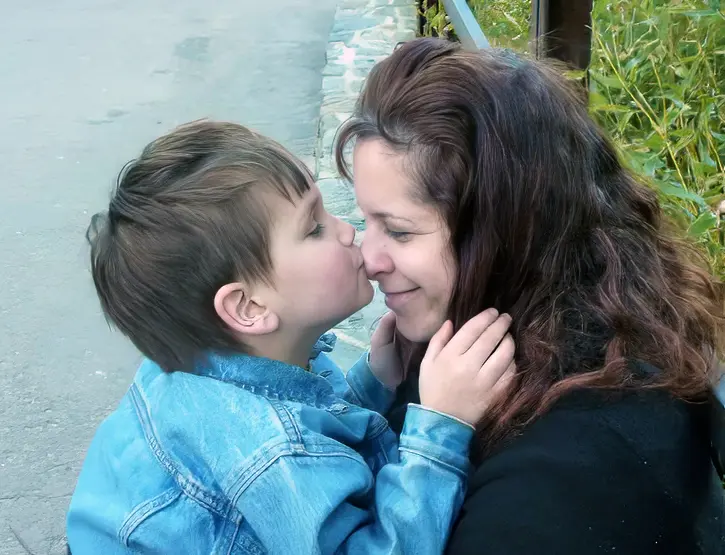
What Parenting Taught Me About Leadership, Business, and Human Connection
My son, Seth, and I once spent nearly an hour in a power struggle involving an orange peel, a sticky, rapidly deteriorating napkin, and a trash can. I "won" the argument — on a technicality — but I remember standing there thinking, "There has to be a better way."
People often told me I needed to be tougher on Seth.
"If you don't get him under control," they warned, "he's going to become an entitled, spoiled brat."
The thing is, Seth was unlike any child I had ever known. Conventional parenting methods had little impact on him. Whenever he became overwhelmed, his behavior would spiral out of control, and he would often hit or push me.
Because I was carrying my own history of complex trauma, those moments didn't simply feel stressful; they activated wounds I had spent a lifetime trying to outrun. Every incident felt like evidence that I was failing as a mother, and every piece of well-meaning advice directed toward me seemed to reinforce that fear.
So, I tried harder.
And harder.
The Orange Peel Standoff
The night of the forty-five-minute-long "Orange Peel Standoff" was both a breaking point and a turning point.
I had to face the facts. I couldn't change Seth's behavior through sheer willpower. I had to figure out what was happening beneath the surface. That shift changed everything.
Rather than seeing an opponent, I saw a struggling child. Rather than trying to control Seth, I focused on understanding him. This didn't make parenting easier, but it did make it more effective.
It took time, but I eventually realized that, to Seth, agreeing to throw away the orange peel and napkin felt like surrendering his autonomy. No wonder he had been so adamantly opposed.
What Was Really Going On Beneath the Surface
Years later, I learned that Seth is autistic, with a PDA profile (Pathological Demand Avoidance, also described as a Persistent Drive for Autonomy). The behaviors many had interpreted as defiance, manipulation, or disrespect were often expressions of overwhelm, confusion, anxiety, or sensory distress.
He wasn't trying to make my life harder.
He was trying to navigate experiences he didn't yet have the words to explain.
This perspective didn't magically erase the challenges we faced. It didn't heal my trauma. But it did change the lens through which I viewed every interaction.
As I learned more about autism and PDA, I also learned more about myself. I began recognizing how often my reactions were shaped not by the present moment, but by my own unresolved past. Seth wasn't causing all of my emotional responses. Sometimes, he was revealing wounds that had existed long before he was born.
This realization was both painful and freeing. It helped me understand that we were both doing the best we could with nervous systems shaped by experiences we hadn't chosen.
Healing became something we built together.
The True Strength of a Relationship
Raising Seth has taught me one of the most powerful lessons I have ever learned: the true strength of a relationship isn't measured by the absence of conflict. It is measured by how well the people involved repair after conflict.
Repair isn't a single conversation or apology. It is a willingness to remain curious instead of becoming defensive. It is asking questions before making assumptions. It is recognizing that building a healthy relationship — whether personal or professional — is not about perfection, but about the willingness to keep showing up, keep learning, and keep trying again.
The same principle applies to families, friendships, and businesses alike.
- The best leaders ask questions before drawing conclusions.
- The best entrepreneurs see feedback as information, not as a personal attack.
- The strongest teams aren't the ones that avoid conflict; they are the ones that know how to repair trust when conflict inevitably happens.
Whether you are leading a family, a company, or a community, the principle remains remarkably similar: people do their best work when they feel understood rather than judged.
How This Shaped the Way I Build My Business
This lesson has shaped every project I have created. When I write books, design educational guides, or speak with parents, I try to begin with curiosity rather than certainty.
Instead of asking, "How do I convince people?" I ask, "What are they struggling with? What need brought them here?"
This shift has changed the way I build my business.
It has also changed the way I define success.
Success is no longer about being perfect or having all the answers. It is about creating spaces where people feel safe enough to ask questions, admit mistakes, learn, and grow.
What Seth — and Trauma — Taught Me
Seth taught me that behavior is communication.
Trauma taught me that reactions often have histories we cannot see.
Together, these experiences taught me something even greater: the most effective leaders, parents, and entrepreneurs are not the ones who always know the answer. They are the ones who remain curious long enough to discover it.
But by far, the most important lesson I have learned is that we all have our own "language," shaped by our upbringing, our cultures, our experiences, and our individual nature. When we take the time to learn and speak each other's language, we become better parents, better leaders, better entrepreneurs, and better human beings.
We also create something far more powerful than agreement.
We create understanding.
And understanding is where healing, leadership, and lasting connection all begin.


