LETTERS TO MY SON: THE "NOT SO MAGNIFICENT" YEARS
Finding Magnificence in the Broken Years: A Mother's Journey from Guilt to Grace

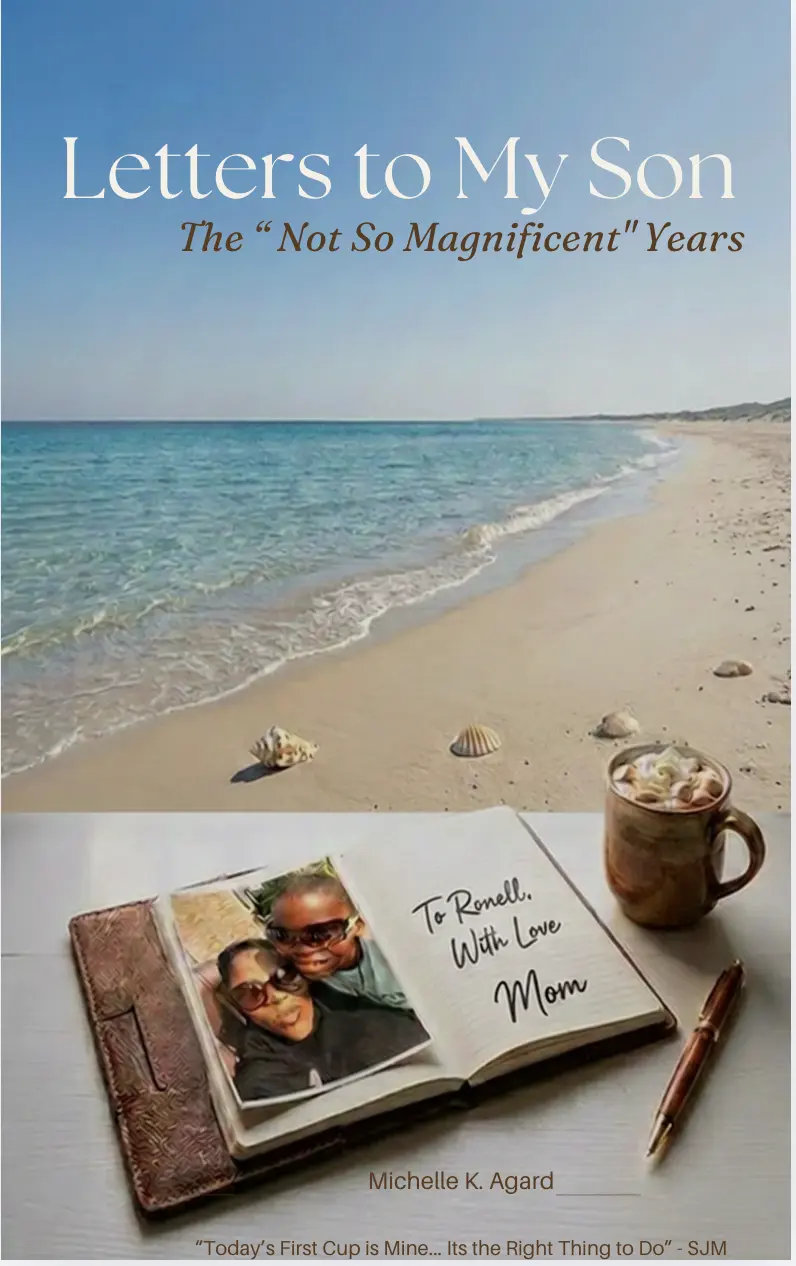
As I work toward completing my memoir, Letters to My Son: The Not-So-Magnificent Years, I pause, daring to share. “Rumbling with vulnerability,” as Brené Brown would say. Honestly, I feel beat up and burdened with guilt, but I am doing it bloody, bruised, and blessed. Blessed with gratitude for God’s grace, a mother, and a village who helped—and still help—maintain Ronell’s magnificence.
There are stories women whisper in private but rarely say aloud in public. Stories about the years they missed. The phone calls and text messages they replay in their minds. The birthdays they couldn’t attend. The dreams they pursued while carrying guilt in one hand and faith in the other.
For many women, motherhood is expected to look like constant presence, endless sacrifice, and the quiet burial of personal ambition. But life is rarely that simple.
Some women leave not because they stop loving their children, but because they are trying to survive, rebuild, heal, or become. That truth may be uncomfortable for some people to hear, but it is real.
Letters to My Son: The Not-So-Magnificent Years was born from that reality. It is not a book that, when completed, will be written from perfection. It is written from reflection. From wrestling honestly with the cost of becoming. From understanding that love and regret can exist in the same heart at the same time.
For years, I carried—and still carry—the weight of choices made while pursuing purpose, stability, healing, and faith in God. I believed I was building a future strong enough for my son to stand on. Yet while building, I also lost time—the one thing no mother can ever fully reclaim.
And still, love remained.
That is the conversation many women are afraid to have openly: that you can deeply love your children and still have seasons where life pulls you away from them physically, emotionally, financially, or spiritually.
Some women are surviving abusive relationships. Some are chasing opportunities. Some are battling poverty, addiction, trauma, depression, or unfinished dreams. Some are simply trying to become whole women while grieving the moments they could not fully mother.
Too often, these women suffer silently beneath shame.
But shame has never healed anyone.
What heals is honesty.
What heals is compassion.
What heals is allowing women room to tell the full story of their humanity.
The word magnificent comes from the Latin magnificus—“greatness” and “to make.” Magnificence is not perfection. It is the courage to create meaning from broken places. It is surviving years that did not look beautiful while still believing God could bring beauty from them.
That understanding changed me.
Inspired by the wisdom of The Prophet, especially the poem “On Children,” I began to understand motherhood differently. Khalil Gibran writes:
“Your children are not your children. They are the sons and daughters of Life’s longing for itself.”
Those words reminded me that our children are not possessions; they are souls entrusted to us while we ourselves are still learning, healing, and becoming.
That realization does not erase accountability, nor does it remove pain. But it does create space for grace.
This memoir is my attempt to speak truthfully to my son, Ronell, about the not-so-magnificent years. The years of distance. The years of faith. The years of striving. The years where ambition and motherhood collided in painful ways.
But this article is also for every woman carrying silent guilt.
For the woman who cries after everyone else goes to sleep.
For the woman who wonders if her child will ever fully understand her choices.
For the woman trying to rebuild herself after losing pieces of her identity.
For the woman who still prays for her children daily, even across distance and silence.
You are not alone.
Your story deserves tenderness, not only judgment.
Your humanity deserves acknowledgment.
And your healing deserves community.
Sometimes the strongest thing a woman can do is tell the truth about the years that almost broke her.
If you find yourself somewhere inside these words, may this be your reminder that magnificence is not found in flawless motherhood. It is found in courage, accountability, endurance, faith, and the willingness to love even through imperfection.
May you find a shoulder to lean on.
May you find room to grieve honestly.
May you forgive yourself where necessary.
May you stand firmly in your own magnificence.
And may the children you left—yet forever loved—one day feel the truth inside your heart.
Because even the not-so-magnificent years still carry the possibility of redemption, reconciliation, and love.
— Michelle K. Agard