Menopause 101: Mandatory Workplace Webinar
A Brutally Honest Guide to Menopause in the Workplace

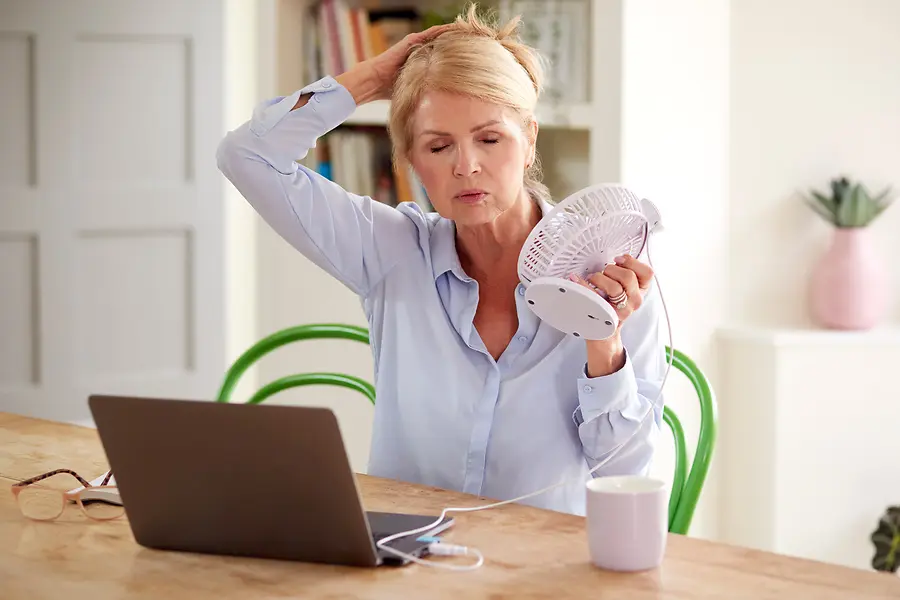
Menopause 101: Mandatory Workplace Webinar
By: DN Hill
Category: Narrative nonfiction / memoir / workplace culture / women & leadership
Welcome to Menopause 101. We're so glad you could join us today.
If you are viewing this webinar, it means you are either a woman over forty, a manager of a woman over forty, or a man who clicked the wrong link but decided to stay because it sounded low-effort and vaguely medical.
Before we begin, please note that this session is intended to increase awareness, promote empathy, and ensure we never have to structurally change anything.
Let's get started.
Menopause is a natural biological process
Menopause is a natural biological process in which the ovaries gradually stop producing estrogen and progesterone. In simpler terms, the internal chemical system that has been quietly buffering women against rage, exhaustion, and felony for decades powers down without notice. This is normal. This is healthy. This is expected. And it is scheduled to occur at the exact moment a woman reaches peak professional competence, just to keep things interesting.
No one knows why.
Science calls this a coincidence. Women call it sabotage.
Common symptoms include hot flashes, night sweats, sleep disruption, brain fog, and mood changes. Less commonly mentioned symptoms include losing the ability to pretend meetings are necessary, developing an allergic reaction to corporate buzzwords, and suddenly seeing workplace dysfunction in ultra-high definition with surround sound.
Night sweats are not "getting warm."
Night sweats are not "getting warm." Night sweats are waking up as if you were slow-roasted in an air fryer and then immediately flash-frozen like a bag of shrimp. You wake up soaked, throw the blankets off, regret that decision, put the blankets back on, and regret that decision too. By 3:00 a.m., you are standing in your bedroom holding a fitted sheet, wondering how many clean sheets a woman is supposed to own before menopause becomes a boutique hospitality experience with no Yelp listing.
Some women may experience temporary changes in concentration or memory. Translation: she still knows everything. She just occasionally cannot access a noun. This does not mean she is declining. This does not mean she is "off." This does not mean we should quietly stop inviting her to important meetings. It means her endocrine system is under construction, and we regret to inform you that construction noise is not optional and will not be completed on schedule.
Brain fog is not forgetting who you are.
Brain fog is not forgetting who you are. Brain fog is knowing exactly who you are and watching your brain briefly buffer like a Windows 95 computer that someone keeps trying to use anyway. It is standing in a meeting thinking, I know this word. I invented this word. I have billed for this word, and then having to describe the word like you're on a game show for adults with student loans.
Men who pause are considered thoughtful. Women who pause receive a calendar invite titled Just Checking In.
Some women may experience irritability.
Some women may experience irritability. This is misleading. What women experience is accuracy.
For decades, estrogen functioned like noise-canceling headphones for bullshit. It softened edges. It delayed reactions. It allowed women to nod politely while watching grown adults reinvent the wheel in real time and call it innovation. Menopause removes the headphones. Suddenly, the same meeting is not the same meeting. Suddenly, the same email feels spiritually offensive. Suddenly, the sentence "Let's circle back" sounds like a threat from a low-budget horror movie.
This is not a personality change. This is a system update.
Women in menopause may appear more direct. Yes. Because decorative language requires energy, and menopause has reallocated that energy to temperature regulation and not committing arson. Women are no longer padding correct statements with emotional throw pillows. They are saying the sentence. This has been categorized as a tone issue. Tone is the sound truth makes when a woman says it without apologizing.
Managers are encouraged to lead with empathy.
Managers are encouraged to lead with empathy, check in with employees, and offer flexibility. Managers are discouraged from using the phrase "Are you okay?" in a voice that means, We noticed. Managers are discouraged from documenting tone while ignoring dysfunction. Managers are discouraged from quietly deciding that a woman who has been competent for thirty years is suddenly a mystery novel.
If a woman tells you she is not sleeping, she is not asking for a motivational quote. She is telling you her nervous system is filing a formal complaint.
Suggested coping strategies include yoga, meditation, breathing exercises, lavender, and downloading an app. While these are lovely, none of them replace sleep, hormonal treatment, reasonable workloads, or a workplace culture that does not require women to cosplay as robots.
Crystals do not fix capitalism.
Menopause does not make women bad at their jobs.
Menopause does not make women bad at their jobs. Menopause makes women bad at pretending their jobs are not bad. Women do not lose ambition. Women do not lose intelligence. Women do not suddenly become incompetent at fifty. Women lose tolerance. There is a difference.
If a woman who has been steady for decades suddenly seems "different," she is probably not broken. She is probably done.
Thank you for attending Menopause 101.
HR will now return to pretending this webinar was about wellness.
DN Hill is a finance executive, leadership scholar, and university lecturer with more than thirty years of experience in capital markets and mortgage banking. She is a doctoral researcher whose work focuses on organizational design and women's leadership. She writes about why women keep getting blamed for systems that don't work—and how workplaces can be redesigned to support women's health, dignity, and longevity. Menopause Got Me Fired is the latest expression of her work.


