Mental Health in the Workplace
What We Think of Others Reflects Ourselves

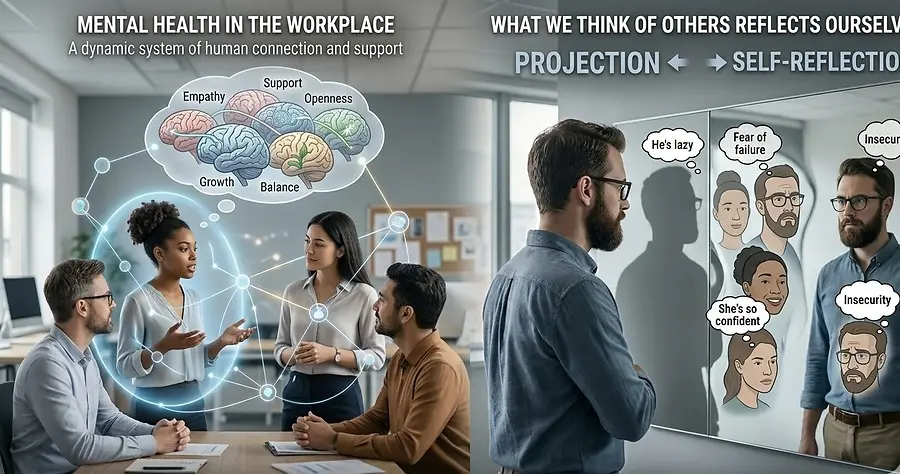
In today’s fast-paced work environments, mental health is no longer a side topic; it’s central to how employees perform, connect, and thrive. Stress, burnout, and emotional fatigue affect professionals at every level, including management, but awareness is only half the battle. The culture we collectively create in the workplace—how we communicate, empathize, and judge—deeply influences everyone’s sense of psychological safety.
The Hidden Stress Behind the Desk
Many workers experience anxiety or depression silently, fearing judgment or appearing “weak.” Long hours, constant connectivity, and high performance expectations can leave little room for rest or vulnerability. When employees feel isolated, it’s not just productivity that suffers—it’s trust, morale, and long-term well-being.
The Mirror Effect: What Our Opinions Reveal
An often-overlooked aspect of workplace mental health is how we perceive and talk about each other. Psychologists often refer to this as “projection,” when people criticize or judge traits in others that they struggle to accept in themselves. For example, a coworker who constantly calls others “lazy” may be wrestling with their own guilt about productivity. Negative assumptions often tell us more about the speaker’s internal world than about the target.
Creating a Culture of Awareness
A mentally healthy workplace isn’t built through policies alone; it grows through compassion and consistency. You can foster better mental and emotional balance by practicing reflection. When you find yourself judging others, ask what that judgment might reveal about your own feelings or fears.
When people feel seen and understood rather than judged, collaboration deepens, and performance naturally improves. In the end, nurturing mental health at work means doing more than protecting employees from burnout—it means building a culture of mutual understanding, where every interaction becomes a mirror for growth instead of criticism.