Mitochondrial Dysfunction and Autism Spectrum Disorder: Exploring the Biological Connection
Investigating Mitochondrial Abnormalities as One Component of Autism's Complex Biological Foundation

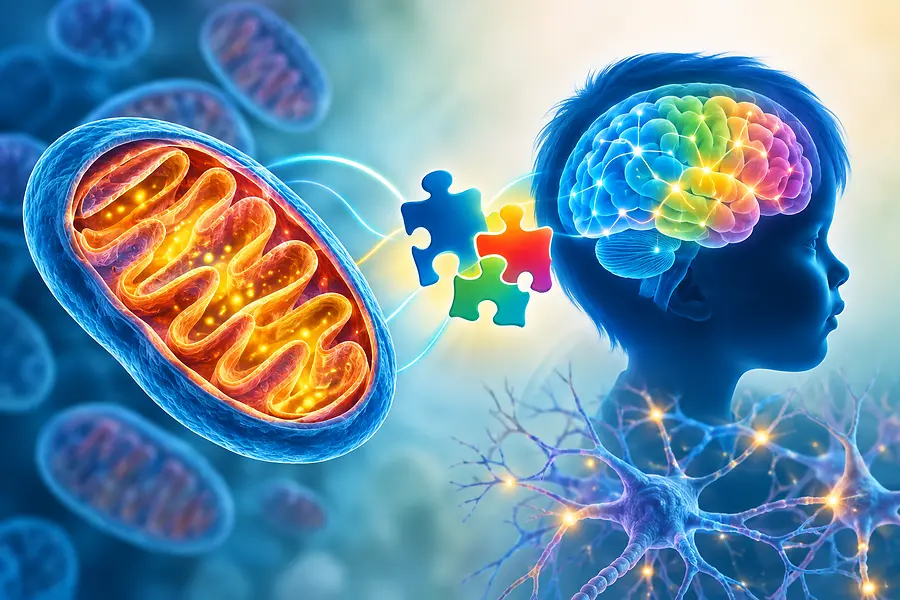
Mitochondrial Dysfunction and Autism: Exploring the Biological Connection
Autism spectrum disorder (ASD) is a complex neurodevelopmental condition characterized by differences in social communication and interaction, restricted or repetitive patterns of behavior, and sensory and behavioral differences. Contemporary research increasingly recognizes autism as a biologically heterogeneous condition involving interactions among genetic, neurological, metabolic, and cellular processes.
One area of increasing scientific interest is mitochondrial function. Mitochondria are cellular organelles responsible for producing much of the adenosine triphosphate (ATP) required to sustain cellular activity. Because the brain has exceptionally high energy requirements, mitochondrial function is particularly important during neurodevelopment. Consequently, researchers have investigated whether impaired mitochondrial function may contribute to neurological and developmental differences observed in a subset of autistic individuals.
The available evidence supports an association between mitochondrial abnormalities and ASD; however, mitochondrial dysfunction should not be characterized as the universal cause of autism. Instead, current research suggests that altered mitochondrial function may represent one component of a complex biological pathway affecting some individuals on the autism spectrum.
Mitochondria and Brain Development
Mitochondria perform several functions essential to neuronal health. Their primary role is to produce ATP through oxidative phosphorylation. In addition to energy production, they play key roles in regulating calcium, facilitating cellular signaling, guiding apoptosis, and controlling reactive oxygen species.
These functions are particularly important in neurons because maintaining electrical gradients, transmitting signals, transporting cellular materials, and supporting synaptic communication require substantial amounts of energy.
The developing brain is especially metabolically demanding. During early childhood, neurons undergo rapid differentiation, migration, synapse formation, and circuit refinement. These processes depend on adequate energy availability and tightly regulated cellular signaling.
Disruptions in mitochondrial function could therefore affect cellular processes involved in neuronal development. This does not mean that mitochondrial dysfunction necessarily produces autism, but it provides a biologically plausible mechanism through which altered cellular metabolism could influence neurodevelopment.
Evidence Linking Mitochondrial Dysfunction With Autism
Research examining mitochondrial function in ASD has identified several biological differences in some autistic populations. A systematic review and meta-analysis found evidence of increased rates of mitochondrial disease and biochemical abnormalities associated with mitochondrial function among individuals with ASD. Reported differences included alterations in lactate, pyruvate, carnitine, and other metabolic markers.
More recent research has expanded these findings. Frye et al. (2024) conducted a systematic review and meta-analysis involving 204 studies examining biomarkers of mitochondrial dysfunction in ASD. The researchers identified differences in several metabolic measures, including lactate, pyruvate, ATP, creatine kinase, carnitine, and acyl-carnitines. Studies also reported differences involving mitochondrial DNA and mitochondrial respiration.
These findings are significant because they suggest that mitochondrial abnormalities may occur more frequently within some autistic populations than would be expected by chance. At the same time, studies may vary substantially. Differences in participant characteristics, diagnostic populations, laboratory methods, and definitions of mitochondrial dysfunction make it difficult to establish a single mitochondrial profile associated with autism.
Thus, mitochondrial dysfunction appears more appropriately understood as a potential biological feature of a subgroup rather than a defining characteristic of ASD.
Oxidative Stress and Cellular Energy
One proposed mechanism connecting mitochondrial dysfunction and autism involves oxidative stress. Mitochondria naturally produce reactive oxygen species as a byproduct of energy production. Under normal physiological conditions, antioxidant systems maintain an appropriate balance between reactive oxygen species and cellular defenses. When this balance becomes disrupted, excessive oxidative stress can damage proteins, lipids, DNA, and cellular membranes.
Because neurons require significant amounts of energy, impaired mitochondrial energy generation and oxidative imbalance can affect neuronal function. Researchers have proposed that increased oxidative stress could interfere with synaptic signaling, cellular communication, and other processes involved in neurodevelopment.
Importantly, oxidative stress should not be interpreted as an autism-specific mechanism. Oxidative stress occurs in numerous physiological and pathological conditions. Its potential relevance to ASD is therefore best understood as one component within a larger network of biological processes rather than as an independent explanation for autism.
Genetics, Mitochondrial Function, and Neurodevelopment
The relationship between mitochondrial dysfunction and autism also intersects with genetics. ASD has substantial genetic heterogeneity, with numerous genes contributing to differences in brain development, synaptic function, cellular signaling, and metabolism. Genetic pathways associated with neurodevelopment also influence mitochondrial processes.
Mitochondrial DNA provides an additional layer of biological complexity, as mitochondria contain their own genetic material and have distinct patterns of inheritance from nuclear DNA. Genetic variation affecting mitochondrial function may therefore interact with nuclear genetic factors and other cellular processes.
This interaction illustrates why autism cannot be adequately explained through a single biological mechanism. Rather, autism appears to emerge from complex interactions among multiple biological pathways. Mitochondrial function may be one pathway through which genetic differences influence neuronal development and cellular energy regulation.
Mitochondrial Dysfunction Versus Mitochondrial Disease
A critical distinction must be made between mitochondrial dysfunction associated with ASD and primary mitochondrial disease. Primary mitochondrial disorders are medical conditions caused by genetic or cellular abnormalities that impair mitochondrial function. Individuals with mitochondrial disease may experience neurological and developmental manifestations, including developmental delays, seizures, motor abnormalities, and, in some cases, autistic characteristics.
However, autism is not synonymous with mitochondrial disease. An autistic individual does not necessarily have a mitochondrial disorder, and an abnormal metabolic marker does not automatically establish a diagnosis of mitochondrial disease. Clinical diagnosis of a mitochondrial disorder requires appropriate medical assessment, laboratory evaluation, and, when indicated, genetic testing.
This distinction is particularly important because the presence of mitochondrial abnormalities in research studies should not be interpreted as evidence that all autistic individuals have an underlying mitochondrial disease.
The Question of Causality
Perhaps the most important issue in understanding mitochondrial dysfunction and autism is causality. Although researchers have identified associations between mitochondrial abnormalities and ASD, association does not establish that mitochondrial dysfunction causes autism.
Several possibilities remain under investigation. Mitochondrial dysfunction could contribute directly to neurodevelopmental differences in some individuals. Alternatively, mitochondrial abnormalities could emerge as a consequence of other biological processes associated with autism. A third possibility is that the relationship is bidirectional, with genetic and cellular differences affecting mitochondrial function while altered mitochondrial activity subsequently influences neuronal development.
It is also possible that multiple pathways exist and that mitochondrial dysfunction represents one biological mechanism within specific subgroups of autistic individuals. This interpretation is consistent with the considerable heterogeneity observed in autism research.
Mitochondrial Function, Fatigue, and Autistic Burnout
The relationship between mitochondrial metabolism and autistic burnout is an emerging area of interest but should be approached cautiously. Autistic burnout is generally described as a state of significant exhaustion and reduced functioning associated with prolonged demands, chronic stress, environmental mismatch, and insufficient recovery.
Mitochondria are central to cellular energy metabolism; it is biologically plausible that metabolic processes could interact with experiences of fatigue and physiological stress. However, current evidence does not demonstrate that mitochondrial dysfunction causes autistic burnout. At present, any proposed relationship between the two should be regarded as a research hypothesis rather than an established clinical explanation.
Future research examining energy metabolism, stress physiology, neurodevelopment, sensory demands, and recovery may provide greater insight into whether metabolic differences contribute to fatigue or reduced functioning within particular autistic populations.
Implications for Autism Research and Clinical Understanding
Understanding mitochondrial biology may eventually contribute to a more precise model of autism. Rather than viewing ASD as a single condition with one underlying mechanism, researchers increasingly recognize that autism may involve multiple biological pathways and subgroups.
Identifying individuals with clinically meaningful mitochondrial abnormalities could potentially improve understanding of specific developmental or neurological profiles. It may also contribute to future research into individualized interventions.
However, evidence is not currently sufficient to support the assumption that mitochondrial-targeted treatments are appropriate for autistic individuals generally. Additional research is needed to determine which individuals may benefit from specific approaches and how mitochondrial biomarkers should be interpreted clinically.
Consequently, mitochondrial research should complement, not replace, established developmental, behavioral, educational, and clinical approaches to supporting autistic individuals.
Conclusion
Mitochondrial dysfunction represents an important and evolving area of autism research. Mitochondria regulate cellular energy production and participate in oxidative balance, calcium regulation, cellular signaling, and neuronal development. Because neurons require substantial amounts of energy, disruptions in mitochondrial function could theoretically affect processes involved in brain development and synaptic communication.
Current evidence demonstrates that mitochondrial abnormalities are present in a subset of individuals with ASD and that differences in metabolic biomarkers, mitochondrial DNA, and mitochondrial respiration have been reported across numerous studies. Nevertheless, the evidence remains heterogeneous and does not support the conclusion that mitochondrial dysfunction is the universal cause of autism.
The most scientifically appropriate interpretation is that mitochondrial dysfunction may represent a potential contributing mechanism or biological correlate within a subset of autistic individuals. Continued research examining mitochondrial genetics, cellular metabolism, oxidative stress, neuronal development, and environmental influences may help clarify how these mechanisms interact.
Such research has the potential to advance a more individualized understanding of autism while avoiding reductionist explanations that attribute a highly complex neurodevelopmental condition to a single biological process.


