Nepal’s Flood: The Human Cost of Climate Injustice and the Urgent Fight for a Safer Future
Why Nepal's Climate Crisis Demands Global Justice, Not Just Sympathy

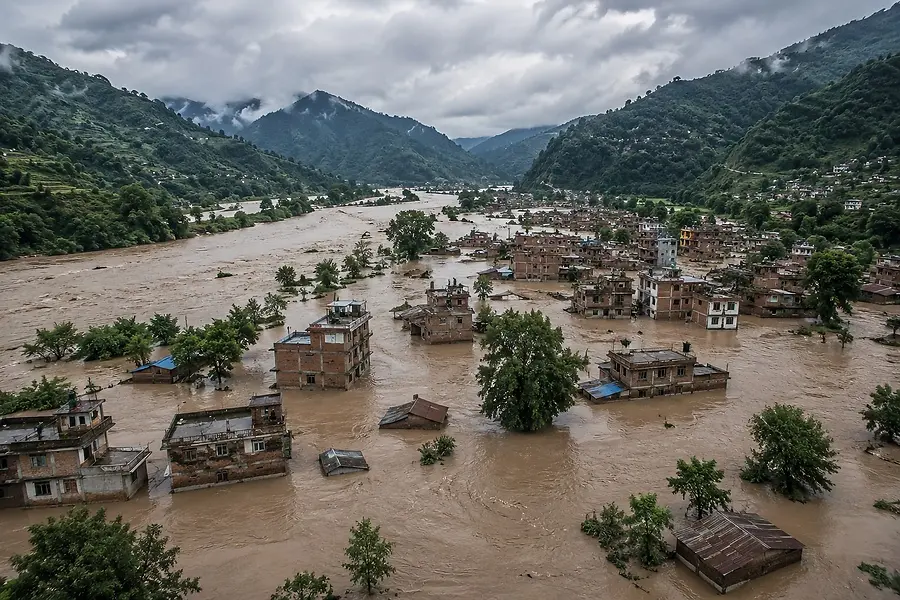
For me, this is not simply another news story about a flood.
Nepal is home. The Himalayas are not just mountains on a map or beautiful images used in tourism campaigns. They are where families live, where communities build their futures, where rivers begin, and where generations have learned to live alongside nature.
When I see the devastation in Rasuwa and other affected areas—lives lost, families separated, homes destroyed, roads and bridges washed away—I cannot look at these images as distant statistics. Behind every number is a human life, a family, a story, and a future that has been taken away.
The greatest loss cannot be measured in billions of rupees. It is measured in the people who will never come home. It is measured in parents who have lost children, children who have lost parents, families who have lost everything they built over generations, and communities now facing an uncertain future.
And that is why I believe we must ask a difficult question: "How much more are the people of Nepal and other Himalayan countries expected to endure?"
We did not create most of the emissions responsible for the climate crisis. We did not build our economies through decades of massive fossil-fuel consumption. Yet our communities are increasingly exposed to melting glaciers, unstable mountains, extreme rainfall, floods, and landslides.
It is painful to see people who have contributed so little to global warming paying such a high human price for it.
I don’t want Nepal to be seen only as a victim waiting for international donations after every disaster. We deserve more than sympathy. We deserve climate justice.
My participation in the 2026 United Nations High-level Political Forum (HLPF) at UN Headquarters gave me an opportunity to bring Himalayan communities into the global climate conversation. During a climate-change side event, I raised concerns about the need for equitable access to climate decision-making, policy processes, and reliable climate data for communities living on the frontlines of climate change. For me, this is deeply personal. Coming from Nepal and being connected to communities that depend on the mountains, rivers, forests, and natural resources for their livelihoods, I have seen how climate impacts are not experienced equally. Indigenous women and young people, in particular, often have the least influence over decisions that directly affect their lives, despite holding valuable local knowledge and lived experience. I emphasized that climate justice must go beyond discussing vulnerable communities—it must ensure that they have a meaningful seat at the table, access to the information they need, and the opportunity to help shape the policies and solutions that will determine their future.
We need serious international investment in adaptation, meaningful access to loss-and-damage finance, technology, scientific cooperation, and early-warning systems that can save lives. Nepal and other Himalayan countries also deserve a stronger voice in global climate decisions.
But we must also look honestly at ourselves. Climate change cannot become an excuse for poor planning, unsafe settlements, or weak enforcement. We need accountability at home and accountability internationally.
The recent flooding should not become another cycle of tragedy, relief, reconstruction, and forgetting.
Every life lost should strengthen our determination to prevent the next loss.
I don’t want us to simply rebuild what the water destroyed. I want us to build a Nepal that is safer, stronger, and prepared for the climate future that is already here.
The Himalayas provide water, ecosystems, and life far beyond Nepal’s borders. Protecting the people who live there is therefore not charity.
It is a shared global responsibility. Nepal does not need the world to just feel sorry for us.
We need the world to hear us, stand with us—and act.