Neurodivergence and Mental Health in the Christian Church
Creating space for neurodivergent belonging in faith communities through ethical leadership and mutual understanding.

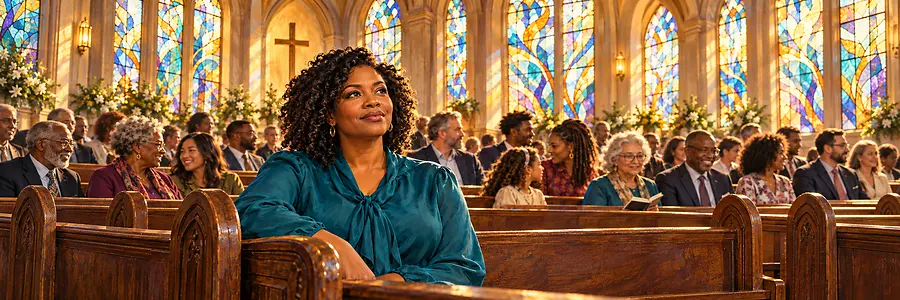
The Church should be a place where people can seek spiritual refuge without being shamed for how their minds work. I write about this because of people I love and because this is personal. As a Black woman who is neurodivergent and Christian, I know how deeply the desire to belong can collide with the pressure to become who others expect you to be.
Race, gender, neurological differences, and faith intersect in how I experience a space and how others interpret me. Yet the need for understanding reaches across identities, denominations, and congregations. My concern comes from loving the Church and wanting its care to reach people who are too often misunderstood.
When Difference Receives a Spiritual Label
In some Christian settings, deliverance ministry emphasizes casting out demons or removing harmful spiritual influences. My concern is what happens when appearance, unfamiliar behavior, or emotional distress becomes the basis for declaring that someone needs deliverance before anyone considers their health.
I have witnessed people being described as demon-possessed when their experiences needed professional mental health assessment. A spiritual label can delay care and teach a person to fear disclosing what they are experiencing.
Neurodivergence is a nonmedical umbrella term, not a diagnosis. It can describe differences in attention, learning, communication, and other aspects of brain functioning. Neurodivergence and mental illness are not interchangeable, although they can coexist; definitions of the umbrella term vary (Cleveland Clinic, n.d.). An autistic person may also experience depression. A person with ADHD may have another condition that needs its own assessment.
Someone with dyslexia may need another way to follow a Bible lesson. A person managing sensory overload may step outside during worship. Someone who struggles to articulate their needs may remain quiet in a group. Neither outward behavior nor a diagnosis tells us everything about a person's needs or relationship with God. They may not jump and shout. That does not mean they love God less.
Faith and Treatment Can Coexist
There were times under certain leadership when I was encouraged not to take medication for depression. I was told that God was healing me. During those periods, I experienced behavioral shifts, intrusive thoughts, and destructive behavior.
As an adult, I was responsible for my health, but spiritual authority carried weight in my decisions. The people offering that direction did not have the clinical qualifications to determine my treatment. That experience taught me how consequential a leader's words can be.
I believe God can heal. I also believe seeking treatment is compatible with faith. Medication needs and treatment duration differ by person and condition. The National Institute of Mental Health advises people not to stop taking prescribed medication, even when feeling better, without a health care provider's help (NIMH, n.d.). A pastor's assurance should not replace that clinical conversation.
As a certified life coach and board-certified Christian counselor, I have encountered needs that required referral beyond a supportive conversation. Those roles do not make me a physician or confer medical prescribing authority. Responsible care includes recognizing when someone needs a licensed professional's assessment.
Belonging Affects Participation
In Lifeway Research's 2014 study of 355 U.S. Protestant adults with depression, bipolar disorder, or schizophrenia, 8% said people's responses to their mental illness caused them to stop attending church, and 10% said those responses led them to change churches. At the same time, 53% described their local church as supportive (Lifeway Research, 2014). These historical findings reflect both the care churches provide and the consequences of harmful responses.
Andrew Whitehead's study of nationally representative U.S. children's survey data found that autistic children had almost twice the odds of never attending religious services compared with children without a chronic health condition (Whitehead, 2018, 2019). This is an association involving children, not proof of why an adult leaves church. Neither study represents all Christians worldwide. Both give congregations reason to examine barriers rather than assume that absence means a lack of faith.
Doing the Work Ourselves
A book I have been reading, The Life-Changing Art of Self-Brain Surgery by W. Lee Warren, offers a useful point of reflection. In its opening chapter, Warren recounts how surgeon Leonid Rogozov removed his own appendix while isolated in Antarctica in 1961. Warren emphasizes Rogozov's shift from seeing himself only as a frightened patient to recognizing the trained physician who could act (Warren, 2026, pp. 7–9).
Warren connects this story to taking an active role in examining thoughts and responses. He asks readers to acknowledge the roles of "patient and doctor" in their well-being (p. 9). I take from this a call to participate in our own care. I am applying his perspective to church life, not proposing self-diagnosis, literal surgery, or replacing professional treatment.
My plea is that leaders do the work on themselves. Examine assumptions, seek appropriate care, and notice how stress or unresolved experiences affect the way you respond to people. Spiritual authority does not remove our need for self-awareness.
Members have work to do, too. We can seek assessment when needed, participate in treatment, learn our support needs, and communicate them where it is safe. Understanding our own experiences can also help us understand a leader's limitations. Mutual understanding does not require accepting harmful advice. Leaders retain responsibility for how they use their authority.
Care Must Include the Shepherd
Pastors carry family responsibilities while supporting people through grief, conflict, and uncertainty. A Lifeway survey conducted in 2021 and reported in 2022 found that 26% of U.S. Protestant pastors said they had personally experienced mental illness; 17% reported a diagnosis, and 9% reported an undiagnosed experience (Earls, 2022). These figures reflect self-reported experiences, not clinical assessments of every pastor.
Leaders need access to confidential care without having that need treated as a failure of their calling. Congregations can support reasonable workloads, rest, and professional referral networks. A church can care for the person who preaches as well as the people listening.
Ethical Leadership in Sacred Spaces
My doctoral studies in organizational leadership examine ethical leadership, psychological safety, and neurodiversity. Brown, Treviño, and Harrison's research connects ethical leadership with trust, fairness, and followers' willingness to report problems (Brown et al., 2005). Their work concerns organizations, but I believe its questions about the use of authority also matter in church.
Amy Edmondson describes psychological safety as a shared belief that a team is "safe for interpersonal risk taking" (Edmondson, 1999). Applying that idea to a congregation, I ask: Can someone request written instructions, take a quiet break, or disclose a struggle without being embarrassed? Can they question advice without having their faith judged?
Churches can provide accessible teaching materials and different ways to participate. Leaders can ask what helps each person, protect confidential disclosures, and refer medical concerns to qualified professionals. A person who steps back from a group may need support rather than a reprimand.
Making Room to Be Understood
I have not made every decision well. Some experiences involved difficulties thinking, remembering, or responding in the ways people expected. Accountability matters, and understanding the conditions surrounding a decision matters, too. My imperfections do not erase what I have learned or my responsibility to help others.
That conviction led me to create Understanding Neurodiversity™, a free educational initiative of God's Diamonds. It provides resources for people and their communities without replacing clinical assessment. Our motto, "Produced under pressure," speaks to the effort of showing up while carrying struggles others cannot see.
Doing the work should help us care for ourselves and each other. It should not mean masking every difference to earn acceptance. I am still learning, maintaining my treatment plan, and choosing hope. I want someone else to receive understanding earlier than I did.
Grace asks us to care enough to understand. Just because my struggle differs from yours does not mean something is spiritually wrong with me.
References
Brown, M. E., Treviño, L. K., & Harrison, D. A. (2005). Ethical leadership: A social learning perspective for construct development and testing. Organizational Behavior and Human Decision Processes, 97(2), 117–134. Source
Cleveland Clinic. (n.d.). Neurodivergent. Source
Earls, A. (2022, August 2). Lifeway Research: Pastors have experience with mental illness. ChurchLeaders. Source
Edmondson, A. (1999). Psychological safety and learning behavior in work teams. Administrative Science Quarterly, 44(2), 350–383. Source
Lifeway Research. (2014). Study of acute mental illness and Christian faith. Source
National Institute of Mental Health. (n.d.). Mental health medications. Source
Warren, W. L. (2026). The life-changing art of self-brain surgery: Connecting neuroscience and faith to radically transform your life. Tyndale Refresh. Chapter 1, pp. 7–9; publicly available book preview. Source
Whitehead, A. L. (2018). Religion and disability: Variation in religious service attendance rates for children with chronic health conditions. Journal for the Scientific Study of Religion, 57(2), 377–395. Source
Whitehead, A. L. (2019, May 8). Where are the children with chronic health conditions and their families? Studying Congregations. Source
About the Author
Kimberly J. Lewis, M.Div., is an organizational change and transformation professional, Christian minister, and doctoral student in organizational leadership. She is the founder of God's Diamonds and creator of Understanding Neurodiversity, a free educational initiative. Her work explores ethical leadership, psychological safety, neurodiversity, and the thoughtful use of AI to support people through change.
Explore some of her work and connect through her portfolio at KimberlyJLewis.com. Follow her on Instagram at @KimberlyJ4Change and connect on LinkedIn at https://www.linkedin.com/in/thekimberlyj.
Visit UnderstandingNeurodiversity.org for free educational resources.