
Nonprofit Boards — Do They Get It?
Understanding the critical distinction between governance and management in nonprofit leadership.

Nonprofit Boards — Do They Get It?
Governance Is More Than Attending Meetings
Nonprofit organizations are created to advance missions, strengthen communities, address inequities, and meet needs that too often go unmet. Behind every nonprofit is—or should be—a Board of Directors entrusted with protecting that mission and ensuring the organization's long-term health.
But there is a question nonprofit leaders sometimes hesitate to ask:
Does the board actually understand its job?
Serving on a nonprofit board is not an honorary appointment. It is not simply an opportunity to add another affiliation to a professional biography, attend a few meetings, vote on an annual budget, or show up at the organization's signature fundraiser.
Board service is governance.
And governance carries real responsibility.
The Board Is a Governing Body
A nonprofit Board of Directors exists to provide governance, fiduciary oversight, strategic stewardship, and accountability.
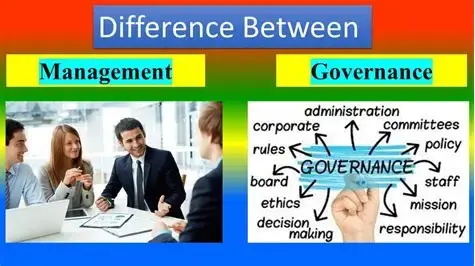
The board does not exist to manage the organization's daily operations. That responsibility belongs to the chief executive and the leadership team. Instead, an effective board operates at a higher level, ensuring that the organization remains financially sound, legally compliant, strategically focused, adequately resourced, and faithful to its mission.
That distinction between governance and management is critical.
A board that becomes overly involved in day-to-day operations can undermine the authority of its executive leader and create confusion throughout the organization.
But the opposite can be equally damaging.
A board that is disengaged, uninformed, or unwilling to exercise meaningful oversight can allow financial problems, compliance concerns, organizational dysfunction, leadership challenges, and strategic drift to grow unchecked.
Strong governance requires finding the appropriate balance.
The board should not run the organization.
But it must govern it.
Fiduciary Responsibility Is Not Optional
Board members assume fiduciary responsibilities when they agree to serve. At the core of nonprofit governance are three fundamental duties: the Duty of Care, the Duty of Loyalty, and the Duty of Obedience.
Duty of Care requires board members to be informed, prepared, engaged, and thoughtful in their decision-making. Members should review financial reports, understand significant organizational risks, attend meetings consistently, ask meaningful questions, and seek additional information when something does not make sense.
Duty of Loyalty requires board members to place the interests of the nonprofit ahead of personal, professional, financial, or political interests. Conflicts of interest must be disclosed and appropriately managed. Board decisions should be driven by what best serves the organization and its mission—not individual agendas or relationships.
Duty of Obedience requires the board to ensure that the organization remains faithful to its charitable purpose and complies with applicable laws, regulations, governing documents, contractual obligations, and organizational policies.
These duties are not theoretical concepts buried in bylaws.
They are the foundation of responsible nonprofit governance.
If an organization is experiencing persistent financial instability, repeated compliance failures, significant leadership turnover, unresolved organizational risks, or continued mission drift, the board cannot simply view those problems as management issues.
At some point, they become governance issues.
Governance Is Not Micromanagement
One of the most common areas of tension between nonprofit boards and executives is determining where governance ends and management begins.
The board should be asking questions such as:
Are we financially sustainable? Are our programs advancing our mission? What are the greatest risks facing the organization? Are appropriate internal controls in place? Does our strategy reflect the environment in which we are operating? Do we have adequate resources to execute that strategy? Is the CEO meeting the expectations established by the board?
The board generally should not be deciding which employee handles a project, directing frontline staff, rewriting operational procedures, managing individual grants, approving routine purchases, or inserting itself into everyday personnel decisions.
A healthy governance structure establishes clear boundaries.
The board governs. The chief executive manages.
That does not mean the board is passive. Quite the opposite.
An effective board establishes expectations, monitors performance, examines data, challenges assumptions, evaluates risk, asks difficult questions, and holds executive leadership accountable for results.
It also recognizes that accountability must work in both directions.
The board cannot reasonably hold a chief executive responsible for delivering an ambitious strategic plan while failing to approve adequate resources, participate in fundraising, recruit needed expertise, make timely governance decisions, or address structural problems within the board itself.
The Board's Relationship With the CEO Matters
Few relationships are more consequential to a nonprofit's success than the relationship between the board and its chief executive.
The board hires, supports, evaluates, and, when necessary, terminates the chief executive. But effective governance requires more than supervising the CEO.
It requires partnership with appropriate boundaries.
A strong board provides the executive leader with clearly defined expectations, regular performance feedback, strategic guidance, access to expertise, and the resources necessary to lead effectively.
The CEO, in turn, provides the board with accurate information, strategic insight, financial transparency, organizational context, and sufficient data to make informed decisions.
Problems emerge when that relationship becomes adversarial, overly political, excessively operational, or unclear.
A CEO should not have to guess what success looks like.
And a board should never wait until a crisis—or an annual evaluation—to communicate significant concerns about executive performance.
Committees Are Where Much of Governance Happens
A strong board is rarely effective through full-board meetings alone.
Committees allow directors to examine complex issues more deeply and bring informed recommendations to the full board. Depending on the organization's size and structure, committees may include Finance, Governance, Development or Fundraising, Programs, Audit, Strategic Planning, Executive, and other specialized committees.
But creating a committee is not the same as having an effective committee.
Every committee should have a clear charter, defined responsibilities, measurable objectives, an annual work plan, appropriate membership, and a chair capable of moving the work forward.
Committee Chairs Are Leadership Positions
The committee chair is not simply the person who schedules meetings.
A strong committee chair understands the committee's mandate, establishes priorities, develops agendas with purpose, ensures members receive appropriate information, facilitates substantive discussion, assigns responsibilities, tracks progress, and reports recommendations to the full board.
Most importantly, effective committee chairs understand the difference between doing the organization's staff work and governing the work.
For example, the Finance Committee should not merely receive a financial statement and move on. It should understand revenue performance, expenses, cash flow, reserves, liabilities, budget variances, financial controls, audit findings, and emerging financial risks.
A Governance Committee should not exist only to nominate new board members. It should continuously assess whether the board itself is functioning effectively—including composition, competencies, attendance, engagement, succession planning, committee performance, board education, and periodic board assessment.
A Development Committee should understand that fundraising cannot simply be delegated to the executive director or development staff. Board members should participate in opening doors, cultivating relationships, making personally meaningful contributions, identifying prospects, supporting stewardship, and serving as credible ambassadors for the organization.
A Programs Committee should maintain visibility into outcomes, quality, impact, community needs, and whether programs remain aligned with the organization's mission and strategy—without attempting to manage program staff.
Committees should create deeper governance, not additional bureaucracy.
Board Composition Matters
Passion for the mission matters.
But passion alone does not create an effective board.
Nonprofits need directors whose collective competencies correspond to the organization's needs. Depending on the organization, that may include expertise in finance, law, fundraising, government relations, human resources, risk management, marketing, communications, technology, data, programs, community engagement, real estate, healthcare, education, or other relevant areas.
Boards should periodically conduct a board skills and competency assessment and ask:
What expertise do we currently have?
What expertise are we missing?
Does our board reflect the communities and stakeholders connected to our mission?
Who understands our financial model?
Who understands fundraising?
Who understands our programs?
Who understands governance?
And perhaps most importantly:
Are our board members willing and able to do the work required of them?
A prestigious title or extensive professional résumé does not automatically make someone an effective nonprofit director.
The organization needs the right board, not simply impressive names on a website.
An Ineffective Board Can Become an Organizational Risk
Organizations frequently examine operational risks: funding reductions, staff turnover, compliance concerns, cybersecurity, litigation, program performance, and economic uncertainty.
Far less frequently do organizations acknowledge another significant risk:
An ineffective board.
A weak board can contribute to delayed decision-making, poor financial oversight, inadequate fundraising, executive turnover, unmanaged conflicts of interest, compliance failures, strategic stagnation, and organizational instability.
It can also create a particularly damaging dynamic in which executive leadership is held accountable for organizational outcomes while the board fails to examine its own contribution to those outcomes.
If the board approves the strategy, approves the budget, evaluates the chief executive, oversees organizational risk, and holds fiduciary responsibility for the institution, then organizational accountability cannot reside exclusively with management.
Governance must include board accountability as well.
Boards Must Evaluate Themselves, Too
Nonprofits routinely evaluate employees.
Boards evaluate chief executives.
Programs are measured.
Budgets are monitored.
Funders demand outcomes.
But who evaluates the board?
Strong governance requires periodic board self-assessment.
Boards should examine attendance, participation, financial literacy, committee effectiveness, fundraising engagement, strategic contribution, board composition, CEO support and oversight, succession planning, and adherence to governance responsibilities.
Individual directors should also understand that board membership is not necessarily permanent.
When members consistently miss meetings, fail to prepare, avoid fundraising responsibilities, disregard conflicts of interest, undermine governance boundaries, or contribute little to the organization's work, board leadership must be willing to address the issue.
Accountability cannot stop at the boardroom door.
Governance Is Stewardship
Ultimately, nonprofit board service is an act of stewardship.
Board members are temporarily entrusted with something that belongs to a much larger community: an organization's mission, reputation, resources, history, and future.
That responsibility deserves more than quarterly attendance.
It requires curiosity.
Preparation.
Financial literacy.
Strategic thinking.
Courageous conversations.
Accountability.
Fundraising engagement.
Respect for governance boundaries.
And an unwavering commitment to the mission.
The strongest nonprofit boards understand that their responsibility is neither to simply support management nor to control management.
Their responsibility is to create the governance conditions under which effective leadership and sustainable mission impact can thrive.
So perhaps every nonprofit board should periodically ask itself a few uncomfortable questions:
Do we understand our fiduciary responsibilities?
Are we governing—or merely meeting?
Are our committees producing meaningful oversight and action?
Are we giving executive leadership the resources, clarity, and accountability necessary to succeed?
Are we willing to evaluate our own performance with the same rigor we expect from staff?
And finally:
If this organization succeeds or fails, do we understand the role that we played in that outcome?
Because when governance works, a strong board can be one of a nonprofit's greatest strategic assets.
When it doesn't, it can become one of its greatest liabilities.
Nonprofit Boards: Do They Get It?
The organizations—and communities—they are entrusted to serve cannot afford for the answer to be no.
Nakia Marshall, MPA
Nonprofit Executive | Organizational Strategist | Management Consultant

Nakia Marshall, MPA is a nonprofit executive, organizational strategist, management consultant, and life and career coach with more than 25 years of experience advancing organizations and programs that strengthen children, families, and communities. Her career spans executive leadership, child welfare, behavioral health, developmental disabilities, education, residential services, community-based programming, and…





