Plain Language Isn't Simple
Why plain language requires far more than a vocabulary adjustment.

At some point in nearly every public health communications project, someone suggests making the language simpler. Avoid jargon. Use shorter sentences. Aim for an eighth-grade reading level. This is all reasonable advice.
But if that were all it took to communicate complex information effectively, we could hand everyone a thesaurus, a readability calculator, and an afternoon off.
There's a persistent assumption that plain language is what happens after the difficult work is finished. Researchers produce the evidence. Analysts interpret the data. Policymakers develop the recommendations. Then someone in communications comes along to make everything a little more palatable.
Take out the big words. Shorten the paragraphs. Add some bullet points. Maybe a nice graphic. There: now the public can understand it. Except that's not how understanding works.
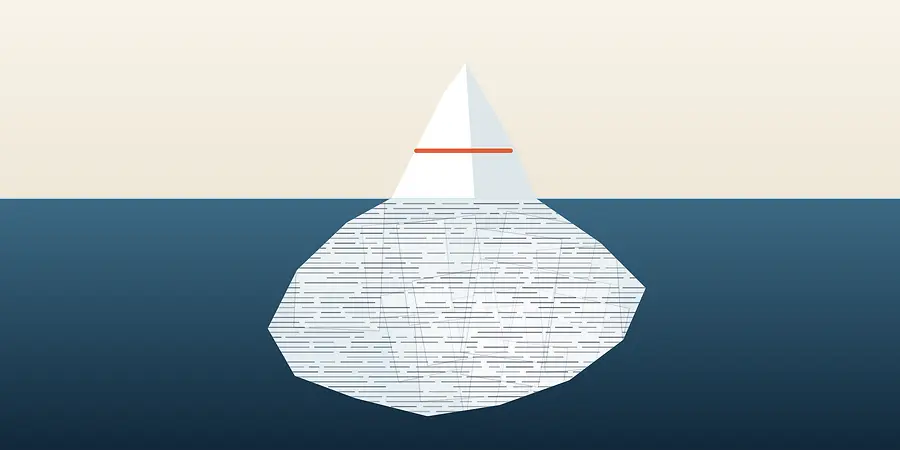
Plain language requires understanding complicated information well enough to know what can be simplified and what must be preserved. That takes far more than a vocabulary adjustment.
The trouble with making things simple
I've spent much of my professional life translating complicated information for people who have every reason to need it and very little reason to enjoy deciphering it.
Public health research. Policy proposals. Community health assessments. Legislative priorities. Grant-funded initiatives whose acronyms require explanations longer than their executive summaries.
The hard part is figuring out what the information actually means. Consider a community health needs assessment. A report might contain hundreds of pages of survey results, demographic comparisons, stakeholder interviews, research findings, and recommendations.
Then someone asks for a one-page summary. Sure. One page. No problem.
Except now you have to decide which findings matter most, what the data actually supports, and whose experiences might be missing. What can you responsibly conclude when a survey disproportionately represents higher-income residents? And what kind of one-pager do you make when the numbers tell one story and the people living with the consequences tell another?
You cannot solve those problems by replacing utilize with use.
Plain language is too often treated as a mechanical editing exercise, as though accessibility were something you could achieve with a checklist and a few substitutions. But a document can meet every readability standard and still misrepresent the evidence, omit essential context, or fail to answer the questions people actually have.
You have to understand the research well enough to know what it can tell you, what it can't, and where the important questions remain unanswered. Then you have to communicate all of that without turning a one-page summary into a dissertation or quietly transforming uncertainty into fact.
That's judgment, and no checklist supplies it.
Clarity is not certainty
One of the easiest ways to make a public health message sound clear is to make it sound more certain than the evidence allows.
Confident statements are easier to remember. Caveats are inconvenient. Nobody wants a social media graphic that says, "Well, it depends."
Unfortunately, sometimes it does depend. A survey of residents is not necessarily representative of every resident. An association is not proof of causation. A finding about one population does not automatically apply to another.
A sentence can be beautifully concise and still be wrong.
How do you explain uncertainty without burying the point? How do you acknowledge limitations without making the entire finding sound useless? How do you preserve nuance without expecting your audience to earn a graduate degree before they're allowed to understand what you're saying?
Those are questions about evidence, credibility, and trust. They're also why the person writing the summary needs to understand a great deal more than how to write a summary.
A word about tender plants
If you live in Western Massachusetts, you may know Dave Hayes, the Weather Nut, our local oracle of atmospheric uncertainty and all things meteorological.
Dave has a remarkable gift for making weather forecasts useful. He explains what's happening, what might happen next, and what we should actually do about it. He understands that people have different reasons for caring about the weather, and he speaks to them accordingly.
He also tells us when to protect our tender plants.
I love this.
Not just because I have, on occasion, been personally invested in the survival of my oregano, but because tender plants is such a beautiful, precise little phrase.
Dave can explain an approaching frost without making us sit through a meteorology lecture. He doesn't pretend the forecast is more certain than it is, and he doesn't assume everyone is reading for the same reason. Some people need to know about road conditions. Some are worried about power outages. Some of us would like to know whether our oregano is about to die.
He understands the weather well enough to tell us what matters.
The result is specific, accurate, and human.
Which is what plain language is supposed to be.
The audience is not the problem
I've never liked the phrase dumbing it down.
Apart from being insulting, it gets the relationship backward.
When people struggle to understand public health information, we often talk about what they lack: health literacy, scientific knowledge, familiarity with technical language. Sometimes those are real barriers. But the responsibility for overcoming them cannot rest entirely with the person trying to understand.
If a public agency publishes information that people cannot use, perhaps we should examine the communication before diagnosing the audience. A person reading a health recommendation may be between work shifts, caring for a child, reading in a second language, or making a decision with immediate consequences for their life. They don't owe us unlimited attention. They certainly don't owe us admiration for our vocabulary.
Sometimes effective communication means shorter sentences. Sometimes it means explaining a concept that professionals have used for so long they've forgotten it needs explaining. And sometimes it means recognizing that the question the institution wants to answer is not the question the community is asking.
You can write a perfectly accessible explanation of something nobody needed explained and still have failed spectacularly at communication. That's an audience problem only if you've decided the audience exists to serve the message, rather than the other way around.
Communication is part of the work
Public health communications is often treated as something that happens downstream.
A program is designed. A policy is developed. A report is completed. Then the communications person gets called in to tell people about it (preferably by Friday).
But communication decisions are also program decisions. Who needs this information? What assumptions are we making about their circumstances? What barriers might prevent them from acting on it?
Those questions belong at the beginning of the work.
If people cannot figure out how to access a service, the problem is not necessarily the brochure. If a health recommendation assumes resources people don't have, a more cheerful infographic won't fix it.
And if the public cannot understand what an agency is doing or why it matters, that has consequences for trust, participation, and whether the work accomplishes what it was supposed to accomplish.
Communications is not the decorative layer applied after the serious people have finished being serious. It is part of how the work reaches people and becomes useful.
The hard work of being understood
October is Health Literacy Month, which seems like a good time to reconsider what we mean when we ask for plain language.
Readability matters. So do translation, accessible formats, culturally responsive communication, and opportunities for people to ask questions. But none of that relieves us of the responsibility to understand the substance of what we're communicating.
Good plain-language writing requires subject-matter knowledge, analytical judgment, and a willingness to question the assumptions embedded in the original material. It also sometimes requires telling the people who produced that material that their preferred explanation isn't particularly useful to anyone outside the room.
This is not always a popular observation.
I don't want public health information to be simple.
Public health isn't simple, and neither are people or the conditions that shape their health.
I want public health information to be clear, accurate, honest, and useful. Those are considerably more demanding standards.
The point of plain language isn't to make complicated work look easy. It's to do the hard work of making understanding possible.